AI Summit 2026 Key Takeaways and Announcements
Explore AI Summit 2026 key takeaways, announcements, and trends. Discover generative AI, machine learning innovations, and enterprise solution.

The AI Summit 2026 represents a pivotal moment in the evolution of artificial intelligence technology and global innovation. As the artificial intelligence conference landscape continues to expand, 2026 emerges as a transformative year with multiple high-stakes gatherings shaping the future of machine learning and AI technology. From NVIDIA’s GTC in San Jose to India’s pioneering AI Impact Summit, these events showcase breakthrough innovations, governance frameworks, and real-world applications that are redefining industries worldwide. The AI conference circuit of 2026 brings together industry leaders, researchers, developers, and executives to discuss cutting-edge advancements, including generative AI, autonomous systems, robotics, and ethical artificial intelligence deployment.
Whether you’re a technology professional, business leader, or innovation enthusiast, the key takeaways from these major AI Summits are essential for staying competitive in an increasingly AI-driven world. This comprehensive guide explores the most significant announcements, emerging trends, and strategic insights from AI Summit 2026 that will influence enterprise strategy, technological innovation, and AI development for years to come. By examining the diverse perspectives presented at these gatherings—from governance initiatives in the Global South to hardware innovations in Silicon Valley—we gain valuable insights into how artificial intelligence solutions are being scaled, regulated, and optimized across sectors.
NVIDIA GTC 2026: The Hardware Revolution
AI Hardware Innovation and GPU Breakthroughs
NVIDIA’s GTC Conference 2026, scheduled for March 16–19 in San Jose, stands as the year’s most anticipated AI conference for technology leaders and developers worldwide. Known as the epicenter of GPU technology and accelerated computing, this event serves as the stage for announcing next-generation AI hardware that will power the industry’s most ambitious machine learning projects. CEO Jensen Huang is expected to unveil revolutionary GPU architectures designed specifically for artificial intelligence applications, including enhanced capabilities for generative AI training and inference.
The anticipated announcements around AI accelerators and computing infrastructure represent a critical inflection point for enterprises seeking to scale their AI infrastructure investments. These hardware innovations address growing demands for higher performance, improved energy efficiency, and better support for complex deep learning models that require unprecedented computational power. Organizations attending NVIDIA’s technology summit will gain firsthand insights into how next-generation computing platforms can optimize their AI Summit operations while reducing operational costs and environmental impact.
Robotics and Autonomous Systems
Beyond traditional computing architecture, NVIDIA GTC 2026 will highlight transformative advancements in robotics and autonomous systems powered by artificial intelligence. The conference will feature demonstrations of intelligent robots capable of performing complex industrial, logistics, and healthcare tasks. These AI-powered robots represent a convergence of computer vision, natural language processing, and real-time decision-making systems that showcase how AI Summit is moving from theoretical research into practical, revenue-generating applications.
Speakers will present case studies from leading companies deploying autonomous solutions in manufacturing, warehousing, and autonomous vehicle development. The integration of AI algorithms with robotic systems exemplifies how machine learning models are enabling machines to perceive environments, make autonomous decisions, and execute tasks with minimal human intervention. This segment of the AI conference demonstrates the tangible business impact of AI innovation across multiple vertical industries and geographic markets.
Enterprise AI Solutions and Deployment Strategies
NVIDIA GTC 2026 will dedicate significant programming to enterprise AI Summit solutions, addressing the critical challenge of scaling artificial intelligence across large organizations. Key topics include machine learning operations (MLOps), retrieval-augmented generation (RAG), and developing adaptive architectures that balance innovation with governance. Enterprise leaders will learn strategies for implementing AI systems that are robust, scalable, and compliant with emerging regulatory frameworks.
The conference will showcase how organizations can transition from AI-ready to AI-native architectures that fundamentally restructure how businesses operate. This focus on AI implementation reflects the industry’s maturation—moving beyond experimental proof-of-concepts to production-grade AI Summit solutions that directly impact profitability and competitive advantage. Attendees will gain practical insights into building organizational capabilities for AI adoption, upskilling workforce teams, and establishing governance structures that ensure responsible AI technology deployment aligned with business objectives and regulatory requirements.
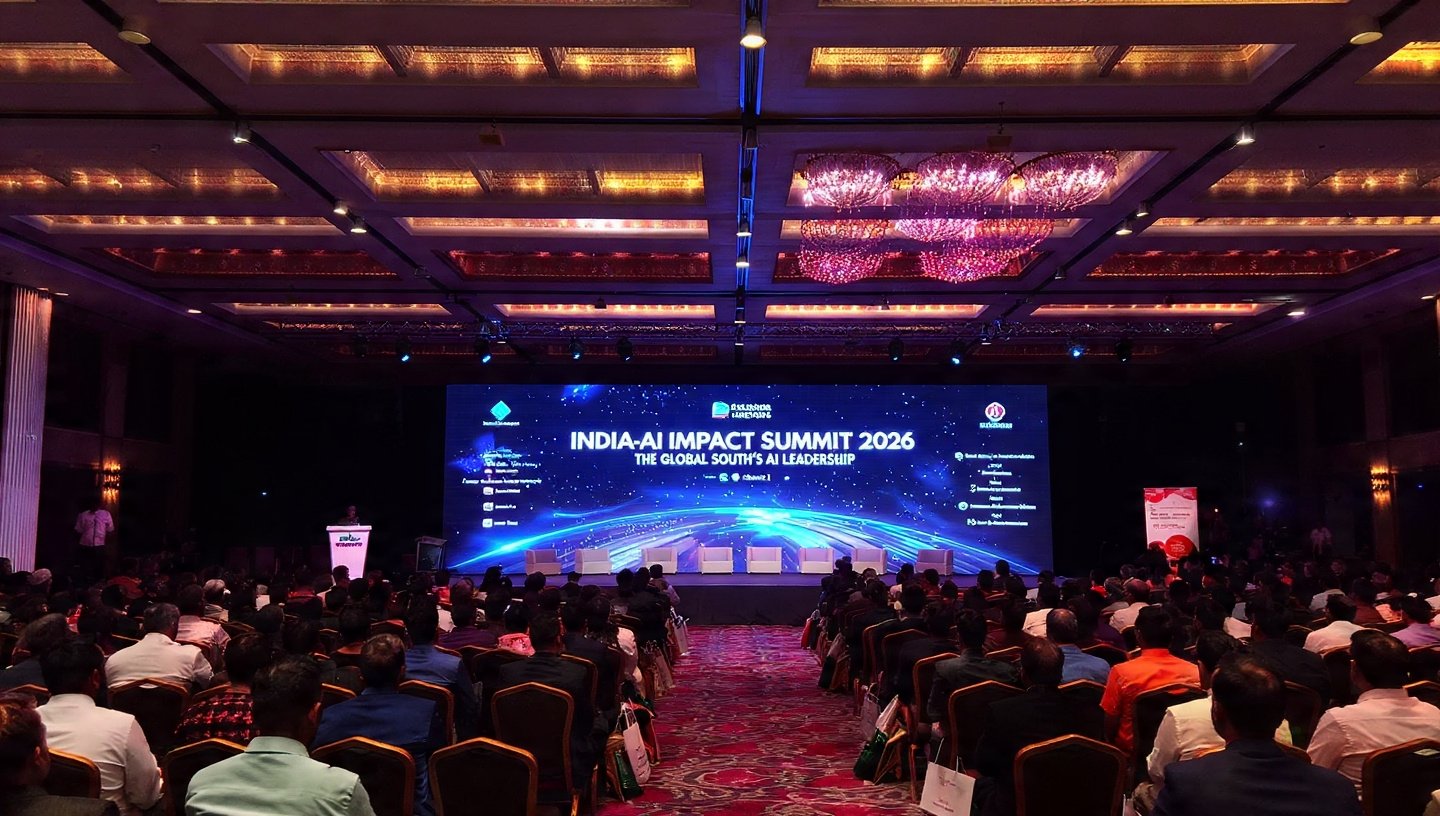
India-AI Impact Summit 2026: The Global South’s AI Leadership


Inclusive AI and Global Governance Framework
The India-AI Impact Summit 2026, scheduled for February 19–20 in New Delhi, represents a historic turning point—the first time a Global South nation hosts a major AI summit. This artificial intelligence conference fundamentally shifts the global conversation around AI development and governance, moving beyond Western-centric perspectives to emphasize inclusive, sustainable, and people-centric AI innovation. Organized by India’s Ministry of Electronics and Information Technology (MeitY), the summit embraces three guiding principles: People, Planet, and Progress.
These principles underscore a commitment to ensuring artificial intelligence serves humanity in all its diversity, respects environmental stewardship, and drives equitable prosperity across the Global South. The summit introduces India’s AI Summit Governance Guidelines, establishing frameworks for responsible AI Summit innovation that balance technological advancement with societal protection. This governance initiative addresses critical gaps in current international AI regulations, particularly for emerging markets where machine learning adoption is accelerating rapidly. The AI conference signals a strategic shift in how emerging economies approach artificial intelligence ethics, data privacy, and human-centric AI design that prioritizes inclusion over exclusion.
Indigenous AI Projects and Local Innovation
A cornerstone of the India-AI Impact Summit 2026 is the showcase of eight pioneering indigenous AI Summit projects selected from over 500 proposals. These projects span critical domains including multilingual natural language processing, healthcare diagnostics, agricultural optimization, governance systems, and scientific research. Flagship initiatives like Avatar AI, Bharat Gen, and Intellihealth demonstrate how artificial intelligence solutions are being tailored to address region-specific challenges and leverage India’s unique cultural and linguistic diversity. The AI Pitch Fest (UDAAN) initiative showcases promising Tier 2 and Tier 3 AI startups, democratizing access to global audiences and investment opportunities for entrepreneurs outside major tech hubs.
The Global Innovation Challenge encourages developing AI applications that solve public sector problems with scalable impact. Additionally, the YuvaAI Challenge engages youth innovators, ages 13–21, to bring breakthrough AI ideas addressing real-world problems to the platform. This emphasis on localized AI innovation reflects how machine learning technology is being adapted to serve diverse populations, languages, and economic contexts that the legacy Western AI Summit often overlooks. The summit demonstrates that transformative AI development thrives when researchers, entrepreneurs, and policymakers collaborate across geographic and economic boundaries to solve urgent global challenges.
Workforce Development and AI Literacy Programs
The India-AI Impact Summit 2026 highlights comprehensive workforce development initiatives, including 30 AI and Data Labs established across Tier 2 and 3 cities in partnership with NIELIT and Intel. These labs provide foundational training in data annotation, curation, and AI technology basics, enabling learners to participate meaningfully in the emerging AI economy. The IndiaAI Fellowship Program has expanded to support 13,500 scholars across undergraduate, postgraduate, and PhD research levels, creating a robust pipeline of AI talent for emerging markets.
This workforce development approach recognizes that sustainable AI innovation requires not only cutting-edge research facilities but also broad-based digital literacy and AI skills development across diverse educational backgrounds and socioeconomic levels. By investing in human capital, India’s AI conference demonstrates a commitment to ensuring that artificial intelligence benefits extend beyond elite research centers to empower millions of individuals contributing to the AI revolution. This model offers valuable lessons for other nations seeking to build indigenous AI capabilities while creating equitable pathways for professionals to develop expertise in machine learning, data science, and AI applications.
NVIDIA GTC 2026: Enterprise-Grade AI Implementation
Machine Learning Operations and MLOps Excellence
Modern enterprise AI success depends fundamentally on establishing robust machine learning operations frameworks. NVIDIA GTC 2026 sessions will address the critical challenge of operationalizing AI systems across complex organizational ecosystems. MLOps best practices cover model training, validation, deployment, monitoring, and continuous improvement—transforming machine learning from experimental initiatives into reliable, production-grade systems.
Enterprise leaders will learn how to implement AI infrastructure that supports rapid experimentation while maintaining governance standards, security protocols, and compliance requirements. The conference will showcase real-world AI deployment case studies demonstrating how organizations overcome challenges in model versioning, data pipeline management, and performance optimization.
These machine learning operational frameworks enable companies to reduce time-to-value for AI projects, minimize technical debt, and scale artificial intelligence solutions across multiple business units. MLOps represents a critical competitive advantage as organizations race to monetize their AI investments and realize measurable business outcomes from machine learning implementations.
Generative AI Applications and Large Language Models
Generative AI continues dominating the AI conference agenda throughout 2026, with NVIDIA GTC dedicating extensive programming to large language models (LLMs), foundation models, and practical implementations of generative AI across industry verticals. Speakers will discuss how organizations are leveraging retrieval-augmented generation (RAG) to ground AI models in proprietary data, enabling natural language processing systems that provide accurate, contextually relevant responses.
Generative AI applications span content creation, code generation, customer service automation, and knowledge work augmentation—creating unprecedented productivity gains alongside important ethical and workforce considerations. The AI conference will examine how AI technology is transforming creative industries, professional services, and technical fields through generative capabilities that augment human expertise rather than entirely replacing human workers.
The capabilities and limitations of AI-powered systems are essential for enterprise leaders seeking to harness generative intelligence responsibly while maintaining human oversight and accountability. These sessions emphasize that sustainable AI adoption requires balancing technological capabilities with organizational readiness, ethical governance, and workforce transition strategies.
Global AI Governance and Safety Summit 2026
International AI Regulation and Standards Development
The AI governance summit in Geneva, held alongside the AI for Good Global Summit, brings together global stakeholders to address critical questions around AI safety, ethical artificial intelligence deployment, and international regulatory harmonization. Hosted by the UN Secretary-General with International Telecommunication Union (ITU) support, this inaugural Global Dialogue on AI Governance establishes frameworks for coordinated international approaches to AI regulation.
The AI conference emphasizes developing common standards that facilitate innovation while protecting vulnerable populations from potential AI Summit harms. Key governance topics include algorithmic transparency, bias detection and mitigation, data privacy protections, and accountability mechanisms for AI systems making high-stakes decisions in healthcare, criminal justice, and financial services. This AI summit recognizes that effective artificial intelligence governance requires collaboration across governments, private sector innovators, civil society organizations, and affected communities.
The emphasis on inclusive dialogue reflects that AI Summit impacts extend far beyond technology professionals to encompass entire populations whose lives are shaped by algorithmic decision-making systems. Policymakers attending the governance summit will gain insights into emerging best practices for regulating AI technology while fostering continued innovation and economic competitiveness across diverse regulatory jurisdictions.
AI Safety and Responsible AI Development
The AI safety summit agenda addresses growing concerns around AI security, adversarial robustness, and unintended consequences of deploying large-scale AI systems in critical infrastructure. Researchers and practitioners will present findings on emerging threats to AI security, including prompt injection attacks, model poisoning, and adversarial examples that can mislead machine learning models. The AI conference emphasizes the importance of embedding safety mechanisms throughout the AI development lifecycle—from initial model design through deployment, monitoring, and decommissioning.
This focus on AI safety reflects a maturing that responsible artificial intelligence deployment requires technical rigor, ethical deliberation, and ongoing vigilance. Organizations will learn practical approaches to implementing responsible AI frameworks, establishing ethics review boards, conducting fairness audits, and maintaining transparency about AI system capabilities and limitations. The safety summit demonstrates consensus among global leaders that sustainable AI innovation depends on proactively addressing potential harms, maintaining human agency and oversight, and ensuring that AI technology development aligns with democratic values and human rights principles.
Key Announcements from Major AI Conferences 2026
Infrastructure Investment and AI Ecosystem Development
Multiple AI conferences in 2026 highlight record-breaking investments in AI infrastructure and ecosystem development. The European Commission’s InvestAI fund commits €200 billion to large-scale AI infrastructure projects, with €20 billion allocated specifically for AI gigafactories. This massive capital commitment demonstrates governmental recognition that AI technology leadership requires strategic investments in computing infrastructure, talent development, and research facilities. Similarly, India’s AI labs initiative establishes 570 AI and Data Centers nationwide, democratizing access to AI computing resources across Tier 2 and 3 cities.
These infrastructure investments reflect that artificial intelligence capabilities increasingly depend on access to computing power and training data—resources that must be distributed more equitably to avoid concentrating AI power among wealthy nations and elite institutions. The AI conference announcements signal a critical evolution: from framing AI development as a software problem addressable by any startup with a good idea, to recognizing artificial intelligence as requiring substantial physical infrastructure, capital investment, and strategic national planning.
Child Safety and Responsible AI Governance
The ROOST initiative, launched at the AI Action Summit and carrying forward into 2026 discussions, represents a significant commitment by major technology companies to responsible AI governance. This nonprofit organization provides open-source safety tools for detecting, reviewing, and reporting child sexual abuse material (CSAM)—demonstrating how artificial intelligence can be mobilized to protect vulnerable populations. Supported by AI leaders including Google, OpenAI, and Roblox, ROOST exemplifies how the AI community can collaborate on addressing urgent societal challenges through AI technology.
The AI conference’s emphasis on child safety reflects broader recognition that responsible AI development must address not only algorithmic bias and model accuracy but also the concrete harms that AI systems can facilitate or exacerbate. This focus on AI governance for child protection establishes an important precedent for proactive industry collaboration on implementing safety mechanisms and responsible AI practices.
Acceleration vs. Deliberation: The AI Industry’s Shifting Philosophy
A critical theme emerging from AI conferences in 2026 is the industry’s deliberate choice to prioritize acceleration and innovation over extended deliberation about potential AI risks. Major technology leaders argue that the greatest risk to artificial intelligence adoption is hesitation—that excessive caution might cede AI leadership to less scrupulous competitors or nation-states with fewer ethical constraints. This philosophical stance represents a significant departure from previous AI summits emphasizing precaution, safety, and staged rollout of AI technology.
The AI conference’s emphasis on acceleration reflects genuine disagreement within the AI community about optimal paths forward: whether faster AI adoption creates more value and opportunity than potential risks, or whether rushing ahead without adequate safeguards and thoughtful AI governance invites foreseeable harms. This tension between innovation velocity and responsible deployment will likely define AI development throughout 2026 and beyond, with implications for regulatory policy, investment strategies, and organizational AI adoption roadmaps.
Sector-Specific AI Applications and Breakthroughs

AI in Healthcare and Scientific Research
The AI conference landscape showcases remarkable breakthroughs in healthcare applications of artificial intelligence. Intellihealth, one of India’s flagship AI projects, demonstrates how machine learning models can improve diagnostic accuracy, reduce healthcare costs, and extend quality care to underserved populations. AI technology is revolutionizing medical imaging analysis, drug discovery, genomic research, and personalized treatment planning.
The generative AI capabilities are enabling researchers to analyze vast scientific datasets, identify patterns invisible to human analysts, and accelerate hypothesis generation and testing. AI conferences highlight how artificial intelligence is fundamentally reshaping scientific methodology—from laboratory research to clinical practice to public health policy—creating opportunities for breakthrough discoveries and more equitable healthcare access globally.
AI in Finance and Enterprise Operations
Artificial intelligence is transforming financial services, risk management, and enterprise operations at scale. The AI conference agenda covers machine learning applications in fraud detection, algorithmic trading, credit assessment, and personalized financial services. Organizations are deploying AI systems to analyze vast datasets, identify emerging risks, forecast market trends, and optimize investment strategies with speed and sophistication previously impossible.
Enterprise leaders attending AI conferences learn practical approaches to implementing AI in operational domains, including supply chain optimization, workforce management, customer experience personalization, and strategic decision-making. The convergence of AI technology with enterprise systems is creating competitive advantages for organizations that successfully navigate AI adoption, governance, and integration challenges.
AI in Agriculture and Environmental Sustainability
India’s AI Impact Summit emphasizes AI applications for agricultural optimization and environmental sustainability—critical domains where artificial intelligence can address global challenges affecting billions of people. Machine learning models trained on agricultural data help optimize crop yields, reduce resource consumption, predict climate impacts, and enhance food security in emerging markets.
The AI conference agenda reflects growing recognition that transformative artificial intelligence applications extend beyond consumer tech and financial services to encompass planetary challenges, including climate change, biodiversity loss, and sustainable development. This emphasis on AI for good demonstrates how technology innovation can be deliberately aligned with urgent societal needs when AI development is guided by inclusive governance frameworks and commitment to equitable global prosperity.
Future Outlook: AI Summit 2026 and Beyond
The AI Summit 2026 landscape presents a complex picture of simultaneous technological advancement, governance experimentation, and genuine uncertainty about optimal paths forward. The AI conferences demonstrate that artificial intelligence has transitioned from emerging technology to fundamental infrastructure, reshaping every industry and society. Organizations must prepare for a future where AI adoption is not optional but essential for remaining competitive.
The key takeaways from AI events in 2026 emphasize several critical imperatives: invest in AI infrastructure and talent development; establish robust governance frameworks balancing innovation with responsible deployment; address urgent questions about AI safety, fairness, and accountability; and ensure that benefits from AI technology extend equitably across geographies and demographic groups. Success in this environment requires technical sophistication, ethical seriousness, strategic foresight, and commitment to collaborative problem-solving across organizational, sectoral, and international boundaries.
More Read: Academic AI Conferences vs Industry Events: Which to Choose
Conclusion
The AI Summit 2026 represents a defining moment for artificial intelligence technology, governance, and global collaboration. From NVIDIA’s hardware innovations driving AI infrastructure forward to India’s pioneering AI Impact Summit demonstrating Global South leadership, the AI conferences of 2026 showcase how machine learning and generative AI are becoming central to addressing challenges and unlocking opportunities across every sector and geographic region.
The key announcements highlight record investments in AI technology, ambitious AI projects, frameworks for responsible AI governance, and a growing consensus that artificial intelligence success requires balancing rapid innovation with ethical safeguards, inclusive governance structures, and equitable benefit distribution. As organizations navigate the AI conference insights and prepare for accelerating AI adoption, the critical imperative is ensuring that artificial intelligence development remains aligned with democratic values, human rights, environmental sustainability, and the genuine flourishing of diverse communities worldwide.
The AI events of 2026 establish important precedents and frameworks that will guide AI innovation and governance for years to come, making them essential reference points for leaders, researchers, and innovators committed to shaping a future where AI technology serves humanity broadly rather than concentrating power and prosperity among isolated elites.