What Is Spatial Computing and Should You Care?
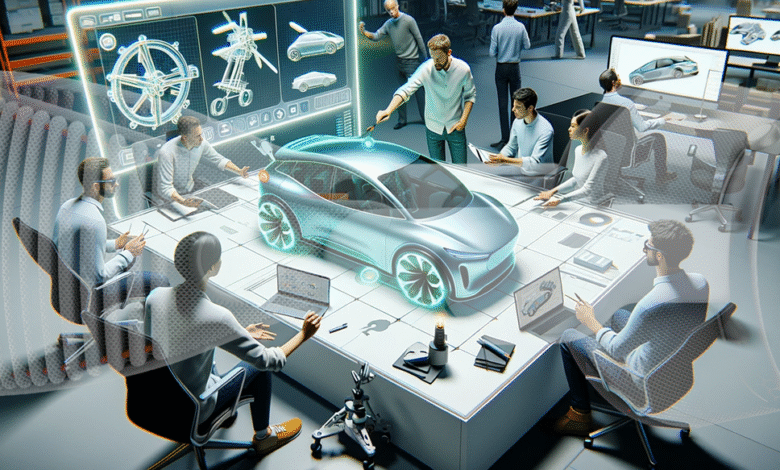
Spatial computing represents a fundamental paradigm shift in how humans interact with technology, moving beyond traditional two-dimensional screens toward immersive, three-dimensional environments that seamlessly blend digital and physical realities. This revolutionary technology category encompasses augmented reality (AR), virtual reality (VR), and mixed reality (MR) platforms that enable intuitive, gesture-based interactions within computational environments mirroring our natural spatial.
Unlike conventional computing interfaces requiring keyboards and mice, technology allows users to manipulate digital objects, navigate environments, and communicate through natural body movements, eye tracking, and voice commands, fundamentally transforming user experience across consumer and enterprise applications.
The significance of spatial computing extends far beyond entertainment gaming or personal entertainment applications. Market research indicates that the global spatial computing market is projected to grow from $8.57 billion in 2024 to $25 billion by 2035, representing a compound annual growth rate of approximately 10.31%, with some analysts projecting even more aggressive expansion rates exceeding 22% annually.
This explosive growth trajectory reflects rapidly accelerating adoption across manufacturing, healthcare, education, retail, and enterprise sectors seeking operational optimization through immersive digital environments. Major technology corporations, including Apple Vision Pro, Meta Quest, Microsoft HoloLens, and Google, are making substantial capital investments, signaling their conviction that spatial computing represents the next dominant computing platform following the era of smartphones and personal computers.
Whspatial computing is gaining, and its transformative potential has become essential for professionals, entrepreneurs, educators, and technology enthusiasts, anticipating significant workplace and consumer technology disruption.
What Exactly Is Spatial Computing?
Spatial computing fundamentally represents the virtualization of activities and interactions between machines, people, objects, and their surrounding environments to enable and optimize actions and interactions. At its core, the spatial computing definition describes computer systems retaining and manipulating referents to real objects and spaces, allowing machines to understand three-dimensional spatial relationships with remarkable precision and responsiveness. Unlike traditional computing that constrains interaction to flat digital screens positioned as external interfaces, spatial computing systems invert this relationship by teaching computers to understand and interact naturally within human physical environments through sophisticated sensor integration and artificial intelligence.
Technology achieves this breakthrough integration through comprehensive data gathering techniques utilizing advanced sensor systems, including lidar (light detection and ranging), radar, photogrammetry, depth cameras, and RGB cameras that capture comprehensive three-dimensional models of surrounding environments.
These spatial mapping methodologies automatically generate point clouds—three-dimensional data representing environmental geometry, object positions, and spatial relationships that enable computational systems to maintain accurate environmental information. When combined with computer vision, machine learning algorithms, and artificial intelligence, these technologies enable computers to perceive, interpret, and respond intelligently to dynamic physical environments in real-time, creating genuinely interactive experiences where digital content and physical reality coexist seamlessly.
Core Technologies Behind Spatial Computing

Augmented Reality (AR) and Digital Content Integration
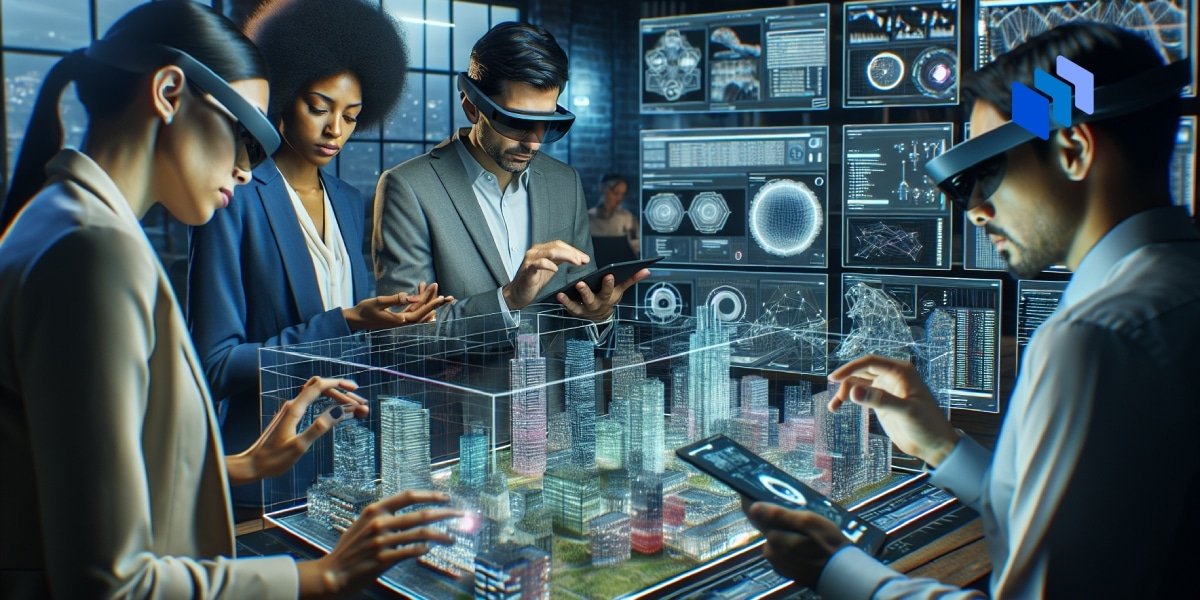
Augmented reality represents one foundational pillar of spatial computing, enabling digital overlays atop real-world environments while maintaining visibility and interaction with physical surroundings. AR technology overlays contextual information, instructional data, visual guidance, and interactive elements directly onto users’ views of reality, enriching environmental perception without eliminating awareness of physical spaces. In practical applications, augmented reality glasses worn by manufacturing technicians display digitally rendered assembly instructions precisely superimposed upon actual machinery, enabling complex tasks while eliminating cognitive load associated with manual reference documentation.
The augmented reality market segment within reached $3.42 billion in 2024 and is anticipated to grow substantially to $10.25 billion by 2035, reflecting growing commercial adoption across retail, education, training, and enterprise sectors. AR spatial computing applications enhance employee productivity, reduce error rates in complex assembly operations, and accelerate onboarding timelines by providing just-in-time information delivery contextualized to specific workplace environments and tasks.
Virtual Reality (VR) and Immersive Environments
Virtual reality creates fully immersive digital environments that completely replace physical world perception, transporting users into entirely synthetic three-dimensional spaces where all sensory inputs derive from computational systems. VR technology enables the creation of training simulations approximating dangerous or complex real-world scenarios, including surgical procedures, flight operations, hazardous material handling, and emergency response situations in completely safe, repeatable, and economically efficient formats. Virtual reality applications within spatial computing frameworks valued at $2.14 billion in 2024 are projected to expand to $6.49 billion by 2035, driven primarily by gaming entertainment, professional training, and therapeutic applications.
Mixed Reality (MR) and Seamless Blending
Mixed reality represents the most sophisticated spatial technology iteration, enabling genuine interaction between digital and physical elements within unified computational environments. Mixed reality platforms allow digital objects and environments to respond to physical world constraints, enabling users to interact simultaneously with both physical and digital artifacts as though they constitute a single coherent reality. MR applications in manufacturing environments enable workers to manipulate digital product models while observing physical workplace components, facilitating collaborative problem-solving where virtual content responds authentically to physical interaction patterns.
Why Should You Care About Spatial Computing?
Transformative Impact on Work and Enterprise Operations
The enterprise adoption of spatial computing solutions is accelerating dramatically as organizations recognize substantial operational optimization opportunities. Spatial computing applications in manufacturing enable real-time monitoring of production processes, automating quality control inspections, optimizing warehouse operations through coordinated human-robot collaboration, and facilitating complex spatial analyses that transform operational efficiency. Industrial spatial computing implementations in aerospace, automotive, pharmaceutical, and advanced manufacturing sectors are demonstrating tangible productivity gains, error reduction, and accelerated timelines that directly impact organizational profitability.
Microsoft’s $22 billion defense department contract to provide augmented reality headsets to American soldiers exemplifies strategic importance in military, intelligence, and security contexts. These AR technologies enhance situational awareness, facilitate information sharing during complex operations, and assist decision-making under demanding conditions, demonstrating that spatial computing adoption has transcended consumer entertainment to achieve critical infrastructure status within government and defense establishments.
Healthcare Transformation and Medical Innovation
Healthcare represents a particularly transformative application domain for technology. Surgeons utilizing spatial computing platforms can visualize detailed anatomical models, access patient-specific data overlaid on surgical fields in real-time, practice complex procedures through immersive simulation before attempting patient interventions, and collaborate remotely with specialists during critical procedures. Sharp HealthCare established a Spatial Computing Center of Excellence, explicitly focusing on leveraging Apple Vision Pro and augmented reality technologies to enhance patient care delivery, demonstrating serious healthcare system investment in spatial computing solutions.
Medical training accelerates substantially through virtual realitysimulationsons enabling residents and students to practice procedures repeatedly without patient risk or cadaveric material constraints. Spatial computing technologies create anatomically accurate, physiologically responsive simulation environments where learners develop proficiency through authentic practice before clinical deployment, fundamentally improving medical education quality and patient safety outcomes.
Educational Transformation and Immersive Learning
Educational applications of spatial computing enable students to explore molecular structures at atomic scales, interact with historical environments through immersive digital experiences, conduct dangerous chemistry experiments safely through virtual reality simulation, and collaborate globally through shared mixed reality environments. Spatial computing in education transforms passive information consumption into active experiential learning where students manipulate objects, observe phenomena directly, and develop genuine conceptual through authentic interaction rather than observing instructors demonstrate principles on traditional classroom displays.
Consumer Entertainment and Metaverse Development
Gaming and entertainment applications represent substantial spatial computing adoption drivers, with VR gaming providing interactive entertainment experiences impossible within traditional screen-based interfaces. The metaverse concept leverages spatial computing technologies to create persistent virtual worlds where geographically distributed users interact, collaborate, and conduct commerce through embodied avatars, representing a fundamental reimagining of social digital experiences and virtual community participation.
Real-World Applications and Use Cases
Manufacturing and Industrial Operations
Spatial computing transforms manufacturing through autonomous equipment monitoring, precision-guided inspection processes, real-time work instruction delivery, and immersive worker training. Automated warehouse operations combine spatial awareness of robotic equipment with human worker positioning to optimize product location, reducing fulfillment times while improving ergonomic conditions and workplace safety.
Retail and Customer Experience Enhancement
Retailers deploy AR spatiocomputing, enabling customers to visualize furniture within personal home environments before purchasing decisions, reducing return rates while enhancing purchase confidence and satisfaction. Spatial retail applications create interactive product experiences, facilitate virtual showroom tours, and enable personalized recommendations contextualized to specific customer environments and preferences.
Remote Collaboration and Distributed Teams
Spatial computing platforms enable distributed team members to collaborate within shared virtual environments, manipulating objects together and conducting meetings within immersive contexts that simulate physical co-location. Remote spatial computing collaboration reduces travel requirements while enabling richer communication and problem-solving interactions compared to traditional video conferencing.
Architecture and Construction
Architects and construction professionals utilize spatial computing to visualize building designs at full scale within actual site environments, identifying spatial conflicts, optimizing layouts, and facilitating stakeholder communication through immersive walkthroughs before construction commences. Digital twins of buildings enable simulation of environmental conditions, equipment performance, and occupant behaviors throughout operational lifecycles.
Key Technologies Enabling Spatial Computing Advancement
5G Connectivity and Low-Latency Communication
5G technology adoption has achieved approximately 2 billion global connections as of 2024, providing the high-bandwidth, low-latency communication infrastructure essential for seamless spatial computing experiences. 5G networks enable cloud rendering of complex three-dimensional environments, streaming of high-fidelity visual content, and real-time responsiveness necessary for immersive interactions without motion-induced discomfort or interaction delays disrupting user presence within virtual environments.
Artificial Intelligence and Machine Learning Integration
Artificial intelligence dramatically enhances spatial computing capability through sophisticated environmental, object recognition, predictive analytics, and adaptive system behavior. Machine learning algorithms analyze sensor data to construct accurate environmental models, identify objects and individuals with remarkable precision, anticipate user intentions, and optimize system responses. AI-powered spatial computing applications increasingly manifest autonomous behavior, adaptive learning, and contextual learning to create remarkably natural interactions resembling collaboration with intelligent physical agents.
Computer Vision and 3D Mapping
Computer vision technology enables machines to interpret visual information at human-cognitive levels, recognizing objects, spatial relationships, tracking movement, and extracting meaningful information from visual data streams. 3D mapping and modeling transform raw visual data into structured computational representations, enabling subsequent analysis, spatial reasoning, and environment manipulation.
Edge Computing and Cloud Infrastructure
Edge computing distributes computational processing toward data source locations, minimizing latency while enabling sophisticated analysis locally on spatial computing devices. Cloud computing handles intensive rendering operations, large-scale data processing, and machine learning model inference, streaming results back to VR headsets and AR glasses at a rate that maintains immersive interactivity without computational power limitations constraining local device hardware capabilities.
Current Market Landscape and Key Players
The spatial computing market demonstrates substantial consolidation around technology giants, including Apple (Vision Pro), Meta (Quest series), Microsoft (HoloLens), and Google (Android XR), supplemented by special competitors, including Magic Leap, Varjo, XREAL, and HTC Vive. Apple’s Vision Pro particularly accelerated mainstream consumer recognition despite premium $3,500 pricing, establishing spatial computing as a legitimate computing category alongside smartphones and personal computers.
The spatial computing hardware segment captured 64.12% of market share in 2024, reflecting expensive head-mounted displays and optical components, though services are expanding rapidly at 44.02% CAGR through 2030 as enterprises demand integration support, cloud rendering, and managed device fleets. Spatial computing platform vendors now embed AI perception engines, while telecommunications operators invest in edge computing infrastructure, reducing motion-to-photon latency below critical 20-millisecond thresholds essential for immersive experience quality.
Challenges and Barriers to Widespread Adoption
Hardware Costs and Device Accessibility
Current spatial computing device prices ranging from $1,500 to $3,500 create substantial barriers to consumer adoption, though competitive pressures and production scaling are driving costs downward. Spatial computing headset development timelines suggest mainstream consumer affordability within three to five years, though enterprise adoption has already commenced and given substantial return-on-investment justifications.
Technical Complexity and Developer Skill Requirements
Building sophisticated spatial computing applications requires substantial technical expertise spanning 3D graphics programming, sensor calibration, computer vision, physics simulation, and user experience design for genuinely immersive interactions. Spatial computing development tools, engines, and frameworks continue maturing, gradually reducing expertise barriers, enabling broader developer participation.
Privacy and Data Security Concerns
Spatial computing systems continuously collect extensive environmental data, biometric information (eye tracking, hand movements), and spatial context, creating legitimate privacy and surveillance concerns. Data protection regulations and privacy frameworks remain evolving, generating uncertainty regarding appropriate data handling practices, user consent requirements, and organizational liability for inappropriate data utilization.
The Future of Spatial Computing
Convergence with Artificial Intelligence and Autonomous Systems
AI integration will dramatically accelerate as spatial computing systems become increasingly capable of autonomous environmental, predictive behaviors, and adaptive interactions. Intelligent spatial computing applications will develop contextual awareness, enabling proactive assistance, anticipatory interfaces, and collaborative human-machine problem-solving, approaching seamless integration.
Mainstream Consumer Adoption and Metaverse Development
Spatial computing devices will achieve consumer ubiquity similar to smartphone penetration as prices decline and killer applications emerge beyond gaming. Metaverse development will accelerate, creating persistent virtual worlds where billions conduct commerce, collaborate, socialize, and recreate traditional physical-world activities through immersive digital environments.
Enterprise Digitalization and Digital Twin Ecosystems
Digital twins powered by spatial computing will become standard optimization tools across manufacturing, healthcare, infrastructure management, and complex organizational systems. Industrial metaverse platforms will enable unprecedented operational visibility, cross-organizational collaboration, and scenario simulation capabilities, fundamentally transforming how enterprises understand, optimize, and manage complex systems.
Regulatory Maturation and Responsible Innovation
Governments will establish clearer regulatory frameworks addressing privacy, data ownership, cybersecurity, workplace safety, and responsible AI integration within spatial computing systems. Regulatory clarity will accelerate enterprise adoption while establishing guardrails protecting users from surveillance, manipulation, and harm.
Should You Actually Care? Final Considerations
Spatial computing represents genuinely transformative technology likely to rival smartphone impact across multiple decades, making awareness and basic knowledge increasingly essential for professionals, educators, and engaged citizens. If you work in healthcare, manufacturing, design, education, or enterprise technology, spatial computing applications and their transformative potential have become strategically important for career planning and organizational strategy development.
Even if not currently working directly with spatial computing technology, awareness of the market trajectory, key applications, and transformative implications enables informed consumer decisions regarding future technology investments while positioning you to recognize emerging opportunities within your professional domain. Spatial computing adoption will accelerate substantially over the next 3-5 years, making foundational knowledge increasingly valuable for navigating the evolving technology landscape.
More Read: Best Robotics Kits for Learning and Hobby Projects
Conclusion
Spatial computing represents far more than exciting entertainment gadgetry or futuristic speculation—it constitutes a legitimate emerging computing platform projected to grow from $8.57 billion in 2024 to $25 billion by 2035, with some analyses suggesting substantially larger market expansions as spatial computing adoption accelerates across enterprise, healthcare, manufacturing, education, and consumer segments. The convergence of augmented reality, virtual reality, mixed reality, artificial intelligence, 5G connectivity, and edge computing technologies creates unprecedented opportunities for reimagining human-computer interactions, workforce productivity, medical innovation, educational delivery, and entertainment experiences.
Whether through Apple Vision Pro, Meta Quest, or specialized enterprise solutions, spatial computing technology is transitioning from conceptual research to mainstream commercial deployment, making foundational knowledge essential for professionals anticipating career advancement, entrepreneurs seeking innovation opportunities, educators preparing students for emerging technology careers, and consumers making informed decisions about future technology investments.
Your engagement with spatial computing may range from casual exploration through entertainment applications to serious professional involvement developing solutions or implementing platforms—regardless of engagement level, the fundamental importance of spatial computing within the emerging technology landscape suggests that asking “should you care?” represents less an open question and more a strategic imperative for navigating the rapidly evolving digital future with confidence and purpose.