How Much Does Cloud Storage Actually Cost?
Discover how much cloud storage costs across AWS, Azure, and Google Cloud. Compare pricing, hidden fees, and factors affecting your cloud bill.

Cloud storage pricing has become increasingly essential for both individual users and enterprises navigating digital infrastructure decisions. The reality is that cloud storage cost is far more complex than simply looking at per-gigabyte rates displayed on provider websites. While browsing popular cloud storage services, you’ll notice that Google Drive offers 15 GB free, Amazon S3 provides competitive tiered pricing, and Microsoft Azure presents region-specific rates—but these surface-level figures mask the true financial picture. Cloud storage costs vary dramatically based on numerous interconnected factors, including capacity, data access frequency, geographic location, bandwidth consumption, and operational requirements.
For organisations storing terabytes of data across multiple regions with frequent retrieval demands, monthly bills can easily exceed thousands of dollars, even while using providers with seemingly affordable base rates. This comprehensive guide dissects the complete cloud storage pricing landscape, revealing hidden costs, comparing major providers, and providing strategies to optimise your cloud storage expenses regardless of scale or use case. By how different pricing models work and identifying cost reduction opportunities, you can avoid budget surprises while ensuring your chosen solution aligns with your actual data needs and access patterns.
Cloud Storage Pricing Models
- Cloud storage pricing operates through several fundamentally different models, each designed to accommodate distinct business requirements and usage patterns. The most prevalent approach is pay-as-you-go pricing, where you’re billed monthly based on actual consumption metrics. This model appeals to organisations with unpredictable data volumes or seasonal usage fluctuations because you avoid commitment penalties while scaling flexibly. With pay-as-you-go arrangements, your bill fluctuates monthly alongside your storage utilisation, data transfer activities, and operational requests.
- Committed use discounts (CUDs) represent the alternative for organisations with stable, predictable storage requirements. By committing to minimum storage volumes for one, three, or five-year terms, companies receive substantial discounts—often 20-40% off standard rates. Commitment-based pricing works excellently when you accurately forecast your needs, but it becomes problematic if your data volumes decrease mid-contract.
- Subscription models operate differently, particularly for personal and small business cloud storage services like Google One, OneDrive, and Dropbox. These subscription-based pricing structures charge fixed monthly or annual fees regardless of actual usage, making budgeting predictable but potentially wasteful if you use minimal. Lifetime plans, offered by providers like pCloud and IceDrive, involve substantial upfront payments that deliver lifetime access without ongoing fees—valuable for users planning decades of continuous service.
- Tiered pricing, common in enterprise solutions, provides progressively lower per-unit costs as volume increases. Your first terabyte might cost $25/month, the next five terabytes might cost $20/month each, and beyond that might cost further to $15/month per terabyte. This structure incentivises consolidation with single providers.
Storage Capacity and Per-Gigabyte Costs
- Storage capacity represents the foundation of cloud pricing calculations, though per-gigabyte costs vary substantially among providers. Gigabyte pricing requires careful attention to how providers structure their tiers. Google Cloud charges approximately $0.020 per gigabyte monthly for standard in US regions, making 1 terabyte cost roughly $20 monthly. However, organisations storing petabytes benefit from tiered discounts. Amazon S3 pricing in the US East region charges $0.023 per gigabyte for the first 50 TB monthly, then decreases to $0.022 per gigabyte for between 50-500 TB.
- Affordable cloud storage for personal users presents dramatically different economics. Google One’s 100 GB plan costs $1.99 monthly ($19.99 annually), equating to approximately $0.20 per gigabyte annually. Sync.com offers 2 TB annual plans for $57.60, or $0.024 per terabyte monthly. These consumer cloud storage solutions benefit from economies of scale that enterprise providers struggle to match.
- Storage pricing differences between providers can exceed 50% for identical data volumes. IDrive’s Mini plan offers 100 GB for just $2.95 annually, while Microsoft OneDrive’s 100 GB subscription costs $19.99 yearly. For larger capacity, IceDrive’s 1 TB annual plan costs $59, versus Dropbox’s Standard plan at $120 annually for equivalent storage. These variations make price comparisons essential before commitment.
- Regional pricing variations complicate international deployments. AWS charges more for in the Asia Pacific regions than US regions. Azure charges different rates for data replication between geographic zones. These geographic cost factors mean organisations with global data distribution face substantially higher bills than those consolidating in single regions.
Data Transfer and Egress Bandwidth Costs
- Egress fees, representing charges for moving data out of cloud networks, constitute one of the most overlooked cost categories, causing budget surprises. Most cloud providers charge egress fees—also known as bandwidth or data transfer fees—for taking data out of their system. AWS charges up to $0.09 per gigabyte transferred, meaning transferring just 10 terabytes externally costs $900. Google Cloud charges $0.12 per gigabyte for some transfer types, while Azure pricing varies by region and redundancy configuration.
- Data egress charges apply when retrieving stored data from providers’ networks. If you store 100 GB in cloud but never retrieve it, you avoid egress bandwidth costs entirely. However, organisations accessing data regularly face exponential cost growth. A company transferring 1 terabyte monthly experiences $90-120 in egress costs alone, potentially doubling their total expenses.
- Cross-region data transfer incurs additional fees when replicating data between geographic locations for redundancy or disaster recovery. The geo-replication data transfer charge is for bandwidth used to replicate data to the second Azure region, with costs typically around $0.02 per gigabyte. Organisations requiring data presence in multiple continents can face substantial data replication costs.
Fortunately, some providers offer free egress options. Wasabi does not charge any fees for data transfers out (egress) or API requests. Cloudflare R2 similarly eliminates egress charges. These providers differentiate themselves through zero egress pricing, appealing to organisations anticipating heavy data retrieval patterns. Ingress fees, conversely, remain rare. Cloud providers encourage data uploads by offering free inbound transfers, making initial migration painless but eventual retrieval costly—a strategy discouraging customer switching.
Storage Classes and Access Tiers
Most enterprise providers offer multiple storage classes, charging different rates based on access frequency and retrieval speed. Storage tiers prove crucial for cost optimisation.
- Hot storage provides immediate data access with the fastest retrieval speeds, charging the highest per-gigabyte rates. This tier suits frequently accessed operational data, active databases, and working datasets. AWS Standard, Azure Hot tier, and Google Standard class exemplify this category.
- Cool storage (also called “cold storage” or “archive storage”) charges significantly lower rates but imposes penalties for frequent access and early retrieval costs. Coldline has a 90-day minimum duration, making early deletion expensive. Organisations might store 5 TB in cool for $10 monthly versus $100 monthly in hot storage, saving $90 despite retrieval restrictions.
- Infrequent access storage bridges the gap, offering moderate pricing with minimal restrictions. These tiers suit data accessed occasionally—quarterly reports, periodic backups, or historical information requiring preservation but infrequent review.
- Archive storage provides the absolute lowest rates for data rarely accessed or maintained purely for compliance. Retrieving archived data can take 12-48 hours and incur substantial retrieval fees, but costs may drop to $0.004 per gigabyte or less. This tier works for long-term backups and regulatory records.
Optimising through storage tier selection can reduce annual costs by 30-70%. Moving frequently accessed data to appropriate tiers while demoting inactive data to cheaper classes creates significant savings without compromising functionality.
API Requests and Storage Operations
API request costs represent hidden expenses that many organisations underestimate. API-based actions incur minimal costs, typically per 10,000 procedures. However, organisations performing millions of operations monthly face substantial bills.
AWS S3 charges approximately $0.0004 per 1,000 PUT requests (uploads/writes) and $0.0004 per 10,000 GET requests (downloads/reads). An application performing 1 million API calls daily accumulates roughly $12 monthly in request charges—meaningful for cost-conscious operations. Complex workloads like machine learning training, continuous database backups, or real-time analytics can generate hundreds of millions of monthly requests, inflating bills unexpectedly.
Google Cloud charges $0.004 per 10,000 Class A operations and $0.008 per 10,000 Class B operations, with different classifications applying to various API calls. Azure similarly distinguishes operation types and charges accordingly.


Operation costs vary by transaction type. Write operations typically cost more than read operations. List operations and metadata queries incur separate charges. Some providers offer free API calls for certain operations or thresholds, while others charge comprehensively.
Minimising API request costs requires careful application architecture. Batching requests, implementing efficient caching strategies, and reducing unnecessary API calls prevent cost escalation. Organisations performing high-volume operations should analyse request patterns and optimise architectures accordingly.
Redundancy and Data Replication Costs
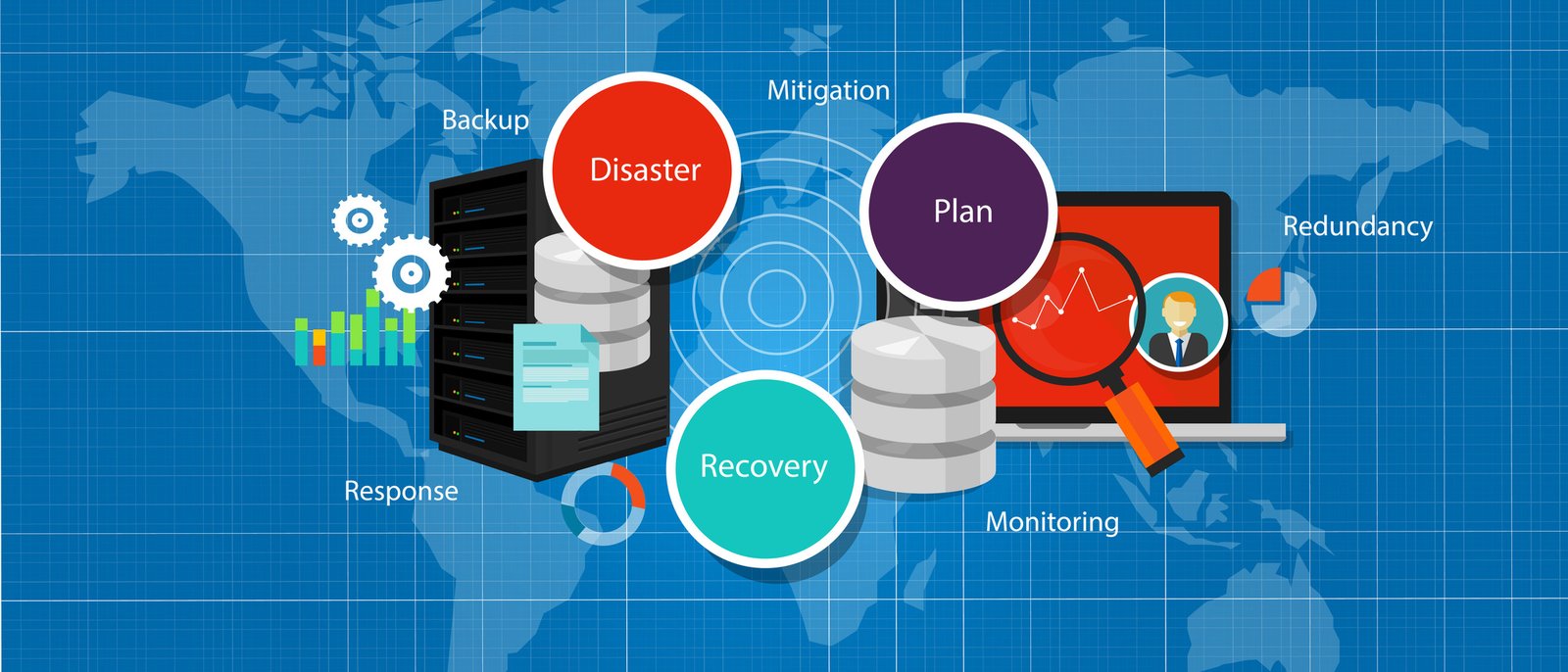
- Data redundancy, essential for disaster recovery and business continuity, dramatically increases costs. Within single geographic regions (locally redundant storage/LRS) costs the least. GZRS, or RA-GZRS, are not currently available for Premium Block Blobs, demonstrating how redundancy options vary by class.
- Geo-redundant storage (GRS) replicates data across distant geographic regions automatically, providing protection against regional outages. This redundancy increases costs substantially—sometimes 50-100% above baseline pricing—because providers must maintain and synchronise multiple data copies.
- Zone-redundant storage (ZRS) offers middle-ground economics, replicating data across availability zones within regions. This provides protection against datacenter failures while costing less than fully geo-redundant solutions.
Organisations requiring disaster recovery capabilities must budget additional costs for both redundancy and periodic failover testing. Maintaining replicated data in distant regions incurs continuous expenses plus additional costs when accessing replicated copies.
Comparing Cloud Providers: AWS, Azure, Google Cloud
- AWS S3 pricing dominates enterprise object storage discussions. Storage costs start at $0.023 per gigabyte for standard in US regions, with volume discounts reducing rates as consumption increases. Amazon S3 pricing is based on several cost factors: class (six options), storage quantity in Gigabytes per month, AWS region/location, data transfer out (egress), data retrievals and requests, management and analytics needs, data replication, as well as Lambda usage. This granular pricing provides flexibility but demands careful monitoring.
- Microsoft Azure pricing emphasises integration with enterprise software ecosystems. Azure employs a pay-as-you-go pricing model, with costs determined by storage volume, redundancy options, access tiers, and additional services such as data transfer and operations. Azure’s pricing closely competes with AWS while offering advantages for organisations with existing Microsoft licenses and software investments.
- Google Cloud Storage charges approximately $0.020 per gigabyte for standard, slightly underpricing AWS. Google offers automatic discounts for sustained use without explicit commitments—storage used consistently throughout months receives progressively higher discounts. This structure benefits organisations with predictable, continuous needs without commitment penalties.
- Backblaze B2 and Cloudflare R2 present compelling alternatives for specific use cases. Backblaze charges $0.006 per gigabyte for unlimited storage with no egress fees, dramatically underpricing major providers for retrieval-heavy workloads. Backblaze B2 is built for affordable performance, targeting price-sensitive enterprises and developers.
For personal cloud storage, offerings vary dramatically. Google One provides competitive pricing starting at $1.99 monthly for 100 GB. Dropbox Plus charges $120 annually for 2 TB. pCloud offers 2 TB annual plans with lifetime purchase options. MEGA provides 20 GB free plus competitively priced paid plans. These consumer storage options target different user needs and budget constraints.
Hidden Costs and Budget Surprises
Beyond obvious storage and transfer fees, numerous hidden cloud costs accumulate silently. Data retrieval costs surprise organisations accessing infrequently stored data unexpectedly. Retrieving 100 GB from archive storage might cost $5-15 beyond charges, often overlooked in budget planning.
- Early deletion fees apply when removing data from certain classes before the minimum duration requirements. Storing data in a 30-day minimum commitment but deleting after two weeks triggers penalties equal to the remaining commitment costs.
- API request costs accumulate significantly for applications performing millions of queries. Monitoring and management services add expenses beyond raw storage. Data replication and synchronisation incur charges. Custom authentication and access controls sometimes require additional fees.
Organisations consuming substantial cloud resources often discover unexpected cost escalation despite monitoring efforts. Most companies that use a public cloud service pay this for day-to-day transactions, such as moving data from cloud-based to on-premise, and costs can quickly spiral as your tenancy grows.
Strategies for Cost Optimisation
Controlling cloud storage expenses requires proactive management and strategic decision-making. Tiering data by access frequency provides immediate savings—move rarely accessed data to inexpensive archive storage while keeping operational data in responsive hot storage.
- Implementing lifecycle policies automatically transitions data between classes based on age and access patterns. AWS S3 Intelligent-Tiering exemplifies this approach, automatically moving objects between access tiers without manual intervention.
- Right-sizing storage capacity prevents overpayment for unnecessary space. Regularly audit utilisation, identify redundant or obsolete data, and delete unneeded content. Organisations often maintain duplicate files, outdated backups, and archived projects, consuming unnecessary.
- Choosing appropriate redundancy levels balances disaster recovery needs against costs. Not all data requires geo-redundancy. Identifying truly critical data requiring multi-region replication while using standard storage for less essential information significantly reduces expenses.
- Negotiating enterprise agreements with providers yields substantial discounts. Large organisations can leverage volume commitments for 20-50% reductions from published rates. Consulting cloud procurement specialists often uncovers negotiation opportunities.
- Leveraging free tier allowances provided by AWS, Azure, Google Cloud, and others extends free usage periods. New accounts enjoy substantial free quotas—Azure provides 5 GB free, AWS offers 5 GB free, and Google provides 5 GB free.
More Read: What Is Edge Computing and Why Does It Matter
Conclusion
Cloud storage pricing encompasses far more complexity than displayed rates suggest, involving capacity charges, egress bandwidth fees, API request costs, redundancy expenses, and numerous other factors contributing to final bills. The most cost-effective solution depends entirely on your specific usage patterns, access frequency, geographic requirements, and retrieval expectations—what costs $100 monthly for one organisation might cost $1,000 for another, despite identical capacity.
Whether selecting among AWS S3, Azure Blob Storage, Google Cloud Storage, or consumer alternatives like Google One and Dropbox, comprehending how pricing models function and identifying hidden costs enables informed decisions and prevents budget surprises. By implementing cost optimisation strategies, choosing appropriate storage tiers, managing data egress carefully, and regularly auditing usage patterns, organisations can substantially reduce cloud expenses while maintaining necessary performance, redundancy, and compliance. The key to managing cloud storage costs effectively lies in a transparent of all cost components, not merely focusing on per-gigabyte rates.