Cloud Security Best Practices Everyone Should Follow
Master essential cloud security best practices, including encryption, IAM, and compliance. Protect your data and infrastructure from cyber threats.

Cloud security best practices have become indispensable in modern business operations as organizations increasingly migrate sensitive data and applications to cloud environments. The rapid expansion of cloud computing has fundamentally transformed how businesses manage, store, and protect their digital assets. However, this digital transformation introduces new vulnerabilities that traditional on-premises security models cannot adequately address.
The stakes have never been higher. According to industry reports, the average cost of a data breach has reached $4.9 million, making robust cloud security strategies essential for organizational survival. Unlike conventional network security that relies on physical perimeters, cloud-based security operates across distributed, dynamic environments where resources can be created, modified, or deleted instantly. This dynamic nature requires security approaches that are equally flexible and comprehensive.
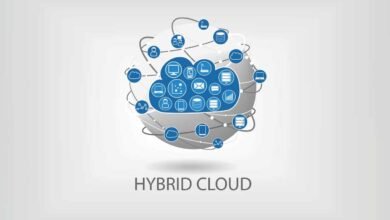
Organizations operating in hybrid and multi-cloud environments face particularly complex cloud infrastructure security challenges. The shared responsibility model forms the foundation of effective cloud data protection, dividing security duties between cloud providers and customers. While providers protect underlying hardware infrastructure, organizations must secure their data, applications, and configurations. This distinction is critical for implementing effective cloud security solutions.
Cloud computing security encompasses far more than simple encryption. It requires a holistic approach combining identity and access management (IAM), continuous monitoring, incident response planning, and stringent compliance adherence. The most successful organizations recognize that cloud security management is not a one-time implementation but an ongoing process requiring regular assessments and updates.
This comprehensive guide explores the essential cloud security best practices that every organization should implement to safeguard its cloud environments. Whether you’re deploying workloads on AWS, Azure, Google Cloud, or managing multi-cloud architectures, these practices provide a roadmap for building resilient, secure cloud infrastructure.
The Shared Responsibility Model in Cloud Security
The shared responsibility model represents the fundamental framework governing cloud infrastructure security across all major cloud service providers. This model clearly delineates which security responsibilities fall to the cloud provider and which remain with the customer. These boundaries are crucial for implementing effective cloud data security.
Cloud providers manage cloud platform security by maintaining the physical infrastructure, hardware, networking components, and virtualization layers. They ensure that underlying systems remain secure against unauthorized access and physical threats. However, customers bear responsibility for securing everything deployed on top of this infrastructure.
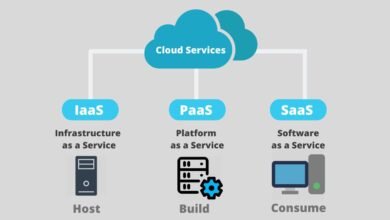
Customer responsibilities typically include protecting data, configuring security services, managing user access through identity and access management (IAM), maintaining applications, securing APIs, and ensuring cloud data protection compliance. These responsibilities extend across infrastructure-as-a-service (IaaS), platform-as-a-service (PaaS), and software-as-a-service (SaaS) offerings, though the scope varies depending on the service model.
Failing to understand this model leads to dangerous security gaps. Organizations may assume their provider handles responsibilities they actually own, leaving critical vulnerabilities unaddressed. Conversely, they may implement redundant security controls, wasting resources and creating operational complexity.


Cloud security posture management tools help organizations visualize and understand their responsibilities. Regular reviews of your cloud provider’s shared responsibility documentation ensure your cloud security strategy aligns with their specific guidelines. This alignment prevents misconfigurations that could expose sensitive information.
Organizations should document which team members own specific security responsibilities. Clear assignment of ownership ensures accountability and prevents security gaps that occur when everyone assumes someone else is handling a critical function.
Implementing Identity and Access Management (IAM) Best Practices

- Identity and access management (IAM) serves as the cornerstone of any robust cloud security posture. This foundational layer governs who can access cloud resources, under what conditions, and with what privileges. Without proper IAM implementation, even the most sophisticated encryption systems remain vulnerable to unauthorized access.
- Multi-factor authentication (MFA) represents one of the most effective security controls available. By requiring users to provide two or more forms of identification before gaining access, MFA security dramatically reduces the risk of unauthorized account compromise. Organizations should enforce multi-factor authentication for all user accounts, especially those with administrative privileges or access to sensitive data.
Modern MFA solutions support multiple authentication methods. Hardware-based FIDO security keys offer superior phishing resistance compared to SMS-based codes or app-based authenticators. These hardware tokens use public key cryptography, making them significantly more secure against social engineering attacks that commonly succeed against weaker authentication methods.
Least privilege access principles ensure users receive only the minimum permissions necessary to perform their job functions. This approach dramatically limits potential damage if accounts become compromised. Role-based access control (RBAC) and attribute-based access control (ABAC) enable granular permission management, allowing organizations to define precisely which users can access specific resources.
Regular access reviews identify and eliminate unused permissions that accumulate over time. Many employees change roles or leave organizations, yet their access privileges persist indefinitely. Automated identity management tools can flag accounts with unused privileges, making it simple to revoke unnecessary permissions.
- Service account management requires special attention. These non-human accounts often possess extensive privileges but receive minimal security oversight. Organizations should implement automated credential rotation, never storing passwords or API keys in plain text. Most cloud providers offer automated key rotation features that reduce operational burden while maintaining security.
- Just-in-time (JIT) access represents a modern approach where users receive temporary elevated permissions only when needed. This strategy eliminates standing administrative access that provides persistent targets for attackers. Time-limited credentials automatically expire, reducing the window available for exploitation.
Data Encryption: Protecting Information at Rest and in Transit
- Data encryption forms the second pillar of effective cloud security best practices, protecting sensitive information from unauthorized disclosure. Organizations should implement encryption for all data, whether stored in cloud databases or transmitted across networks.
- Encryption at rest protects stored data using strong algorithms like AES-256. However, not all implementations provide equivalent security. Organizations should utilize customer-managed encryption keys through services like AWS KMS or Azure Key Vault rather than relying on default provider keys. This approach grants organizations direct control over encryption keys, preventing unauthorized access to sensitive data.
- Encryption key management requires disciplined processes. Organizations should implement automated key rotation schedules that refresh keys regularly without manual intervention. Manual rotation processes frequently become delayed or forgotten, creating security gaps. Automated systems ensure consistency and eliminate human error from this critical function.
- Encryption in transit protects data moving between systems using SSL/TLS protocols. Organizations should enforce minimum TLS 1.2 standards and migrate toward TLS 1.3 for enhanced security. This protection extends to all communications with cloud services, databases, and third-party APIs.
- Separation of duties principles should govern encryption key management. Personnel who manage encryption keys should not have access to use those keys for data operations. This segregation prevents any single individual from gaining complete control over encrypted systems.
- Data tokenization and format-preserving encryption offer alternatives for sensitive data types. These techniques replace sensitive information with non-sensitive substitutes, reducing the impact of potential breaches while maintaining data functionality for legitimate applications.
Organizations frequently store sensitive data that they cannot encrypt due to operational requirements. In these cases, data masking and data redaction protect sensitive information in non-production environments. These techniques remove or obfuscate sensitive data in development, testing, and analytics environments where full datasets are unnecessary.
Network Security and Cloud Infrastructure Protection
- Cloud network security prevents unauthorized access to cloud infrastructure and data. Modern cloud security architecture incorporates multiple-layered defenses that work together to identify and block threats at various points.
- Virtual private networks (VPNs) create secure, encrypted tunnels for data transmission between locations. Cloud providers offer native VPN services that organizations can configure for specific security requirements. VPNs protect data in transit by implementing additional encryption layers beyond standard network security.
- Network segmentation creates logical boundaries limiting how far attackers can spread after gaining initial access. Properly segmented networks prevent lateral movement, containing compromises to limited areas. Zero Trust Architecture represents the evolution of network security, assuming compromise at all times and requiring continuous verification for all access requests.
- Cloud firewall services and web application firewalls (WAFs) block malicious traffic before it reaches applications. Modern firewalls employ threat detection capabilities, identifying sophisticated attacks that traditional rule-based systems might miss. Organizations should monitor firewall logs for indicators of ongoing attacks.
- Security groups provide host-level network controls in cloud environments. These virtual firewalls restrict network traffic to only necessary ports and protocols. Over-permissive security groups represent a common misconfiguration leading to unauthorized access.
- Infrastructure as code (IaC) automates cloud resource deployment, eliminating manual configuration errors. This approach reduces misconfigurations that commonly introduce vulnerabilities. IaC also enables rapid incident response, allowing organizations to quickly detect unauthorized infrastructure changes.
- API security deserves special attention as APIs increasingly expose cloud services to external access. Organizations should implement API authentication, validate all API inputs, and monitor API activity for suspicious patterns. API gateway services provide centralized security controls for API traffic.
Continuous Monitoring and Threat Detection

- Cloud security monitoring enables rapid detection and response to security incidents. Organizations cannot defend what they cannot see, making comprehensive visibility essential for effective cloud threat detection.
- Cloud security posture management (CSPM) solutions evaluate deployments against best practice guidelines. These tools generate security scores quantifying current security maturity and flag deviations from standards. CSPM solutions automate much of the manual work traditionally required for cloud security assessment.
- Logging and centralized log aggregation provide the raw data necessary for threat analysis. Organizations should collect logs from cloud services, operating systems, applications, and security tools. Cloud providers offer convenient log aggregation mechanisms that centralize logs from diverse sources.
- Security information and event management (SIEM) systems analyze logs for indicators of compromise and abnormal activity. SIEM solutions identify unusual login attempts, unexpected network traffic patterns, and suspicious system events. Anomaly detection services automatically flag behaviors deviating from established baselines.
- Cloud-native application protection platforms (CNAPP) address the unique security challenges of containerized and serverless workloads. These platforms provide comprehensive visibility and protection throughout the application lifecycle from development through production.
- Threat hunting goes beyond automated monitoring to proactively search for indicators of compromise. Security teams using threat hunting techniques discover attacks that automated systems might miss, especially sophisticated attacks employing evasion tactics.
- Real-time alerting ensures security teams respond quickly to potential incidents. Organizations should configure alerts for high-risk activities like access to sensitive data, changes to security controls, or unusual administrative actions.
Regular Security Assessments and Vulnerability Management
Ongoing vulnerability assessments identify weaknesses before attackers exploit them. Organizations should conduct regular assessments using automated tools combined with expert manual analysis. Penetration testing simulates real attacks to evaluate actual security effectiveness beyond theoretical vulnerability lists.
- Cloud security audit processes should be scheduled regularly and after significant infrastructure changes. Assessments should evaluate technical controls, configuration compliance, and adherence to cloud security policies. Documentation of findings and remediation tracking ensures follow-up on identified issues.
- Compliance management ensures cloud deployments meet industry regulations relevant to your organization. HIPAA, GDPR, PCI DSS, and other frameworks impose specific security and data protection requirements. Non-compliance can result in substantial fines, business restrictions, and reputational damage.
- Security benchmarks provide standardized guidelines for cloud security configurations. CIS Benchmarks and cloud provider recommendations like Microsoft Cloud Security Benchmark offer consensus-based best practices developed by experts. Organizations should use these benchmarks as baselines for their configurations.
- Remediation tracking ensures identified vulnerabilities receive timely fixes. Organizations should define service level agreements specifying how quickly different vulnerability severities must be addressed. High-severity vulnerabilities typically require remediation within days, while low-severity issues may receive longer timeframes.
Incident Response Planning and Business Continuity
Even with robust preventive controls, breaches can occur. Incident response planning determines how organizations detect, investigate, and recover from security incidents. Organizations lacking incident response plans struggle to respond effectively, allowing attackers more time to access sensitive information.
- Cloud incident response addresses unique challenges, including rapid resource scaling, ephemeral resources, and distributed architectures. Traditional incident response procedures often prove inadequate for cloud environments requiring modified approaches and specialized tools.
- Backup and recovery planning protects against data loss from malware, ransomware, or accidental deletion. Organizations should maintain immutable backups resistant to modification or deletion by attackers. Backup automation ensures consistent backup execution without manual intervention.
- Business continuity planning ensures critical services remain available during security incidents or infrastructure failures. Regular disaster recovery testing validates that backup and recovery procedures function as expected. Many organizations maintain backups that they have never successfully restored, discovering during actual incidents that their backups prove useless.
- Data retention policies balance legal compliance requirements with operational needs. Organizations should understand cloud provider data retention policies and configure appropriate options. Some providers offer “soft delete” features, allowing data recovery for a limited period after deletion.
Compliance and Regulatory Requirements
- Cloud security compliance ensures deployments meet applicable legal and regulatory obligations. Different industries and geographic regions impose varying requirements that organizations must understand and implement.
- HIPAA requires healthcare organizations to implement specific security controls protecting patient data. GDPR imposes stringent requirements for European citizens’ data protection with penalties reaching 4% of worldwide revenue for non-compliance. PCI DSS governs credit card data protection in payment card processing organizations.
Before implementing cloud services, organizations should review compliance requirements and verify that cloud providers meet necessary standards. Organizations remain responsible for compliance violations even when originating from provider misconfigurations.
- Compliance automation through tools like AWS Config, Azure Policy, and similar services reduces manual compliance verification. These tools continuously monitor configurations against compliance standards and alert teams to violations requiring remediation.
- Data sovereignty requirements mandate that particular sensitive data remain within specified geographic regions. Organizations should understand these requirements and configure data storage accordingly. Multi-region deployments complicate data sovereignty compliance, requiring careful architecture planning.
More Read: Cloud Security for AI Protecting Sensitive Data and Models
Conclusion
Effective cloud security best practices require implementing multiple layers of controls addressing identity and access management, data encryption, network security, and continuous monitoring and threat detection. Organizations must understand the shared responsibility model and clearly define which team members own specific security responsibilities. Regular vulnerability assessments, incident response planning, and compliance management ensure organizations maintain robust security postures as threats evolve. The investment in comprehensive cloud security strategies protects sensitive data, ensures business continuity, and demonstrates organizational commitment to protecting customer information and maintaining stakeholder trust. By following these practices, organizations can confidently leverage cloud computing’s benefits while minimizing security risks in an increasingly complex threat landscape.