Self-Driving Cars: Where Are We Really At Right Now?
Self-driving cars' current state: Discover autonomous vehicle technology progress, real deployment status, remaining challenges, and what truly autonomous driving means today.

Self-driving cars have dominated technology headlines for over a decade, with bold predictions about imminent autonomous vehicle ubiquity repeatedly failing to materialize on promised timelines. Tech companies and automakers have cycled through waves of optimism and reality checks, leaving the public confused about whether genuinely autonomous vehicles are just around the corner or still decades away from mainstream adoption. The gap between marketing hype and actual capability has never been wider, as some companies offer “Full Self-Driving” features requiring constant human supervision while others operate truly driverless robotaxis in limited geographic areas.
The current state of autonomous vehicle technology represents a complex, fragmented landscape where remarkable achievements coexist with stubborn unsolved problems. Companies like Waymo operate genuinely driverless taxi services in select cities, accumulating millions of autonomous miles with impressive safety records. Meanwhile, Tesla’s heavily marketed “Full Self-Driving” system requires drivers to remain fully engaged and ready to intervene at any moment, operating at a fundamentally different autonomy level despite similar branding. Traditional automakers have largely scaled back ambitious timelines after billions in investments failed to produce the revolutionary breakthroughs initially anticipated.
Understanding where self-driving technology truly stands requires looking beyond press releases and promotional videos to examine actual deployment scale, geographic limitations, safety performance, regulatory frameworks, and the technical challenges that continue resisting solutions. The reality is more nuanced than simple “solved” or “impossible” narratives suggest—significant progress has occurred in controlled scenarios while full autonomy in all conditions remains elusive.
This comprehensive analysis examines the current state of autonomous vehicles, the different levels of autonomy and what they mean in practice, which companies are closest to delivering real self-driving capability, what obstacles remain, and realistic timelines for when truly autonomous vehicles might become commonplace on our roads.
Understanding Levels of Autonomous Driving
Autonomous vehicle classification uses the SAE (Society of Automotive Engineers) framework, defining six levels from 0 to 5, but these technical distinctions often get blurred in marketing and media coverage.
Level 0-2: Driver Assistance Systems
Level 0 includes no automation—the driver controls everything, though warning systems may alert about dangers.
Level 1 features single automated functions like adaptive cruise control or lane-keeping assist operating independently. The driver monitors everything and controls other functions.
Level 2 combines multiple automated functions—simultaneous acceleration, braking, and steering under specific conditions. Despite automation, the driver must continuously supervise and remain ready to take control instantly.
Most “advanced driver assistance systems” (ADAS) fall into Level 2:


- Tesla Autopilot (not Full Self-Driving)
- GM Super Cruise
- Ford BlueCruise
- Mercedes-Benz Drive Pilot (Level 3 in limited scenarios)
These systems significantly reduce driver workload during highway driving but remain fundamentally driver assistance rather than autonomous driving. The driver bears full legal responsibility and must stay engaged.
Level 3: Conditional Automation
Level 3 autonomy allows the vehicle to handle all driving tasks in defined conditions while requiring the driver to be available to take over when the system requests.
The critical distinction: drivers can disengage from active supervision during Level 3 operation but must respond to takeover requests, typically with several seconds’ warning.
Mercedes-Benz Drive Pilot achieved true Level 3 certification in Germany and some US states, operating on approved highways up to 40 mph in suitable traffic and weather conditions. When active, drivers can legally look away from the road and engage in secondary activities.
Very few systems have achieved genuine Level 3 status. Most marketed as “advanced” remain Level 2 despite appearing similar to users.
Level 4: High Automation
Level 4 autonomy eliminates the need for a human driver in defined operational design domains (ODDs). The vehicle handles all situations within its ODD without human intervention.
Current Level 4 deployments operate in geofenced areas with detailed mapping:
- Waymo One robotaxis in Phoenix, San Francisco, and Los Angeles
- Cruise robotaxis in San Francisco (currently suspended pending safety reviews)
- Baidu Apollo Go in multiple Chinese cities
- Various autonomous shuttle services in controlled environments
These vehicles can genuinely drive themselves—no steering wheel or pedals required—but only within their carefully defined operational areas and conditions. Outside these boundaries, they cannot function autonomously.
Level 5: Full Automation
Level 5 autonomy represents the ultimate goal: vehicles that drive anywhere, anytime, in any condition a human could navigate, requiring no human intervention ever.
No Level 5 systems currently exist or are expected soon. The technical challenges of handling all possible driving scenarios—from unmarked rural roads to blizzards to construction zones to parking garages—remain largely unsolved.
Many experts now question whether Level 5 is achievable with current technological approaches or whether it represents an asymptotic goal where each percentage point of additional capability requires exponentially more effort.
Current State of Self-Driving Car Technology
Self-driving cars exist today, but their capabilities, limitations, and deployment scale often surprise people who believe either that full autonomy has arrived or that it’s entirely vaporware.
Commercial Deployments: What’s Actually Operating
Waymo operates the most advanced commercial autonomous vehicle service, with truly driverless robotaxis carrying paying passengers in several cities.
Waymo One service areas:
- Phoenix metro area: 180+ square miles, operating since 2020
- San Francisco: Expanding service area with thousands of rides weekly
- Los Angeles: Limited service launched in 2023
- Austin: Testing phase
These vehicles operate without safety drivers—genuinely empty driver seats carrying passengers autonomously. According to Waymo’s published data, the service has driven over 20 million autonomous miles with significantly fewer at-fault incidents than human drivers.
Cruise (GM’s autonomous subsidiary) launched driverless robotaxis in San Francisco in 2022 but suspended operations in late 2023 following a serious incident where a Cruise vehicle dragged a pedestrian after another vehicle struck them. The incident revealed both communication failures with regulators and limitations in the vehicle’s decision-making, leading to a complete operational pause for safety review and system improvements.
Baidu Apollo Go operates robotaxis across multiple Chinese cities, including Beijing, Shanghai, and Wuhan, with some services featuring completely driverless operation. China’s regulatory environment and government support have enabled more rapid deployment than in the US, though independent safety verification is limited.
Aurora (founded by former Google, Tesla, and Uber autonomous vehicle leaders) focuses on autonomous trucking rather than passenger vehicles, targeting highway freight transportation where operational constraints are more manageable.
Motional (Hyundai-Aptiv joint venture) partners with Uber and Lyft for autonomous ride-hailing in Las Vegas, though current operations maintain safety drivers.
Geographic and Operational Limitations
Current autonomous vehicle operations succeed within carefully controlled parameters that limit where and when they can function.
Geofencing restrictions: All deployed systems operate only in pre-mapped areas with high-definition maps providing centimeter-level detail about road geometry, lane markings, traffic signals, and permanent features. Venturing outside these areas renders the system non-functional.
Weather constraints: Most systems struggle in heavy rain, snow, or fog that degrades sensor performance. Many suspend operations during adverse weather conditions.
Infrastructure requirements: Current autonomous systems rely on well-maintained road markings, clear signage, and consistent infrastructure standards. Faded lines, missing signs, or unusual road configurations create challenges.
Traffic conditions: Some systems limit operation to specific traffic scenarios—Waymo operates in all traffic conditions within its service area, while Mercedes Drive Pilot operates only in traffic jams at low speeds.
Time of day: While most advanced systems operate 24/7, some early deployments restricted operations to daytime hours due to sensor limitations.
These constraints explain why genuinely autonomous vehicles serve limited areas despite impressive capability within those boundaries.
Safety Performance and Incidents
Autonomous vehicle safety remains hotly debated, with different stakeholders interpreting limited data to support varying conclusions.
Waymo safety data: The company’s published statistics show significantly lower at-fault collision rates than human drivers, with most incidents involving other vehicles hitting stationary or slow-moving Waymo vehicles. However, critics note that Waymo operates in generally favorable conditions and areas, making direct comparisons to human drivers in all scenarios problematic.
Tesla Autopilot data: Tesla claims vehicles using Autopilot experience fewer accidents per mile than the average vehicle, but this comparison proves misleading—Autopilot operates predominantly on highways under ideal conditions where accident rates are inherently lower. Independent analysis suggests Autopilot’s safety benefit is modest at best, with numerous documented cases of the system failing to recognize obvious hazards.
Cruise incident: The 2023 pedestrian dragging incident revealed limitations in both the technology and the company’s transparency. After a human-driven vehicle struck a pedestrian, who then landed in a Cruise vehicle’s path, the Cruise vehicle attempted to pull over but dragged the pedestrian 20 feet, likely due to not recognizing the unusual scenario. Cruise’s incomplete disclosure to regulators compounded the safety concerns.
According to research from the National Highway Traffic Safety Administration, evaluating autonomous vehicle safety remains challenging due to limited data, different operational contexts compared to human drivers, and difficulty defining appropriate comparison metrics.
Critical safety consideration: Current autonomous systems fail differently than humans. Where human drivers might miss a stop sign due to distraction, autonomous systems might misclassify a pedestrian or fail to recognize an unusual construction zone configuration. Understanding these different failure modes matters for overall safety assessment.
Technology Powering Self-Driving Cars
Autonomous vehicle technology combines multiple sensor types, processing systems, and software approaches, with different companies taking varied approaches to the problem.
Sensor Systems: Cameras, Radar, and LiDAR
Cameras capture visual information similar to human vision, recognizing lane markings, traffic signals, signs, pedestrians, and other vehicles. Modern autonomous systems use 8-12+ cameras covering 360-degree views around the vehicle.
Advantages: Rich visual information, color recognition, relatively inexpensive, proven technology.
Limitations: Affected by lighting conditions (glare, darkness), weather, and require sophisticated AI for scene interpretation.
Radar uses radio waves to detect objects, measuring their distance and velocity. Radar penetrates fog, rain, and darkness that impair cameras.
Advantages: All-weather operation, excellent velocity measurement, long-range detection.
Limitations: Lower resolution than cameras or LiDAR, difficulty classifying detected objects.
LiDAR (Light Detection and Ranging) uses laser pulses to create detailed 3D point clouds of the environment, precisely measuring distances to objects.
Advantages: Highly accurate distance and shape information, works in darkness, excellent for creating HD maps.
Limitations: Expensive ($1,000-$75,000+ per unit historically, though costs are dropping), degraded performance in heavy rain or fog, purely geometric data without color or texture information.
The Vision-Only vs. Sensor Fusion Debate
Sensor approaches divide autonomous vehicle companies into distinct camps.
Waymo’s approach: Comprehensive sensor fusion using LiDAR, cameras, and radar. Multiple sensor types provide redundancy and complementary information—LiDAR offers precise distance, cameras identify colors and text, and radar tracks fast-moving objects.
Advantages: Maximum information, redundancy for safety, proven in deployed systems.
Disadvantages: Higher hardware costs, more data processing required.
Tesla’s approach: Vision-only using cameras without LiDAR or radar (radar removed from newer models). Tesla argues that since humans drive with vision alone, computer vision should suffice, and that dependence on LiDAR delays developing robust vision systems.
Advantages: Lower hardware costs, scalability across vehicle fleet, forces development of sophisticated vision AI.
Disadvantages: Vulnerable to visual conditions that challenge cameras, lacks precise distance measurement, and unproven for true autonomy.
The industry debate continues, though most companies pursuing Level 4 autonomy employ sensor fusion while Tesla maintains its vision-only position for its Level 2 system.
AI and Machine Learning
Artificial intelligence powers the decision-making, object recognition, and behavior prediction that enable autonomous driving.
Computer vision neural networks identify and classify objects (vehicles, pedestrians, cyclists, traffic signals, signs) from camera imagery. These networks train on millions of labeled images to recognize patterns.
Sensor fusion algorithms combine data from multiple sensors into coherent environmental representations, resolving conflicts when sensors disagree and leveraging each sensor’s strengths.
Path planning systems determine optimal routes and trajectories considering safety, efficiency, passenger comfort, and traffic rules.
Behavior prediction models anticipate how other road users will behave—will that pedestrian cross, will that car merge, will that cyclist turn? These predictions crucially influence safety decisions.
Reinforcement learning allows systems to improve through experience, though training autonomous driving systems safely in the real world remains challenging.
HD Mapping and Localization
High-definition maps provide centimeter-accurate representations of road geometry, permanent features, and traffic infrastructure that autonomous vehicles use for precise localization.
These maps include:
- Exact lane positions and geometries
- Traffic signal locations and configurations
- Stop sign positions
- Curb locations and heights
- Road surface characteristics
- Historical traffic patterns
Localization algorithms precisely determine the vehicle’s position within these maps (typically within 10 centimeters) using sensor data, far exceeding GPS accuracy.
Map dependence represents both a strength and a limitation—HD maps enable current Level 4 systems but restrict operation to mapped areas and require constant updates when infrastructure changes.
Remaining Challenges for Self-Driving Cars
Despite impressive progress, autonomous vehicles face stubborn technical, regulatory, and social challenges preventing universal deployment.
Technical Obstacles
Edge cases: Unusual scenarios occur rarely but matter enormously—construction zones with ambiguous lane markings, police officers directing traffic, vehicles malfunctioning and behaving unpredictably, debris in roadways. Autonomous systems must handle countless rare scenarios that humans navigate through context and common sense.
Adverse weather: Heavy rain, snow, and fog degrade sensor performance. Snow covers road markings, leaves on wet roads look similar to pedestrians in LiDAR data, and fog scatters laser pulses. Solving reliable all-weather operation remains elusive.
Construction zones: Temporary changed configurations, human flaggers, and unclear routing challenge systems designed for consistent infrastructure. Many current systems struggle significantly or cannot operate in construction zones.
Parking and unstructured environments: Parking lots, driveways, and other unstructured spaces without clear lane markings and traffic rules present difficulties for systems optimized for structured roads.
Pedestrian behavior prediction: Humans exhibit complex, sometimes irrational behaviors—jaywalking, distracted walking, sudden direction changes. Perfectly predicting human behavior may be impossible, requiring autonomous systems to be extremely conservative, potentially degrading traffic flow.
Computational requirements: Processing massive sensor data streams in real-time demands powerful, expensive computing hardware. Reducing costs while maintaining performance remains challenging.
Regulatory and Legal Framework
Regulatory uncertainty slows deployment as governments worldwide develop autonomous vehicle frameworks.
Federal vs. state regulation: In the US, vehicle safety is federally regulated, while driving rules are state-controlled, creating complexity. States have passed contradictory laws—some welcoming testing, others restricting it.
Liability questions: When autonomous vehicles crash, determining liability (manufacturer, software developer, vehicle owner, pedestrian) involves unsettled legal territory. Traditional insurance models assume human drivers.
Safety standards: Regulators struggle to define appropriate safety standards for systems without human parallels. How much safer than humans must autonomous vehicles be? How do you test for safety in rare scenarios?
Data privacy: Autonomous vehicles collect enormous environmental data, raising questions about surveillance, data ownership, and privacy protection.
International harmonization: Different countries pursuing different regulatory approaches complicate global deployment for automotive manufacturers.
Economic and Infrastructure Considerations
Cost barriers: Current Level 4 systems cost $100,000-300,000+ in hardware alone, far exceeding most vehicle prices. Costs must drop dramatically for private ownership viability.
Infrastructure adaptation: Optimizing infrastructure for autonomous vehicles (dedicated lanes, smart traffic signals, standardized signage) requires massive investment with unclear funding.
Business model viability: Robotaxi services must achieve profitability despite high operational costs, limited service areas, and competition from human ride-hailing. Few companies have demonstrated sustainable business models.
Employment impacts: Millions of professional drivers (truckers, taxi drivers, delivery drivers) face potential displacement. Managing this transition represents a significant social challenge.
Public Acceptance and Trust
Public skepticism remains high following high-profile accidents and over-promising.
Trust building: Many people fear riding in vehicles without human drivers despite statistical safety advantages, requiring extensive positive experience to overcome intuitive concerns.
Media coverage: Accidents involving autonomous vehicles receive disproportionate coverage compared to the thousands of daily human-caused crashes, shaping public perception negatively.
Ethical dilemmas: “Trolley problem” scenarios (should an autonomous vehicle prioritize passenger or pedestrian safety when a collision is unavoidable?) generate philosophical debates that don’t have clear answers but influence public acceptance.
According to research from the Pew Research Center, public comfort with autonomous vehicles remains mixed, with significant portions of the population expressing concern about safety and technology reliability despite improving performance metrics.
Major Players in Self-Driving Technology
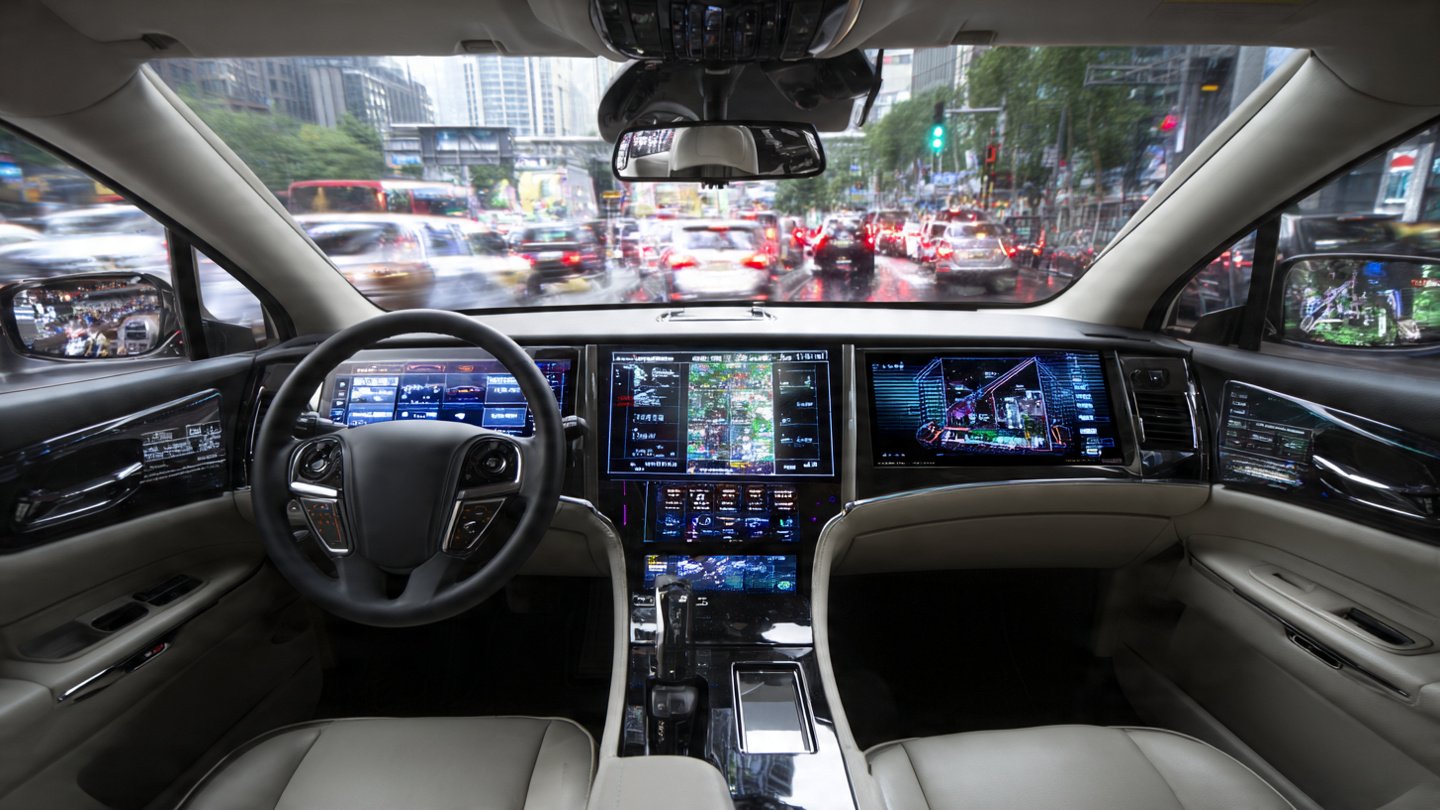
Understanding the autonomous vehicle landscape requires examining the different companies, their approaches, and their current status.
Waymo (Alphabet/Google)
Waymo leads in deployed autonomous vehicles, operating commercial robotaxi services without safety drivers.
Approach: Comprehensive sensor fusion with LiDAR, cameras, and radar. Conservative, safety-first development prioritizing solving specific operational domains completely before expanding.
Status: Millions of autonomous miles completed, commercial service in multiple cities, expanding operational area gradually.
Strengths: Longest autonomous vehicle development history, proven Level 4 capability, strong safety record.
Challenges: Limited geographic coverage, high operational costs, slow expansion pace, and not yet profitable.
Tesla
Tesla pursues autonomous vehicles through incremental improvement of driver assistance systems across its large vehicle fleet.
Approach: Vision-only using cameras, mass-market deployment of advanced driver assistance, and gathering massive training data.
Status: Hundreds of thousands of vehicles running “Full Self-Driving Beta”—a Level 2 system requiring constant driver supervision despite the name. No timeline for genuine autonomy.
Strengths: Largest fleet of vehicles with advanced sensors, massive real-world data collection, and rapid iteration on software improvements.
Challenges: Vision-only approach unproven for full autonomy, persistent overstatement of capabilities creating safety concerns and regulatory scrutiny, and numerous documented failures in obvious scenarios.
Cruise (General Motors)
Cruise achieved driverless robotaxi operation before suspending following the 2023 pedestrian incident.
Approach: Purpose-built autonomous vehicles (Origin) alongside modified production vehicles, sensor fusion with LiDAR, and an urban robotaxi focus.
Status: Operations suspended across all cities as of late 2023 pending safety review and system improvements. Future operational timeline uncertain.
Strengths: Strong GM backing, proven ability to achieve driverless operation, purpose-built vehicle design.
Challenges: Pedestrian dragging incident revealed decision-making limitations and organizational issues, regulatory relationship damaged, and rebuilding is required before resuming operations.
Traditional Automakers
Ford, GM (outside Cruise), Honda, Toyota, and others have generally scaled back autonomous ambitions after initially aggressive investments.
Strategy shift: Most now focus on advanced driver assistance (Level 2-3) for near-term production vehicles while partnering with technology companies (Waymo, Aurora, Motional) for eventual higher autonomy levels.
This retreat reflects the recognition that full autonomy requires fundamentally different expertise and business models than traditional automotive manufacturing.
Chinese Companies
Baidu, Pony.ai, WeRide, and others operate autonomous vehicles across Chinese cities with government support.
Advantages: Favorable regulatory environment, government infrastructure investment, and massive data collection opportunities.
Unknowns: Independent safety verification is limited, making an objective assessment of Chinese autonomous vehicle progress difficult for outside observers.
Realistic Timeline: When Will Self-Driving Cars Be Common?
Autonomous vehicle predictions have consistently proven too optimistic, necessitating realistic expectation-setting.
Near-Term (2024-2027)
Likely developments:
- Continued geographic expansion of existing Level 4 robotaxi services to additional cities
- Improved Level 2/3 driver assistance in production vehicles is becoming standard on premium models
- Autonomous trucking is beginning limited commercial operation on specific highway routes
- Regulatory frameworks are becoming clearer in major markets
Unlikely developments:
- Widespread availability of truly autonomous vehicles for private purchase
- Autonomous vehicles operating unrestricted in all weather and conditions
- Robotaxis are available in most US cities
Medium-Term (2027-2032)
Possible developments:
- Level 4 robotaxi services are available in 20-50 major metro areas
- Autonomous delivery vehicles are becoming common in urban areas
- Highway autonomous trucking is scaling significantly
- First production vehicles with genuine Level 3 capability available for purchase
- Some jurisdictions are creating autonomous vehicle priority infrastructure
Still unlikely:
- Level 5 autonomy in any implementation
- Autonomous vehicles outnumber human-driven vehicles
- Elimination of steering wheels and pedals from most new vehicles
Long-Term (2032+)
Possible developments:
- The majority of ride-hailing in major cities is shifting to autonomous vehicles
- Significant reduction in private car ownership in dense urban areas
- Highway driving is becoming predominantly autonomous
- Fundamental urban design changes accommodating autonomous vehicles
Uncertain:
- Whether true Level 5 “drive anywhere, anytime” autonomy will ever be achieved.
- Timeline for autonomous vehicles becoming the majority of all vehicles
- Whether autonomous vehicles will fulfill predicted transformational impacts on transportation and urban design
Honest assessment: Autonomous vehicle deployment will likely follow a decades-long gradual rollout beginning with constrained use cases (urban robotaxis, highway trucking) and slowly expanding, rather than a sudden revolution replacing human drivers.
What This Means for Consumers and Society
Self-driving cars will reshape transportation, but the transformation will be gradual and uneven.
For Individual Consumers
Near-term reality: Most people will continue driving themselves for many years. Advanced driver assistance features will provide incremental safety and convenience benefits, but genuine hands-off autonomy remains distant for private vehicles.
When purchasing vehicles: Prioritize safety-tested driver assistance features (automatic emergency braking, blind spot monitoring, lane keeping) over futuristic autonomy promises. Be skeptical of marketing claiming “self-driving” for systems requiring constant supervision.
Robotaxi consideration: In cities with autonomous taxi services, trying these services provides insight into current capabilities and limitations. For some urban dwellers, robotaxis might already replace car ownership economically.
For Transportation and Urban Planning
Gradual impacts: Cities shouldn’t radically redesign around autonomous vehicles yet, but should consider how infrastructure might accommodate future autonomy—sensor-friendly signage and road markings, dedicated autonomous vehicle lanes, redesigned pickup/dropoff areas.
Parking evolution: Long-term reduction in parking needs seems likely if robotaxis reduce private ownership, but this transition will span decades, not years.
Traffic flow: Optimistic projections about autonomous vehicles eliminating congestion likely overstate impacts—vehicles still occupy road space regardless of who or what drives them.
Safety Implications
Potential benefits: Autonomous vehicles could dramatically reduce accidents caused by human error (distraction, impairment, fatigue,e,which accountts for over 90% of crashes currently.
Realistic expectations: Even if autonomous vehicles are statistically safer than humans, they won’t be perfect. Different failure modes mean some accident types may decrease while others potentially increase.
Transition risks: Mixed autonomy traffic (human and autonomous vehicles) may be more challenging than either pure scenario, as autonomous vehicles struggle to predict human behavior and humans struggle to predict autonomous vehicle behavior.
Conclusion
Self-driving cars have progressed from research curiosities to genuine commercial deployments in limited scenarios, with companies like Waymo successfully operating truly driverless robotaxis carrying paying passengers across hundreds of square miles in multiple cities while accumulating millions of autonomous miles with impressive safety records, demonstrating that Level 4 autonomy in constrained operational domains is achievable with current technology.
However, the current state of autonomous vehicles remains far from the revolutionary transformation predicted a decade ago—geographic limitations, weather constraints, reliance on detailed mapping, unsolved edge cases, and high costs prevent these systems from operating anywhere, anytime like human drivers, while the industry’s most prominent self-driving proponent, Tesla, continues offering only advanced driver assistance requiring constant human supervision despite aggressive marketing suggesting otherwise.
The realistic autonomous vehicle timeline involves gradual expansion of robotaxi service areas, incremental improvement of driver assistance systems, and eventual autonomous trucking deployment over the next 5-10 years, while truly universal Level 5 autonomy remains either decades away or potentially unachievable with current technological approaches, meaning most people will continue driving themselves for the foreseeable future while experiencing autonomous transportation primarily through occasional robotaxi rides in select cities rather than through radical immediate transformation of personal vehicle ownership and urban mobility patterns.