Best IoT Platforms for Building Connected Products
Discover the best IoT platforms for 2025. Compare AWS, Azure, Google Cloud, and more solutions for building secure, scalable connected devices.

The Internet of Things (IoT) market is experiencing unprecedented growth, with the global IoT platform market projected to exceed $74.74 billion in value. As organisations increasingly recognise the transformative potential of connected devices and IoT solutions, selecting the right IoT platform has become critical to business success. An IoT platform serves as the foundational infrastructure that bridges the gap between physical devices and actionable business intelligence, enabling enterprises to collect, manage, analyse, and act upon vast quantities of data generated by millions of interconnected devices.
Building connected products requires more than just hardware and sensors—it demands a comprehensive ecosystem that handles device management, data ingestion, real-time analytics, secure connectivity, and application development. The best IoT platforms streamline this complexity by providing unified tools, APIs, and cloud infrastructure that accelerate time-to-market while reducing development costs. Whether you’re a startup launching your first IoT solution or an enterprise managing thousands of devices, IoT Platforms the capabilities and differentiators of leading IoT cloud platforms is essential for making informed decisions. This comprehensive guide explores the top IoT development platforms available today, analysing their strengths, features, and ideal use cases to help you identify the platform that best aligns with your organisational needs and technical requirements.
IoT Platforms: Definition and Core Capabilities
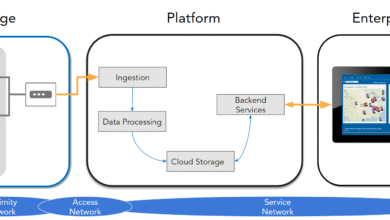
An IoT platform is a multi-layered technology solution designed to manage and automate connected devices across diverse environments. These platforms provide the essential infrastructure required to establish device connectivity, handle data management, ensure security, and enable application development. The architecture of a modern IoT cloud platform encompasses several critical components, including MQTT endpoints, cloud infrastructure, device provisioning systems, and analytics engines.
IoT solutions typically address four main architectural layers: sensors and actuators that collect physical data, edge computing systems that process information locally, Internet gateways that facilitate data transmission, and cloud platforms that store and analyse aggregated information. By consolidating these functions, the best IoT platforms eliminate the need for organisations to build disparate solutions independently, significantly reducing complexity and operational overhead. The most effective IoT development platforms offer scalable architecture, enterprise-grade security, real-time data processing, and seamless integrations with existing business systems.
AWS IoT Core: The Industry-Leading IoT Platform
AWS IoT Core remains the most widely adopted IoT cloud platform, trusted by organisations worldwide for its unmatched scalability and comprehensive feature set. As part of Amazon Web Services’ broader IoT Platforms ecosystem, AWS IoT delivers a fully managed service capable of supporting billions of devices and trillions of simultaneous interactions. The platform excels in device management, offering robust tools for device provisioning, fleet management, and firmware updates across heterogeneous device populations.
One of AWS IoT’s standout features is AWS IoT Greengrass, which extends AWS capabilities to edge devices, enabling local processing and reducing latency in time-sensitive applications. AWS IoT Analytics provides powerful data analytics and stream processing capabilities, allowing organisations to extract meaningful insights from device-generated data. The platform’s deep integration with other AWS services creates a seamless ecosystem for building sophisticated IoT applications. However, organisations should consider that AWS pricing is based on messages transmitted, which can become costly at scale. Despite this consideration, AWS IoT Core remains the preferred choice for enterprises requiring maximum flexibility and advanced features.
Azure IoT Hub: Microsoft’s Comprehensive IoT Solution

Microsoft Azure IoT represents a robust alternative for organizations already invested in the Microsoft ecosystem. Azure IoT Hub is a fully managed service that enables secure bidirectional communication between millions of devices and cloud applications. The platform stands out for its exceptional support for device-to-cloud and cloud-to-device messaging, making it ideal for scenarios requiring real-time command and control capabilities.
Azure IoT Operations, part of the broader Azure portfolio, provides additional tools for device management, monitoring, diagnostics, and optimisation. The platform integrates seamlessly with Azure’s AI and machine learning services, enabling organisations to build intelligent, predictive IoT applications. Additionally, Windows for IoT and Azure RTOS offer specialised operating systems and real-time capabilities for edge devices. Azure IoT Hub’s device provisioning features simplify the onboarding of large device populations, IoT Platform, while enterprise-grade security ensures data protection throughout the device lifecycle. For organisations prioritising integration with Microsoft technologies, Azure IoT Hub delivers exceptional value and mature capabilities.


Cumulocity IoT: Enterprise-Grade Platform for Digital Transformation
Cumulocity IoT has emerged as a leading industrial IoT platform, specifically designed to accelerate digital transformation initiatives across enterprise organisations. This cloud-native platform enables rapid development, deployment, and management of IoT solutions at enterprise scale. What distinguishes Cumulocity is its low-code application enablement capabilities, IoT Platform, allowing developers to create sophisticated applications with minimal hand-coding required.
The platform offers comprehensive device management functionality, sophisticated analytics and data visualisation, and flexible integration options across hybrid and multi-cloud environments. Cumulocity IoT is available as cloud, on-premises, edge, and hybrid solutions, providing organisations with deployment flexibility. The platform’s focus on return on investment through accelerated development cycles makes it particularly attractive for enterprises seeking rapid market delivery. Major brands across manufacturing, healthcare, fleet management, and consumer electronics rely on Cumulocity to power their connected products. The platform’s maturity and enterprise focus position it as an excellent choice for organisations with complex requirements and multi-site deployments.
IBM Watson IoT Platform: AI-Powered Intelligence and Analytics
IBM Watson IoT brings advanced artificial intelligence and machine learning capabilities to IoT solutions, enabling organisations to extract deeper insights from device data. Built on IBM Cloud infrastructure, this fully managed IoT platform delivers device management, IoT Platform secure communications, and flexible connectivity options suitable for diverse industry applications. The platform’s integration with Watson AI services enables predictive analytics, anomaly detection, and intelligent automation that transform raw sensor data into strategic business intelligence.
IBM Watson IoT excels in collecting insights from automobiles, buildings, equipment, and industrial assets, making it particularly valuable for manufacturing, utilities, and transportation sectors. The platform provides comprehensive data analytics capabilities, including real-time stream processing and historical analysis. Organisations appreciate Watson’s open approach to technology integration, the IoT Platform supporting connections to both Oracle and non-Oracle applications through REST APIs. For enterprises seeking to leverage artificial intelligence and machine learning within their IoT infrastructure, IBM Watson IoT Platform offers sophisticated capabilities that drive competitive advantage.
Losant: Powerful Enterprise IoT Development Platform
Losant has carved a distinctive niche as an enterprise IoT platform focused on delivering sophisticated connected solutions without requiring extensive coding expertise. The platform’s visual workflow engine allows developers, IoT Platform, and business analysts to define complex IoT operations through intuitive drag-and-drop interfaces, dramatically reducing development time. This low-code approach democratizes IoT application development, enabling teams to build enterprise-grade solutions rapidly.
Losant’s real-time data visualisation capabilities provide immediate insights into device performance and operational metrics. The platform excels at device connectivity across multiple protocols, flexible data management, and seamless integration with major cloud providers and enterprise systems. The cloud-based infrastructure ensures exceptional scalability, while the visual development approach maintains accessibility for teams of varying technical expertise. Organisations implementing connected product strategies benefit from Losant’s focus on operational efficiency and user-friendly design. The platform’s proven track record with enterprise clients across manufacturing, energy, and logistics sectors confirms its suitability for organisations requiring sophisticated yet accessible IoT solutions.
Particle: Comprehensive IoT Platform with Hardware Integration
Particle distinguishes itself as an integrated IoT platform that combines hardware, connectivity, and cloud services in a cohesive ecosystem. The platform provides 5G connectivity, AI-accelerated computing capabilities, and device cloud infrastructure specifically designed for embedded systems. Particle’s IoT solutions encompass multiple connectivity options, including Wi-Fi, cellular, and mesh networking, allowing developers to select the most appropriate technology for their specific use case.
The Particle Device Cloud handles device management, data ingestion, and application enablement, while the Particle Device OS provides a lightweight operating system optimised for IoT devices. The platform’s focus on simplicity enables rapid product development, with single-line-of-code implementations for many common IoT operations. Particle’s developer tools and comprehensive documentation support the community, facilitating knowledge sharing and accelerating development cycles. IoT Platform Organisations building connected hardware products appreciate Particle’s hardware-software integration and its emphasis on developer experience. The platform’s commitment to accessibility makes it suitable for startups and emerging companies launching their first IoT products.
Blynk: Low-Code IoT Platform for Rapid Development
Blynk has gained substantial recognition as a low-code IoT platform enabling rapid development and deployment of connected applications. The platform provides an integrated solution combining device connectivity, mobile app development, cloud infrastructure, and fleet management in a single ecosystem. Blynk’s no-code app builder allows non-technical users to create branded iOS and Android applications without writing any code, dramatically accelerating time-to-market.
The platform supports multiple connectivity options, including Wi-Fi, cellular, LoRaWAN, and satellite, ensuring compatibility with diverse hardware architectures. Blynk’s managed IoT cloud provides enterprise-grade security, 24/7 monitoring, and SLA-backed uptime guarantees. The platform excels at device provisioning, enabling rapid onboarding of large device populations. Blynk is trusted by 5,000+ companies across agriculture, consumer electronics, IoT Platform and industrial sectors, demonstrating proven reliability at scale. The platform’s emphasis on reducing development complexity and accelerating deployment makes it particularly attractive for organisations prioritising speed-to-market and operational simplicity.
ThingWorx PTC’s Enterprise IoT Development Environment
ThingWorx, developed by PTC, stands as an industry-leading IoT platform enabling rapid development and deployment of innovative connected solutions. The platform provides comprehensive tools for device connectivity, real-time data visualisation, and remote monitoring capabilities. ThingWorx’s emphasis on application development delivers a complete environment for building sophisticated IoT applications without extensive custom coding.
The platform’s robust analytics engine processes streaming data in real time, enabling immediate decision-making and automated responses to device events. ThingWorx integrates deeply with PTC’s broader portfolio of engineering and lifecycle management tools, making it particularly valuable for manufacturing and industrial organisations. The platform’s proven track record with enterprise clients across diverse sectors confirms its capability to handle complex, mission-critical IoT solutions. Organisations seeking an enterprise-grade IoT platform with proven manufacturing expertise find ThingWorx’s comprehensive capabilities and industry focus compelling.
Oracle IoT Cloud: Specialised Platform for Manufacturing and Logistics
Oracle Internet of Things (IoT) Cloud provides a secure, scalable platform specifically optimised for connecting, analysing, and managing IoT devices in manufacturing and logistics environments. As a managed Platform as a Service (PaaS), Oracle IoT emphasises seamless integration with Oracle Cloud Services and enterprise applications. The platform supports multiple programming languages, including JavaScript, Java, Android, iOS, C, and POSIX, providing developers with flexibility in application development.
Oracle IoT Cloud excels at device connectivity, data management, and application development within the context of enterprise resource planning and supply chain operations. The platform’s REST API architecture facilitates integration with diverse enterprise systems and third-party applications. IoT Platform Organisations leveraging Oracle’s broader enterprise technology stack benefit from Oracle IoT Cloud’s native integration capabilities. The platform’s specialisation in manufacturing and logistics use cases makes it particularly valuable for enterprises in these sectors seeking comprehensive IoT solutions aligned with their existing technology investments.
Bosch IoT Suite: Comprehensive Cloud-Based IoT Platform
Bosch IoT Suite represents a comprehensive cloud-based IoT platform offering a range of services and software tools for building and operating connected solutions. The platform delivers device management, data analytics, and machine learning capabilities, enabling organisations to extract actionable insights from device-generated information. Bosch IoT’s versatility across industries and deployment scenarios makes it suitable for diverse organisational needs.
The platform’s focus on data-driven decision-making and predictive capabilities helps organisations optimise operations and prevent equipment failures. Bosch IoT Suite’s integration with advanced analytics and machine learning services transforms raw data into strategic intelligence. IoT Platform The platform’s proven deployment across multiple industries demonstrates its robustness and adaptability. Organisations seeking a mature enterprise IoT platform with comprehensive analytics and machine learning capabilities find Bosch IoT Suite’s capabilities compelling.
SAP Leonardo IoT: End-to-End Intelligent IoT Solution
SAP Leonardo IoT represents an end-to-end IoT platform combining Internet of Things technology, big data analytics, and artificial intelligence capabilities. This integrated approach enables organisations to build intelligent, predictive IoT solutions that drive innovation and competitive advantage. SAP IoT emphasises device connectivity, data intelligence, and real-time analytics through a unified platform architecture.
The platform facilitates remote management and monitoring of connected devices while enabling sophisticated analytics on collected data. SAP Leonardo’s integration with SAP’s broader enterprise software portfolio creates seamless data flows between operational technology and business systems. The platform’s emphasis on AI-powered insights enables organisations to move beyond basic monitoring toward predictive and prescriptive analytics. Organisations already invested in SAP technologies find Leonardo IoT particularly valuable for extending analytics capabilities to operational devices.
Siemens MindSphere: Open IoT Operating System for Digital Enterprises
Siemens MindSphere functions as an open IoT operating system enabling organisations to connect devices, collect data, and develop advanced analytics capabilities. The platform’s emphasis on openness and flexibility allows developers to create custom solutions leveraging powerful APIs and development tools. MindSphere’s scalable architecture supports growth from pilot deployments through enterprise-wide implementations.
The platform provides device management, data collection, and analytics capabilities within a cloud-based environment. MindSphere’s commitment to open standards facilitates integration with diverse hardware platforms and third-party software solutions. IoT Platform Organisations valuing flexibility and openness appreciate MindSphere’s approach to IoT platform design. The platform’s specialisation in industrial and manufacturing applications makes it particularly relevant for organisations in these sectors.
Key Features to Evaluate When Choosing an IoT Platform
When selecting among the best IoT platforms, organisations should evaluate several critical capabilities. Device management functionality must support provisioning, configuration, monitoring, and firmware updates across heterogeneous device populations. IoT Platform Scalability capabilities should accommodate anticipated growth in connected device quantities and data volumes. Security features must include encryption, authentication, authorisation, and compliance frameworks aligned with regulatory requirements.
Data analytics capabilities should provide real-time processing, historical analysis, and visualisation of device-generated information. Integration capabilities must facilitate seamless connections with enterprise systems, databases, and cloud services. Application development support should provide tools, SDKs, and APIs enabling the creation of sophisticated IoT applications. Pricing models should align with organisational budget constraints and usage patterns. Support and documentation quality significantly impact implementation success and ongoing operations.
More Read: IoT Security Risks: How to Protect Your Devices
Conclusion
Selecting the ideal IoT platform for building connected products requires careful evaluation of your organisation’s specific technical requirements, scalability needs, budget constraints, and long-term strategic objectives. AWS IoT Core leads the market with unmatched scalability and comprehensive features, making it ideal for enterprises requiring maximum flexibility. Azure IoT Hub excels for organisations prioritising Microsoft ecosystem integration, while Cumulocity IoT delivers exceptional value for enterprises seeking rapid deployment and return on investment.
Losant stands out for its low-code approach to enterprise applications, Blynk accelerates development cycles with its comprehensive platform, and IBM Watson IoT brings advanced artificial intelligence capabilities to your IoT solutions. Emerging platforms like Particle emphasise hardware integration, while ThingWorx, Oracle IoT Cloud, Bosch IoT Suite, SAP Leonardo, IoT Platform and Siemens MindSphere address specialised industry requirements. The best IoT platform ultimately depends on your unique combination of technical needs, industry focus, scalability requirements, and existing technology investments. By thoroughly evaluating these leading solutions against your specific criteria, you can confidently select an IoT platform that accelerates innovation, maximises operational efficiency, and delivers sustainable competitive advantage in an increasingly connected world.