Best Machine Learning Courses for Beginners
Discover the best machine learning courses for beginners in 2025. Learn Python, AI fundamentals, and build real-world skills with free and paid.

Machine learning courses for beginners have become increasingly accessible, democratizing access to one of the most sought-after skills in technology. Whether you’re transitioning careers, enhancing your professional portfolio, or exploring artificial intelligence fundamentals, the landscape of beginner-friendly machine learning training has never been more diverse. From prestigious universities to industry-leading platforms, online machine learning education now offers multiple pathways to gain job-ready competency without requiring years of prior technical experience.
The demand for machine learning skills continues to surge as organizations across healthcare, finance, e-commerce, and technology sectors seek professionals who understand data-driven decision-making. What makes 2025 particularly exciting is the democratization of learning—many top-tier ML courses now offer free previews, audit options, and financial aid, removing significant barriers to entry. Aspiring data scientists no longer need expensive bootcamps or advanced degrees to break into the field; instead, structured online machine learning programs provide comprehensive curricula with real-world projects, industry mentorship, and recognized certifications.
This guide explores the best machine learning courses tailored specifically for beginners, evaluating platforms like Coursera, edX, Udacity, and others based on curriculum quality, instructor expertise, practical applications, cost-effectiveness, and career outcomes. Whether you’re seeking free machine learning courses, certification programs, or specialized training in Python for machine learning, you’ll find detailed recommendations to match your learning style, budget, and career objectives. By the end, you’ll understand which machine learning training programs align best with your goals and how to structure your learning journey from foundational concepts to deployable AI applications.
1. Machine Learning and Why You Need a Course
- Machine learning represents a transformative shift in how technology solves problems. Rather than following explicit programmed instructions, machine learning algorithms learn patterns from data, enabling systems to improve performance without human intervention. This distinction is crucial before enrolling in any machine learning online course.
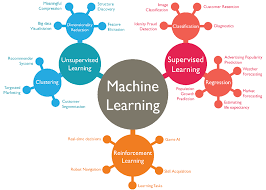
- Machine learning for beginners typically starts with core concepts: supervised learning, where models train on labeled data; unsupervised learning, where algorithms discover hidden patterns; and reinforcement learning, where systems optimize through trial and error. Each machine learning learning path addresses different business problems—supervised learning powers recommendation systems, unsupervised learning drives customer segmentation, and reinforcement learning enables autonomous decision-making.
The practical applications of machine learning fundamentals span virtually every industry. Healthcare professionals use ML models for disease diagnosis, financial institutions deploy algorithms for fraud detection, and e-commerce platforms personalize user experiences. By completing machine learning beginner courses, you position yourself for roles like Machine Learning Engineer, Data Scientist, AI Specialist, and predictive analytics professional—positions offering competitive salaries and abundant opportunities.
The investment in machine learning education for beginners pays dividends beyond employment prospects. You develop problem-solving frameworks applicable across domains, gain hands-on experience with industry-standard tools like Python and TensorFlow, and join a thriving community of practitioners continuously pushing AI boundaries. Most importantly, beginner machine learning training demystifies AI hype, enabling informed perspectives on technology that increasingly shapes business and society.
2. Top Machine Learning Courses for Beginners: Detailed Reviews
2.1 Machine Learning Specialization by Andrew Ng (Coursera)
Andrew Ng’s Machine Learning Specialization stands as the gold standard for beginner machine learning education. Taught by the Stanford professor and AI pioneer who co-founded Google Brain and Coursera, this ML specialization course has trained over 4.8 million learners since its inception.
The machine learning specialization comprises three comprehensive courses: Supervised Machine Learning (regression and classification), Advanced Learning Algorithms (neural networks and decision trees), and Unsupervised Learning (clustering and dimensionality reduction). Each course on machine learning builds systematically, progressing from mathematical foundations to practical implementation using Python, NumPy, and scikit-learn.
What distinguishes this beginner-friendly machine learning course is its pedagogical excellence. Ng employs intuitive explanations, avoiding unnecessary mathematical complexity while maintaining rigor. Real-world case studies demonstrate machine learning applications, making abstract concepts tangible. Learners build machine learning projects, including prediction models, classification systems, and recommendation engines—portfolio pieces that impress employers.


The machine learning course requires basic programming knowledge (loops, functions, conditionals) and high school-level mathematics, making it genuinely accessible to machine learning newbies. Completing the specialization typically requires 2-3 months at 5-7 hours weekly. Coursera offers free trial access, enabling exploration before financial commitment, with certificates available upon completion. Cost: Free to audit (without certificate); approximately $39-49/month for certified track. Difficulty: Beginner to Intermediate. Time commitment: 8-10 weeks at 5-7 hours/week.
2.2 Machine Learning with Python by IBM (Coursera)
IBM’s Machine Learning Professional Certificate offers a pragmatic alternative for learners prioritizing practical machine learning skills over theoretical depth. This industrial machine learning course emphasizes hands-on experience with production-grade tools used daily by data science teams.
The IBM ML certificate program covers Python fundamentals, data preprocessing with Pandas, exploratory data analysis using Matplotlib and Seaborn, and algorithm implementation with scikit-learn and TensorFlow. Unlike purely theoretical machine learning courses online, IBM’s curriculum emphasizes applied machine learning through real datasets and industry scenarios. Learners work with SQL for database queries, Power BI for visualization, and cloud platforms for model deployment—skills directly applicable in professional settings.
This beginner machine learning program particularly appeals to those transitioning from non-technical backgrounds, as it includes foundational Python instruction. The machine learning fundamentals course within the certificate systematically builds competency: supervised and unsupervised learning, implementing regression and classification algorithms, and evaluating model performance using industry-standard metrics. Cost: Free to audit; approximately $39-49/month for certificate. Difficulty: Beginner to Intermediate. Time commitment: 3-4 months at 5-7 hours/week.
2.3 Fast.ai: Practical Deep Learning for Coders
Fast.ai’s machine learning course for beginners takes a revolutionary “top-down” approach, departing from traditional bottom-up theory. Rather than beginning with mathematics and theory, this practical machine learning training plunges learners immediately into building working models, progressively underlying concepts.
This deep learning beginner course suits those who prefer learning by doing over abstract theory. The machine learning curriculum covers computer vision, natural language processing, and recommendation systems using PyTorch. Each lesson includes pre-trained models that learners fine-tune for specific tasks—dramatically accelerating time-to-competency compared to machine learning foundations courses requiring exhaustive theory first.
Fast.ai’s strength lies in democratizing advanced machine learning concepts. The free machine learning course eliminates financial barriers, with optional monetary contributions supporting platform maintenance. The community-driven environment encourages collaboration and knowledge-sharing among learners worldwide. Cost: Free. Difficulty: Beginner to Intermediate (requires Python familiarity). Time commitment: 8-10 weeks of self-paced learning.
2.4 Machine Learning by Andrew Ng (Coursera’s Original Course)
For learners seeking comprehensive coverage of traditional machine learning algorithms, Andrew Ng’s original Machine Learning course remains unparalleled. This classic ML course covers supervised learning (linear regression, logistic regression, neural networks), unsupervised learning (K-means clustering, principal component analysis), and advanced topics like anomaly detection and recommender systems.
The machine learning algorithms course emphasizes algorithmic intuition alongside implementation. Rather than simply calling scikit-learn functions, learners understand the mathematics enabling each algorithm—a foundation essential for advanced machine learning work. The course uses Octave/MATLAB for demonstrations, making it exceptionally clear without language complexity obfuscating concepts.
This comprehensive machine learning introduction particularly benefits those intending to specialize in machine learning research or tackle unusual, domain-specific problems where algorithm internals prove crucial. The mathematical foundation transfers across programming languages, ensuring longevity of knowledge beyond specific tools. Cost: Free to audit; approximately $39-49/month for certificate. Difficulty: Beginner to Intermediate. Time commitment: 11 weeks at 5-7 hours/week.
2.5 Harvard’s Machine Learning and AI with Python
Harvard University’s machine learning and AI course provides prestigious academic machine learning education accessible to global learners. This university-level ML training covers foundational algorithms (decision trees, random forests, gradient boosting) with rigorous Python implementation using scikit-learn and TensorFlow.
The Harvard machine learning program emphasizes practical problem-solving: participants work through real datasets, implement algorithms from scratch, evaluate model performance, and practice avoiding common pitfalls like overfitting and underfitting. The ML course includes computer vision fundamentals and introduces advanced topics like ensemble methods and deep learning.
This beginner to intermediate machine learning course appeals to learners seeking an Ivy League-caliber education with institutional credibility. Harvard’s prestige, combined with rigorous pedagogy and industry-relevant content, makes this comprehensive ML program attractive for those building professional credentials. Cost: Varies by program format. Difficulty: Beginner to Intermediate. Time commitment: 5-7 weeks of intensive study.
3. Free vs. Paid Machine Learning Courses: Making the Right Choice
The free machine learning courses landscape has dramatically expanded, with platforms like Coursera, edX, and Udacity offering substantial free content. Free ML training typically includes course materials, video lectures, and quizzes, but may require payment for certificates—an important distinction.
Paid machine learning certification programs offer additional value: personalized feedback, mentorship access, career support, networking with peers, and recognized credentials. For career-changers and job seekers, paid ML courses often accelerate employment prospects through structured support and credible certifications.
A strategic approach combines both: start with free machine learning lessons to explore topics and assess commitment, then invest in paid ML certifications for specializations aligning with career goals. Platforms like Coursera offer excellent value through specializations, bundling multiple courses at modest monthly costs.
4. Essential Prerequisites for Machine Learning Beginners
Before enrolling in machine learning courses for beginners, assess your foundational knowledge. Machine learning preparation ideally includes Python programming proficiency (loops, functions, data structures), comfort with basic statistics (mean, variance, probability), and elementary algebra.
Python for machine learning is non-negotiable; it’s the industry standard for ML development. Learners lacking a Python background should complete introductory Python courses first—most machine learning online platforms offer these as prerequisites or companion courses. Statistical concepts prevent misinterpretation of model results; basic statistics courses strengthen this foundation.
Mathematical prerequisites depend on the specialization level. Beginner machine learning courses often provide mathematical intuition without rigorous derivations. However, advanced machine learning study requires linear algebra (vectors, matrices, eigenvalues) and calculus (derivatives, gradients, optimization). Most comprehensive ML programs include refresher modules addressing prerequisite gaps.
5. Skills You’ll Develop Through Machine Learning Courses

Completing machine learning certification programs cultivates diverse, highly valued skills. Python programming for data science develops proficiency in the language powering modern AI. Working with machine learning libraries like scikit-learn, TensorFlow, and PyTorch becomes intuitive through hands-on practice.
- Data preprocessing and feature engineering—critical skills often overlooked in theoretical courses—receive proper emphasis in quality practical ML training. Learners understand how raw data transforms into model-ready formats, a process that consumes 80% of professional machine learning work.
- Model evaluation and optimization skills differentiate competent practitioners from amateurs. Through applied machine learning courses, you master performance metrics, cross-validation, hyperparameter tuning, and avoiding common pitfalls like overfitting. These skills directly translate to workplace contributions.
- Algorithmic thinking develops through implementing various machine learning algorithms. When to apply regression versus classification, supervised versus unsupervised learning, and which ensemble methods suit specific problems becomes second nature.
6. Career Outcomes and Job Prospects After Machine Learning Training
Completing reputable machine learning courses opens substantial career opportunities. Entry-level positions like Machine Learning Engineer, Data Scientist, and AI Specialist increasingly require formal ML education, with machine learning certificates demonstrating competency.
The machine learning job market offers competitive salaries—entry-level positions often exceed $80,000 annually, with experienced professionals earning $150,000+. Machine learning career growth remains robust, with demand consistently outpacing supply.
Machine learning internships and contract roles provide entry points; completing portfolio-building machine learning projects through courses accelerates hiring prospects. Employers increasingly value demonstrated machine learning skills over academic credentials alone, making course projects and certifications particularly valuable.
7. How to Choose the Right Machine Learning Course for Your Goals
Selecting appropriate machine learning education depends on several factors. Clarify your objective: exploring fundamentals, building job-ready skills, or specializing in specific domains like computer vision or natural language processing?
Assess your technical background. Beginner machine learning courses assume minimal prerequisites, while advanced ML programs expect programming fluency and mathematical sophistication. Match course difficulty to your current level.
Consider learning style preferences. Video-based machine learning courses suit visual learners; text-heavy programs appeal to readers. Hands-on project-based ML training versus theory-focused algorithmic machine learning courses—both approaches have merits depending on your learning preferences.
Evaluate time commitment. Intensive machine learning bootcamps compress learning into weeks; self-paced online courses spread across months. Align course duration with your schedule and learning pace. Assess financial constraints. Free machine learning education eliminates cost barriers; paid ML certificates offer enhanced support and credentials worth the investment for serious career changers.
More Read: How to Learn Machine Learning: A Realistic Timeline
Conclusion
The democratization of machine learning education through quality online courses has transformed career accessibility for aspiring AI professionals worldwide. Whether you pursue Andrew Ng’s comprehensive Machine Learning Specialization, IBM’s pragmatic, practical ML certificate, Fast.ai’s innovative approach, or Harvard’s prestigious academic machine learning program, you’ll gain practical skills and recognized credentials, opening doors to exciting careers.
Machine learning courses for beginners no longer require significant financial investment or geographic relocation—quality education is accessible to anyone committed to learning. Start with exploratory free machine learning lessons, assess your preferences and goals, then invest in specialized ML training aligned with your career aspirations. The machine learning job market rewards both theoretical and practical capability; completing respected machine learning certifications positions you competitively. Your journey into artificial intelligence and machine learning begins with a single course—take that step today and join thousands of professionals thriving in this transformative field.