Best Robotics Kits for Learning and Hobby Projects
Discover the best robotics kits for learning, hobby projects & STEM education. Compare Arduino, Raspberry Pi, and LEGO options for kids, teens.
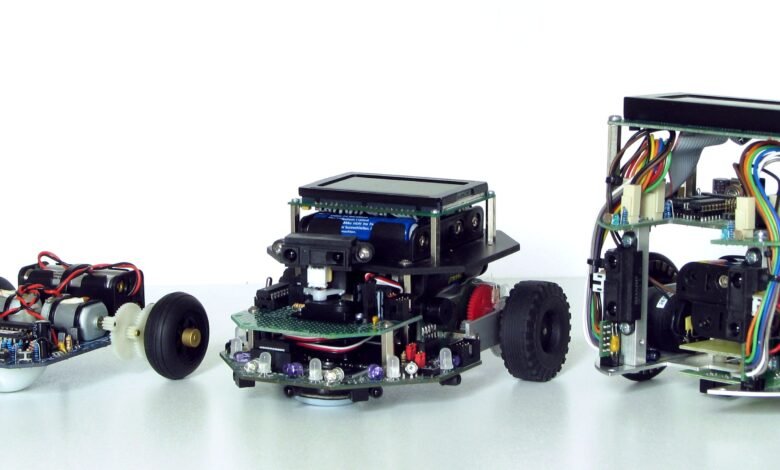
Robotics kits have revolutionized how individuals of all ages engage with science, technology, engineering, and mathematics (STEM). Whether you’re an educator seeking hands-on classroom tools, a parent looking for innovative educational toys, or a hobbyist passionate about robotics projects, these programmable robot kits offer comprehensive solutions that combine mechanical building, electronics, and coding expertise. The robot kit market has expanded dramatically, offering options for absolute beginners through advanced enthusiasts, with platforms like Arduino, Raspberry Pi, and LEGO robotics dominating the educational landscape.
Modern robotics kits for learning go far beyond simple toys—they serve as gateways to understanding real-world engineering principles and computational thinking. Selecting the right robotics kit depends on several factors, including age group, experience level, budget constraints, and learning objectives. This comprehensive guide examines the top-rated robot kit options available today, analyzing their features, pricing, and educational value to help you make an informed decision that aligns with your specific needs and aspirations in the robotics hobby space.
What Are Robotics Kits and Why Should You Consider Them?
Educational robotics kits represent self-contained systems designed to teach programming, mechanical engineering, and problem-solving skills through hands-on construction and experimentation. These STEM robot kits contain all necessary components—motors, sensors, microcontrollers, structural elements, and instructional materials—required to build functioning robots from scratch.
The value proposition of robotics kits for beginners extends beyond mere entertainment. Research demonstrates that hands-on robot building kits significantly enhance critical thinking abilities, foster creative problem-solving approaches, and develop computational literacy in learners. Students working with robot kit projects must understand mechanics, write functional code, debug errors, and iterate designs—all skills directly transferable to academic and professional environments.
Robot hobby kits appeal to diverse audiences because they accommodate multiple learning styles simultaneously. Visual learners benefit from the tangible construction components, kinesthetic learners thrive on assembly activities, and logical thinkers engage deeply with programming requirements. This multifaceted approach to learning makes programmable robotics kits exceptionally effective for sustained engagement and knowledge retention.
Top Robotics Kit Platforms for Different Skill Levels
Arduino-Based Robotics Kits: Perfect for Electronics Enthusiasts
- Arduino robotics kits represent the gold standard for learners passionate about electronics and microcontroller programming. These open-source platforms emphasize component-level understanding and offer extraordinary customization capabilities. The Arduino Starter Kit provides essential microcontroller boards, sensors, motors, and comprehensive tutorials that guide learners through fundamental concepts.
- Arduino-based robot projects empower users to construct intelligent systems with environmental sensors, autonomous navigation capabilities, and sophisticated logic control. Popular Arduino robot kit options include the Elegoo Smart Car series, which features obstacle avoidance sensors, line-tracking capabilities, and Bluetooth connectivity for mobile app control. Learners progress from following basic tutorials to designing entirely custom robotic systems that solve real-world problems.
The strength of Arduino programming robot kits lies in their community support and expandability. Thousands of online resources, tutorials, and open-source projects exist for individuals seeking inspiration. Users can upgrade their systems incrementally by purchasing additional sensors, actuators, and structural components without replacing the core microcontroller platform.
Raspberry Pi Robotics Systems: Advanced Computing Meets Mechanics
- Raspberry Pi robot kits represent a significant leap in computational capacity compared to basic microcontroller platforms. These credit-card-sized computers run full Linux operating systems and support Python programming, enabling sophisticated applications like computer vision, machine learning, and network connectivity.
- Raspberry Pi robotics projects excel when artificial intelligence or advanced data processing becomes necessary. Kits like the PiCar-X integrate cameras, ultrasonic sensors, and real-time video streaming, allowing developers to build autonomous vehicles capable of object recognition and adaptive decision-making. The Raspberry Pi robotics learning environment extends naturally to artificial intelligence applications, making these systems ideal for upper-level students preparing for technology careers.
One significant advantage of Pi-based robot kits involves seamless integration with the broader technology ecosystem. Raspberry Pi robotics systems connect to cloud services, interact with IoT devices, and leverage machine learning libraries like TensorFlow, positioning learners at the intersection of cutting-edge technological advancement.
LEGO Robotics Platforms: Structured Learning and Creativity
- LEGO robotics kits, particularly the LEGO SPIKE Prime and LEGO Mindstorms systems, dominate the K-12 educational market. These LEGO robot building kits combine the creative freedom inherent in LEGO construction with robust programming environments that transition from visual block-based coding to Python text-based programming.
- LEGO robotics education benefits from decades of refinement in pedagogical approaches. The LEGO robotics system includes structured curricula, competitive challenge frameworks (FIRST competitions), and comprehensive teacher support resources. Students building with LEGO robotics sets experience immediate feedback through their creations’ responsive behaviors while developing a deep understanding of engineering principles.
The LEGO robot kit advantage extends to accessibility—the building system requires minimal tools and accommodates learners with varying dexterity levels. Teachers consistently recommend LEGO-based robotics learning because students can accomplish meaningful projects within a single class period while maintaining engagement through creative customization options.
Budget-Friendly Robotics Kits for Cost-Conscious Learners


Entry-Level Robot Kits Under $100
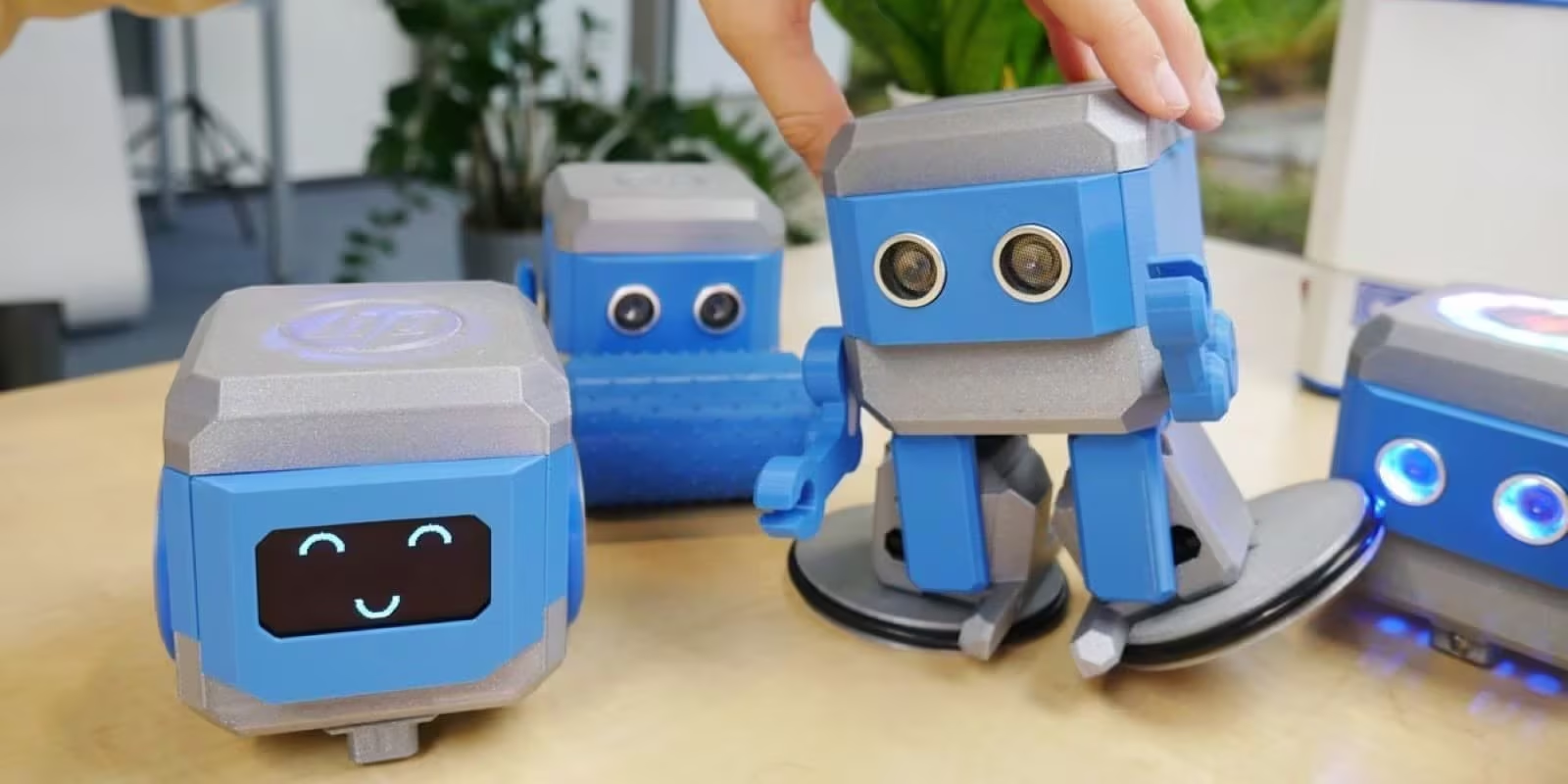
Budget-conscious educators and parents need not compromise on quality when excellent, affordable robotics kits exist at accessible price points. The Elegoo Uno Project Smart Car provides a complete system featuring obstacle avoidance sensors, line tracking capability, and app-based control for approximately $75, delivering exceptional value for the investment.
The Botley Coding Robot offers screen-free programming suitable for elementary students, requiring only remote control-based coding with no internet connectivity or device downloads. This beginner robot kit costs around $80 and proves particularly valuable in classroom environments with limited technology infrastructure.
Basic robotics kits like the 4M Tin Can Robot provide tool-free assembly experiences for younger builders, introducing fundamental concepts without overwhelming complexity or financial burden. These economical robot kits serve as excellent entry points before learners commit to more expensive systems.
Mid-Range Robotics Kits ($100-$400)
The mid-tier robotics market offers substantially enhanced capabilities while maintaining affordability. Makeblock mBot Neo represents an excellent progression point, featuring real sensors, Scratch and Python compatibility, and wireless connectivity for approximately $150-$200.
LEGO SPIKE Prime occupies an enviable market position at roughly $350-$400, providing professional-grade educational robotics within reach of school budgets. This LEGO robotics learning kit combines durable components, intuitive programming environments, and virtually unlimited customization possibilities through LEGO’s extensive brick ecosystem.
The Raspberry Pi 4 robot kits, when purchased with carefully selected components, fall within this range and provide substantial computational capacity for ambitious projects involving image processing or machine learning applications.
Advanced Robotics Kits for Experienced Makers
Professional-Grade Systems for Competitive Robotics
Serious robotics competitors and advanced hobbyists graduate to sophisticated platforms like VEX Robotics systems, which feature metal construction components, professional-grade motors, and scalable programming environments that support both visual and text-based coding.
The Makeblock Ultimate 2.0 robotic kit includes 550+ mechanical parts, enabling the construction of ten distinct robot configurations. Advanced builders appreciate the mechanical flexibility and sophisticated sensor integration that allows investigation of complex robotics concepts, including feedback control systems and autonomous navigation algorithms.
AI-powered robotics kits represent the frontier of hobbyist robotics. Systems like the Petoi Bittle X incorporate voice recognition, computer vision capabilities, and sophisticated locomotion control, attracting builders interested in artificial intelligence integration and biomimetic robotics design.
Key Features to Evaluate When Selecting Robotics Kits
Programming Environment and Language Support
The programming interface fundamentally shapes the learning experience. Visual block-based programming systems like Scratch accommodate younger learners and those new to coding, facilitating rapid project completion and sustained motivation. Conversely, text-based environments using Python or C++ support deeper computational understanding and prepare learners for university computer science coursework.
Ideal robotics kit platforms support progressive learning pathways, beginning with blocks and transitioning seamlessly to text-based programming as skills advance. This programming flexibility prevents outgrowing kits prematurely.
Sensor Integration and Expansion Capabilities
Comprehensive sensor suites determine the complexity of achievable projects. Robotics kits with sensors for distance measurement, light detection, motion sensing, and color recognition enable sophisticated autonomous behaviors. The ability to expand sensor configurations through modular connections prevents project stagnation and supports long-term educational investment.
Build Quality and Component Durability
Construction materials significantly impact user experience and kit longevity. Professional kits featuring metal components withstand years of intensive use within school environments. Plastic construction, while lighter and more economical, requires careful handling to avoid damage from accidental drops or collisions.
Community Support and Online Resources
Thriving online robotics communities dramatically enhance learning outcomes through shared projects, troubleshooting assistance, and inspiration galleries. Popular robotics platforms like Arduino and LEGO enjoy enormous user bases producing countless tutorials, example projects, and customized components that extend platform capabilities beyond original design specifications.
Robotics Kits for Different Age Groups and Experience Levels
Early Childhood Introduction (Ages 4-7)
Young learners require simplified interfaces emphasizing play and creativity before abstract programming concepts. Robotics kits for young children, like Coding Critters or Bee-Bot, introduce directional logic through screen-free, tactile interfaces that develop foundational spatial reasoning and algorithmic thinking without overwhelming complexity.
Elementary School Level (Ages 8-12)
Elementary robotics kits benefit from visual programming blocks that translate directly to observable robot behaviors. LEGO robotics for kids in this age range experience remarkable success because construction feels intuitive while programming remains accessible. Popular options include LEGO Boost, Mindstorms EV3, and Makeblock mBot series, which accommodate skill progression from basic concepts to intermediate system design.
Secondary and Advanced Learners (Ages 13+)
Teenagers and adults tackling advanced robotics kits require platforms supporting sophisticated coding concepts, complex mechanical assembly, and real-world applications. Teen robotics kits like LEGO SPIKE Prime, VEX systems, and Arduino platforms provide the intellectual challenge and customization depth that maintain engagement through multi-year involvement in competitive robotics or hobbyist maker communities.
Learning Outcomes and Skill Development Through Robotics
STEM Skill Integration
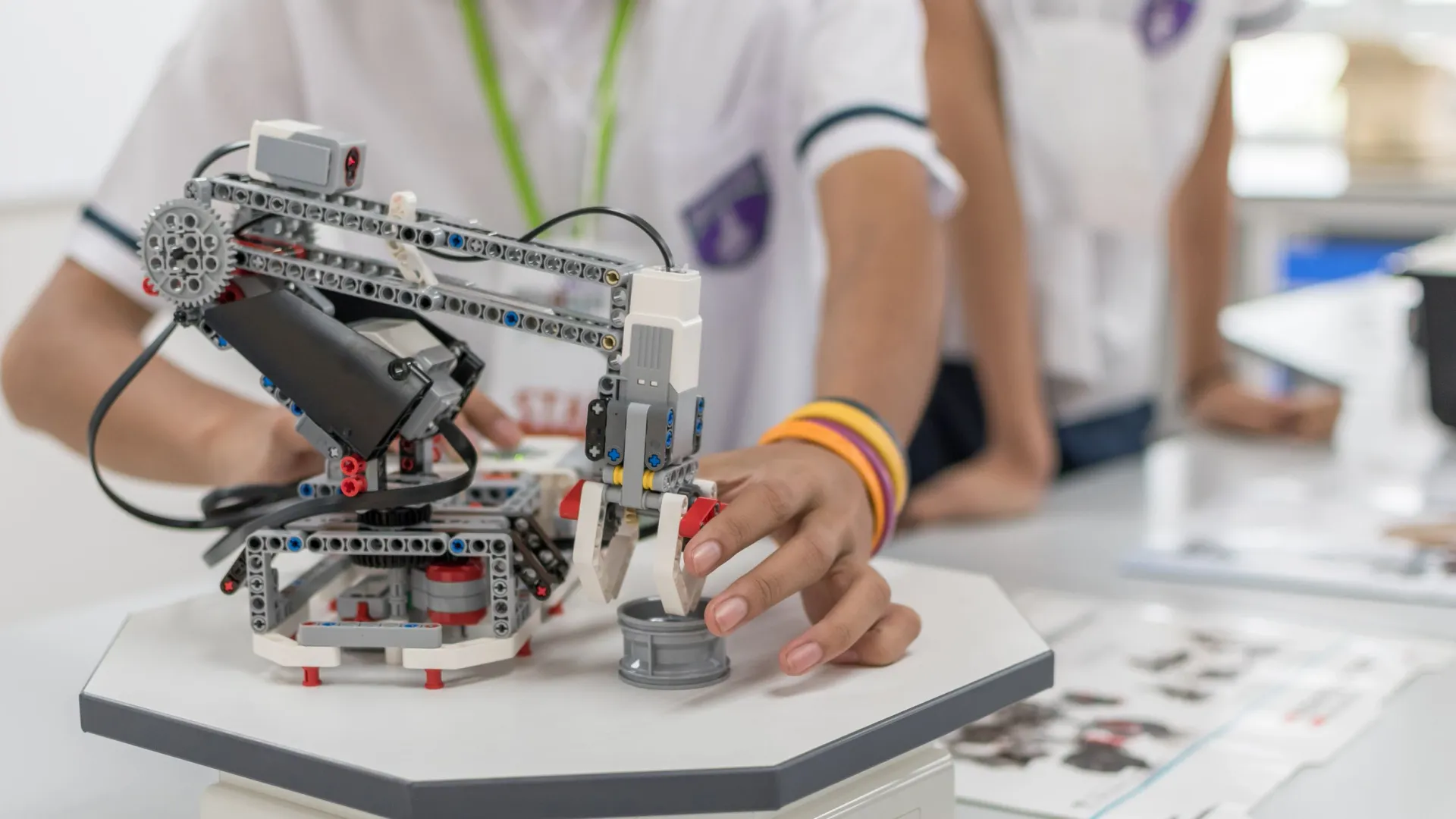
Robotics kits for STEM education naturally integrate science, technology, engineering, and mathematics through authentic, project-based learning. Students constructing mobile robots investigate physics principles, including force, motion, torque, and power efficiency. Sensor programming introduces data collection and analysis methodologies foundational to scientific practice.
Engineering occurs throughout the design iteration cycle—learners hypothesize optimal configurations, test implementations, analyze results, and refine approaches. This iterative design process mirrors professional engineering practice, preparing students for technical careers while developing resilience in the face of failures (reframed as learning opportunities).
Mathematical skills emerge organically through distance calculations, gear ratios, timing synchronization, and coordinate systems required for autonomous navigation programming.
Computational Thinking Development
Robotics programming develops computational thinking capabilities, including decomposition (breaking complex problems into manageable components), pattern recognition, abstraction, and algorithm design. These foundational computer science concepts transfer broadly to academic disciplines and professional technical roles.
Problem-Solving and Persistence
Successfully operating robot hobby projects requires systematic debugging approaches, creative problem-solving under constraints, and persistence through inevitable failures. These dispositions toward challenge-seeking and a growth mindset prove invaluable across educational and professional contexts.
Robotics Kits in Educational Settings: Classroom Implementation
STEM Integration Across Curricula
Forward-thinking educators integrate classroom robotics kits across mathematics, physics, technology, and even language arts disciplines. Students writing documentation for robot projects develop technical communication skills, while competitive robotics teams practice collaborative problem-solving at levels approximating authentic workplace engineering environments.
School robotics programs utilizing competitive frameworks like FIRST leverage robotics’ motivational power to engage students traditionally underrepresented in STEM pathways, particularly girls and minorities, expanding the technical workforce pipeline.
Infrastructure Considerations
Schools implementing robotics programs must consider technology infrastructure requirements, teacher professional development, storage capabilities, and maintenance budgets. Classroom robotics kits featuring durable components, straightforward programming interfaces, and responsive technical support streamline implementation challenges.
Comparison of Top Robotics Kits on the Market
- LEGO SPIKE Prime excels in balanced educational robotics, emphasizing creativity and structured learning, with approximately 400-dollar pricing and professional classroom support infrastructure.
- Arduino Starter Kit serves electronics enthusiasts seeking component-level understanding and extraordinary customization, typically priced around $65-$80 with unlimited expansion possibilities.
- Raspberry Pi robot kits appeal to advanced learners investigating artificial intelligence and machine learning applications, with kits ranging from $100-$300, depending on sensor configurations.
- Makeblock mBot Neo bridges accessibility and capability for younger intermediate learners, offering multiple programming options at around $150-$200 with excellent design and reliable performance.
- VEX Robotics systems target competitive builders, with pricing reflecting professional-grade components and supporting tournament-ready capabilities.
The Future of Robotics Kits and Emerging Trends
The robotics education landscape continues evolving toward AI-integrated robot kits incorporating machine learning capabilities and sophisticated sensor suites. Robotics kits with AI enable learners to explore artificial intelligence concepts previously reserved for university coursework, democratizing access to cutting-edge technology education.
Collaborative robotics, emphasizing swarm behaviors and multi-robot interaction, represents an emerging frontier within hobbyist robotics. Next-generation robot kits increasingly feature wireless connectivity, enabling robot-to-robot communication and coordinated swarm behaviors investigated in academic research contexts.
Integration with Internet of Things (IoT) technology positions robotics kits for 2025 and beyond as gateways to interconnected smart systems, preparing learners for technology careers addressing real-world challenges through networked autonomous systems.
More Read: How to Start a Career in Robotics Engineering
Conclusion
Selecting the ideal robotics kit requires balancing multiple considerations, including learner age, experience level, budget constraints, and specific learning objectives within your available educational infrastructure. Best robotics kits for learning span the spectrum from screen-free beginner robot kits like Bee-Bot through sophisticated AI-powered robotics systems supporting advanced experimentation and competitive involvement. Whether you prioritize LEGO robotics for classroom structure and creative building,
Arduino platforms for electronics depth and customization, Raspberry Pi systems for artificial intelligence exploration, or specialized competitive robots for tournament preparation, excellent robotics kit options exist to support your educational journey. The investment in quality robotics kits generates returns extending far beyond immediate project completion—participants develop problem-solving resilience, computational thinking capabilities, collaborative teamwork skills, and genuine passion for technology that positions them for success in an increasingly STEM-dependent future economy and innovation landscape.