Hybrid Cloud vs Multi-Cloud: What’s Right for Your Business?
Compare hybrid cloud vs multi-cloud strategies. Discover which cloud infrastructure best fits your business requirements, benefits, and implement.
In today’s digital transformation landscape, businesses face a critical decision: choosing between hybrid cloud and multi-cloud architectures. These two cloud computing strategies have become increasingly popular as organizations seek greater flexibility, cost efficiency, and resilience. According to recent industry data, over 78% of large enterprises are expected to adopt either hybrid cloud infrastructure or multi-cloud deployment by 2025. However, many organizations remain unclear about the differences between these approaches and which model aligns best with their unique requirements.
The confusion stems from the fact that both hybrid cloud solutions and multi-cloud architectures involve multiple cloud environments—but they achieve different objectives through distinct methodologies. The nuances between hybrid and multi-cloud approaches are essential for making an informed decision that will shape your organization’s IT strategy, security posture, compliance requirements, and long-term business outcomes.
This comprehensive guide explores the fundamental differences between hybrid cloud computing and multi-cloud strategies, analyzes the advantages and disadvantages of each model, and provides actionable insights to help you determine which cloud infrastructure solution is right for your business. Whether you’re managing sensitive data subject to regulatory compliance, seeking vendor independence, or optimizing operational costs, the following analysis will equip you with the knowledge needed to make a strategic decision that drives competitive advantage.
What is Hybrid Cloud?
Hybrid cloud represents an integrated cloud infrastructure that combines private cloud resources with public cloud services, enabling seamless communication and data flow between both environments. Unlike a single-cloud approach, a hybrid cloud architecture leverages the strengths of both on-premises infrastructure and cloud-based services to create a unified, flexible computing environment.
In a typical hybrid cloud model, sensitive or mission-critical workloads remain on-premises or within a private cloud, while less sensitive applications and workloads utilize the scalability and cost-efficiency of public cloud providers like AWS, Microsoft Azure, or Google Cloud. This strategic placement of workloads ensures organizations maintain control over critical data while benefiting from cloud elasticity for dynamic business demands.
Hybrid cloud deployment typically includes on-premises data centers, private clouds hosted externally, and public cloud services from third-party providers. The integration occurs through robust networking, APIs, and management tools that enable workloads to move seamlessly between environments based on business requirements, performance metrics, and cost considerations.
What is Multi-Cloud?
Multi-cloud represents a cloud strategy where organizations utilize services from multiple public cloud providers simultaneously, without necessarily incorporating private cloud or on-premises infrastructure. Rather than relying on a single vendor for all computing resources, multi-cloud architecture enables businesses to select best-in-class services from various providers—whether AWS for compute, Azure for analytics, or Google Cloud for machine learning capabilities.
In a multi-cloud deployment, different workloads and applications operate independently across multiple cloud platforms. For instance, a company might host its primary applications on AWS while leveraging Google Cloud’s Vertex AI for advanced analytics and Salesforce for customer relationship management. This “best-of-breed” approach to cloud computing allows organizations to optimize specific operational requirements without vendor lock-in constraints.
Multi-cloud management requires careful orchestration across different cloud platforms, APIs, and management interfaces. While these multi-cloud environments operate somewhat independently, organizations still need unified visibility, security policies, and governance frameworks to ensure consistency and compliance across all cloud platforms.


Key Differences Between Hybrid Cloud and Multi-Cloud
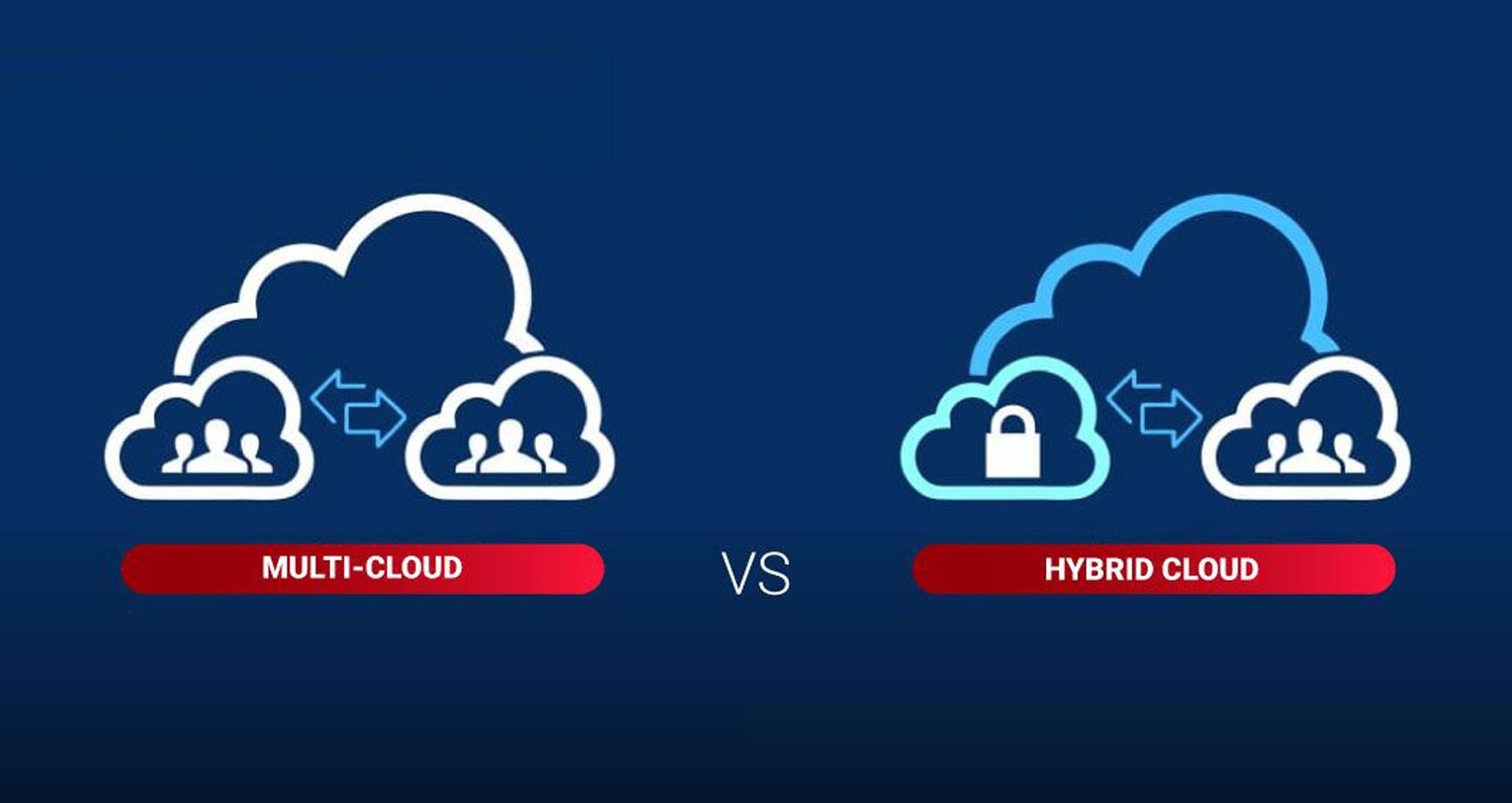
The distinctions between hybrid cloud and multi-cloud are fundamental to making the right architectural choice. Although both approaches involve multiple cloud environments, they differ significantly in structure, composition, and strategic objectives.
Infrastructure Composition
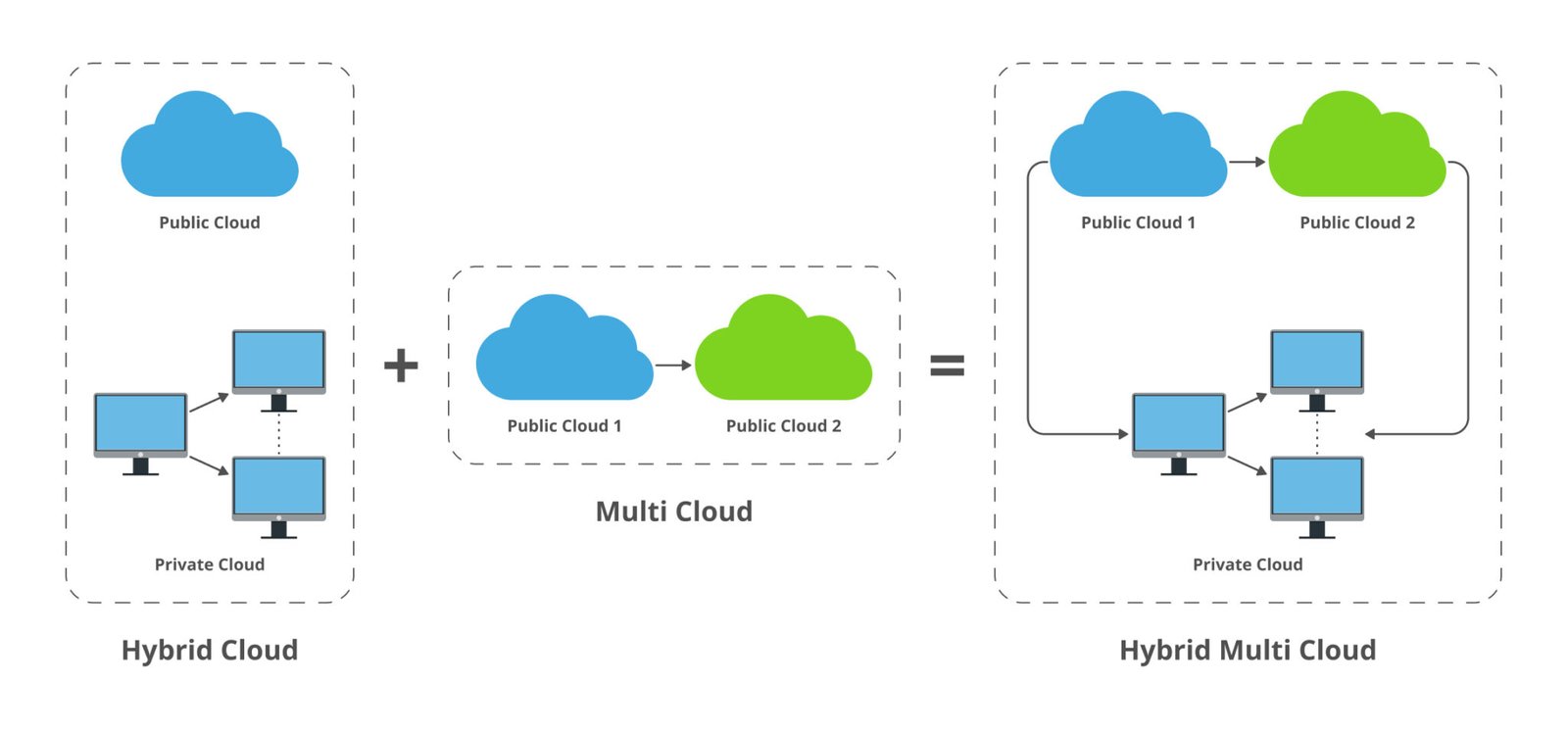
The most fundamental difference lies in infrastructure composition. Hybrid cloud architecture integrates private and public clouds—combining on-premises data centers or dedicated private clouds with public cloud services from major providers. This creates a unified environment where private and public infrastructure work together as a cohesive system.
Conversely, multi-cloud infrastructure exclusively utilizes multiple public cloud providers. There is no private cloud or on-premises component; instead, organizations distribute workloads across different public clouds based on performance, cost, or service optimization requirements.
Workload Integration and Data Flow
- Hybrid cloud solutions emphasize tight integration between private and public environments. Data, applications, and workloads flow seamlessly between environments using load balancing, failover mechanisms, and synchronized databases. When an organization needs additional capacity, workloads automatically scale from private to public cloud infrastructure.
- Multi-cloud deployment maintains relatively independent cloud environments. Workloads operate in silos, with limited integration between providers. Applications may leverage services from multiple clouds, but data and operations don’t automatically migrate between platforms.
Compliance and Data Control
- Hybrid cloud provides superior control for compliance-heavy environments. Sensitive data remains on-premises in controlled environments, while less sensitive workloads leverage public cloud scalability. This placement strategy helps organizations meet GDPR, HIPAA, and industry-specific regulatory requirements while maintaining data sovereignty.
- Multi-cloud architecture places data governance responsibility across multiple public cloud providers. While each provider maintains security standards, organizations must navigate diverse compliance frameworks, shared responsibility models, and different encryption standards across multiple vendors.
Vendor Lock-In
- Hybrid cloud infrastructure may create moderate vendor lock-in with specific private cloud providers or on-premises technology stacks. However, the public cloud component provides flexibility to switch providers if needed.
- Multi-cloud strategies inherently reduce vendor lock-in by distributing workloads across multiple providers. Organizations aren’t dependent on a single vendor’s pricing, service offerings, or infrastructure decisions.
Advantages and Disadvantages of Hybrid Cloud
Benefits of Hybrid Cloud
- Compliance and Regulatory Control: Hybrid cloud architecture enables organizations in regulated industries—healthcare, banking, finance—to maintain on-premises control over sensitive data while meeting stringent compliance requirements. Patient records, financial transactions, and proprietary information remain within controlled environments.
- Flexibility and Scalability: During peak demand periods, hybrid cloud deployment automatically scales workloads to public cloud infrastructure. Retailers experience holiday traffic surges, financial institutions face quarter-end processing demands, and manufacturers manage production spikes without investing in permanent on-premises infrastructure.
- Gradual Cloud Migration: Hybrid cloud solutions support incremental cloud adoption. Organizations can migrate legacy applications gradually to public cloud infrastructure without abandoning existing on-premises investments. This phased approach reduces risk and allows teams time to develop cloud expertise.
- Enhanced Security: Hybrid cloud architecture isolates sensitive workloads on-premises, where organizations maintain complete control over security policies, access controls, and data encryption. Public cloud infrastructure handles less critical workloads.
- Reduced Latency: Hybrid cloud deployment keeps latency-sensitive applications on-premises, ensuring ultra-fast response times for real-time trading platforms, factory automation systems, and interactive applications.
Disadvantages of Hybrid Cloud
- Higher Operational Costs: Hybrid cloud infrastructure requires maintaining both private and public environments. Organizations must purchase, manage, upgrade, and secure on-premises hardware while paying for public cloud services. This dual investment increases the total cost of ownership compared to single-cloud approaches.
- Increased Complexity: Managing hybrid cloud solutions demands expertise across multiple platforms, technologies, and management tools. Integration challenges arise when synchronizing databases, managing security policies, and ensuring consistency between environments.
- Integration Challenges: Establishing a reliable hybrid cloud architecture requires sophisticated networking, API management, and data synchronization mechanisms. Technical obstacles may delay migration projects or necessitate custom development solutions.
- Skills Requirements: Hybrid cloud deployment demands team members with diverse expertise—on-premises infrastructure management, cloud architecture, networking, security, and DevOps. Skills shortages may necessitate expensive consulting engagements.
Advantages and Disadvantages of Multi-Cloud
Benefits of Multi-Cloud
- Vendor Independence: Multi-cloud strategies eliminate dependency on single providers. Organizations avoid vendor lock-in and maintain negotiating leverage with cloud providers. Switching between providers becomes feasible if service quality, pricing, or features become unfavorable.
- Performance Optimization: Multi-cloud architecture enables organizations to select specialized services from each provider. Companies achieve best-in-class AI capabilities from one provider, superior analytics from another, and optimal storage solutions from a third. This multi-cloud approach optimizes specific operational functions.
- Enhanced Resilience: Multi-cloud deployment distributes workloads across independent infrastructure. If one cloud provider experiences outages, services continue operating on other platforms. This geographic and architectural diversity ensures business continuity and minimizes single points of failure.
- Cost Optimization: Multi-cloud solutions enable organizations to leverage competitive pricing from different vendors. Companies use spot pricing and reserved instances strategically across providers, implementing cost governance mechanisms to track spending across multiple cloud environments.
- Global Scalability: Multi-cloud infrastructure supports rapid international expansion. Organizations deploy workloads on local cloud providers in new geographic markets, ensuring compliance with data residency regulations and reducing latency for regional users.
Disadvantages of Multi-Cloud
- Operational Complexity: Managing multi-cloud architecture introduces significant complexity. Organizations must monitor performance, security, and compliance across different platforms with separate dashboards, APIs, and management consoles. Unified visibility becomes challenging.
- Skills and Expertise Gaps: Multi-cloud deployment requires DevOps teams proficient in different cloud platforms, APIs, services, and tools. Organizations struggle to recruit and retain talent with expertise across AWS, Azure, Google Cloud, and other providers.
- Data Transfer Costs: Multi-cloud solutions incur substantial egress charges when moving data between providers. Organizations often face unexpected “data gravity” penalties that limit workload mobility and increase operational expenses.
- Security and Governance Challenges: Managing security across multi-cloud environments proves more difficult than single-cloud deployments. Different providers employ different security models, encryption standards, and identity management systems. Organizations must implement zero-trust security frameworks and cross-platform monitoring to maintain consistent protection.
- Vendor Management Overhead: Multi-cloud infrastructure requires managing relationships with multiple vendors, different SLAs, separate billing systems, and distinct support escalation procedures. This administrative overhead increases organizational friction.
Cost Comparison Hybrid Cloud vs Multi-Cloud
Cost implications are critical when evaluating hybrid cloud versus multi-cloud strategies. Both approaches present different financial models and long-term expenses.
Hybrid Cloud Costs
Hybrid cloud infrastructure requires significant upfront capital investment in on-premises hardware, data center facilities, networking equipment, and security infrastructure. Organizations must purchase servers, storage arrays, network switches, and backup systems before deploying the hybrid cloud environment.
Beyond capital costs, hybrid cloud solutions involve ongoing operational expenses: electricity, cooling, facility maintenance, hardware upgrades, and staffing for on-premises infrastructure management. These predictable but substantial costs remain constant regardless of utilization levels.
Hybrid cloud deployment enables businesses to optimize public cloud spending by routing only necessary workloads to cloud providers. This selective utilization reduces cloud costs compared to moving entire operations to public clouds.
Multi-Cloud Costs
- Multi-cloud architecture eliminates capital expenditures for on-premises infrastructure. Organizations pay cloud providers only for resources consumed—a variable cost model offering cost predictability challenges. Bills fluctuate based on workload utilization, storage consumption, and data transfer volumes.
- Multi-cloud strategies can optimize costs through competitive provider selection, volume discounts, and reserved instance purchases. However, egress charges between providers substantially increase data movement costs. Organizations transferring large datasets between multi-cloud environments face unexpected billing surprises.
- Multi-cloud management tools and platforms add licensing costs, further increasing overall expenses.
When to Choose Hybrid Cloud
- Hybrid cloud architecture represents the optimal choice for organizations meeting specific criteria:
- Regulated Industries: Healthcare organizations storing patient records, financial institutions managing transaction data, and government agencies processing sensitive information benefit from hybrid cloud solutions. On-premises data control ensures compliance with HIPAA, PCI-DSS, SOX, and GDPR requirements.
- Legacy System Integration: Enterprises with significant investments in on-premises infrastructure can leverage hybrid cloud deployment to gradually modernize systems while protecting existing investments.
- Variable Workload Demands: Retailers experiencing seasonal traffic fluctuations, manufacturers managing production cycles, and services experiencing periodic demand surges leverage hybrid cloud architecture to scale elastically without permanent infrastructure investment.
- Data Sovereignty Requirements: Organizations required to maintain data within specific geographic regions or countries benefit from a hybrid cloud infrastructure, keeping sensitive data on-premises while leveraging public cloud for non-sensitive workloads.
- Low-Latency Requirements: Real-time trading platforms, factory automation systems, and interactive applications requiring sub-millisecond response times remain on-premises while leveraging hybrid cloud solutions for non-critical workloads.
When to Choose Multi-Cloud
- Multi-cloud strategies represent the optimal choice for organizations with different requirements:
- Vendor Independence Priority: Organizations seeking to avoid single-vendor dependency and maintain flexibility benefit from multi-cloud deployment. Technology companies, startups, and growth-stage firms prioritize multi-cloud architecture for vendor negotiation leverage.
- Specialized Service Requirements: Enterprises needing best-of-breed capabilities across different functions—AI from Google Cloud, analytics from AWS, data warehousing from Azure—adopt a multi-cloud infrastructure to access specialized services.
- Global Operations: Multinational corporations expanding into new geographic markets leverage multi-cloud solutions to deploy services on regional providers, ensuring compliance with local regulations and optimizing latency for regional users.
- High Availability Requirements: Organizations where system downtime carries severe business consequences prioritize multi-cloud architecture for geographic diversity, vendor redundancy, and fault tolerance.
- Cost Optimization Focus: Companies prioritizing cost efficiency over operational simplicity leverage multi-cloud strategies to negotiate competitive pricing across providers and optimize resource utilization.
Hybrid Multi-Cloud: The Best of Both Worlds?
Forward-thinking organizations increasingly adopt hybrid multi-cloud strategies, combining elements of both approaches. This sophisticated model integrates private on-premises infrastructure, multiple public cloud providers, and managed services—creating maximum flexibility while maintaining compliance and optimization.
A hybrid multi-cloud architecture enables organizations to:
- Maintain on-premises control for sensitive, regulated workloads
- Distribute workloads across multiple public cloud providers for vendor independence
- Optimize costs by placing each workload on the most cost-effective platform
- Leverage specialized services from best-of-breed providers
- Ensure business continuity through geographic and vendor diversity
However, hybrid multi-cloud deployment introduces the highest operational complexity and skill requirements. Successfully managing this approach demands mature cloud governance, sophisticated monitoring platforms, and highly skilled teams.
Selecting the Right Cloud Strategy for Your Business
Choosing between hybrid cloud and multi-cloud requires a comprehensive analysis of your organization’s unique requirements:
- Step 1: Assess Regulatory and Compliance Requirements. Analyze which data and workloads are subject to regulatory requirements. Compliance-heavy organizations benefit from a hybrid cloud architecture, keeping sensitive data on-premises.
- Step 2: Evaluate Current IT Infrastructure.e Assess investments in on-premises systems, legacy applications, and existing infrastructure. Organizations with significant on-premises investments often adopt hybrid cloud solutions for gradual modernization.
- Step 3: Define Performance Requirements. Identify workloads requiring ultra-low latency, high availability, and dedicated resources. These workloads often remain on-premises within in hybrid cloud infrastructure.
- Step 4: Consider Cost Structure. Compare upfront capital investments, ongoing operational costs, and cloud provider expenses. Calculate the total cost of ownership across different cloud computing strategies.
- Step 5: Assess Organizational Capability. Evaluate your team’s expertise with cloud technologies, current staffing levels, and ability to acquire new skills. Multi-cloud deployment requires more sophisticated technical expertise than hybrid cloud solutions.
- Step 6: Plan for Future Growth.h Consider how your organization will evolve. Growth-stage companies may benefit from multi-cloud architecture by avoiding long-term vendor commitment, while established enterprises adopt hybrid cloud solutions, on-premises, protecting existing investments.
Implementation Best Practices
Successful hybrid cloud or multi-cloud deployment requires adherence to proven best practices:
- Establish Clear Governance: Define policies for workload placement, security, compliance, and cost management across your cloud infrastructure. Document decision criteria for which workloads operate on-premises, in private clouds, or on public cloud providers.
- Implement Unified Monitoring: Deploy comprehensive monitoring and observability platforms providing visibility across your entire cloud environment. Unified dashboards enable rapid issue identification and performance optimization.
- Prioritize Security: Implement zero-trust security models appropriate for multi-cloud architecture or ensure consistent security policies across hybrid cloud solutions. Encrypt data in transit and at rest, implement identity and access management, and conduct regular security audits.
- Automate Where Possible: Utilize infrastructure-as-code, automation tools, and orchestration platforms to reduce manual overhead and ensure consistency across cloud computing environments.
- Plan for Skills Development: Invest in team training and development. Hybrid cloud and multi-cloud deployment success depends on skilled professionals who understand cloud technologies, security best practices, and organizational requirements.
- Optimize Costs Continuously: Implement cloud cost management practices, including resource tagging, usage monitoring, reserved instance purchasing, and regular optimization reviews. Multi-cloud environments especially require rigorous cost governance.
Also Read: Hybrid Cloud Solutions for Enterprise AI Deployment
Conclusion
The choice between hybrid cloud and multi-cloud strategies fundamentally depends on your organization’s unique requirements, regulatory environment, existing infrastructure, and long-term business objectives. Hybrid cloud architecture serves organizations prioritizing compliance, gradual modernization, and on-premises data control, making it ideal for regulated industries managing sensitive workloads. Multi-cloud deployment benefits organizations seeking vendor independence, specialized services, global scalability, and resilience through geographic diversity, making it optimal for growth-stage companies and technology firms.
As artificial intelligence, edge computing, and advanced analytics become central to business strategy, many forward-thinking organizations adopt hybrid multi-cloud approaches combining the benefits of both models. The most successful enterprises will develop cloud strategies that align with their specific business requirements, implement robust governance and security frameworks, and continually optimize as technology and business needs evolve. By carefully assessing your organization’s compliance requirements, infrastructure investments, performance demands, cost structure, and team capabilities, you can select the cloud infrastructure solution that delivers maximum competitive advantage while managing operational complexity and financial risk effectively.