Machine Learning in Production Common Problems and Solutions
Machine learning in production faces deployment, scaling, and monitoring challenges. Learn practical solutions to common ML problems in real-world systems

You’ve trained your model, tested it on your laptop, and the metrics look fantastic. Accuracy is through the roof, and everything works perfectly in your development environment. Then you deploy it to production, and suddenly reality hits. Your machine learning models start behaving unpredictably, latency shoots up, and your ops team is calling at 3 AM because the system crashed.
Welcome to machine learning in production, where the real work begins. Building a model is one thing. Getting it to work reliably in a live environment with real users, real data, and real consequences is an entirely different challenge. The truth is, most machine learning projects fail not because of bad algorithms, but because of problems that show up after deployment.
This article walks you through the most common problems teams face when running ML systems in production and gives you practical solutions that actually work. Whether you’re dealing with model drift, struggling with data quality issues, or trying to figure out how to monitor your models effectively, you’ll find actionable advice here. We’re going to cover everything from infrastructure headaches to the subtle ways your models can degrade over time, all based on real-world experience from teams that have been through it.
H2: Understanding Machine Learning in Production
Before we get into the problems, let’s clarify what we mean by machine learning in production. It’s not just about deploying a model and calling it a day.
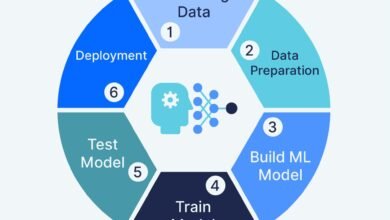
Production ML refers to the entire lifecycle of running machine learning systems in real-world environments where they serve actual users or business processes. This includes:
- Serving predictions reliably and quickly
- Monitoring model performance continuously
- Handling new data at scale
- Managing model versions and updates
- Ensuring security and compliance
- Dealing with infrastructure costs
The gap between research and production is massive. In research, you care about accuracy on a test set. In production, you care about latency, uptime, cost, explainability, fairness, and a dozen other factors that didn’t matter during development.
H3: Why Production ML Is Different from Development
When you’re building models in a notebook, you control everything. You have clean data, unlimited time to train, and you can iterate freely. Production environments are messy, unpredictable, and unforgiving.
Here’s what changes:
- Real-time constraints: Users expect predictions in milliseconds, not minutes
- Data changes: The data your model sees in production differs from training data
- Scale: You’re handling thousands or millions of requests instead of a few test cases
- Dependencies: Your model is now part of a larger system with databases, APIs, and other services
- Accountability: When something breaks, real users are affected and real money is lost
This shift requires a completely different mindset and skill set from traditional machine learning development.


H2: Common Machine Learning in Production Problems
Let’s get into the specific problems you’ll encounter. These are the issues that keep ML engineers up at night.
H3: 1. Model Drift and Performance Degradation
Model drift is probably the most insidious problem in production ML. Your model performs beautifully at launch, then gradually gets worse over time without any code changes.
There are two types of drift:
Data drift happens when the distribution of input features changes. Maybe user behavior shifts, market conditions evolve, or new products get added to your catalog. Your model was trained on historical data, but now it’s seeing patterns it never learned.
Concept drift occurs when the relationship between inputs and outputs changes. The features stay the same, but what they predict changes. For example, words like “sick” or “viral” meant different things before social media became dominant.
Solutions for Model Drift:
- Implement continuous monitoring of input distributions and prediction patterns
- Set up alerts when feature distributions deviate significantly from training data
- Retrain models regularly on fresh data (weekly, monthly, or based on drift metrics)
- Use ensemble methods that combine recent and older models
- Build drift detection into your ML pipeline using statistical tests
- Keep a holdout set from production to track real-world performance
According to research from Google’s ML team, models in production typically need retraining every few months to maintain performance, though this varies dramatically by domain.
H3: 2. Data Quality and Pipeline Issues
Bad data is the silent killer of production ML systems. Your model is only as good as the data it receives, and production data is always messier than you expect.
Common data quality problems include:
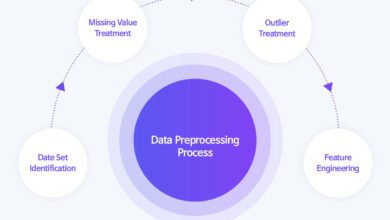
- Missing values where you don’t expect them
- Encoding changes (suddenly a category is represented differently)
- Outliers and corrupted values
- Schema changes in upstream systems
- Delayed or stale data
- Biased sampling in production versus training
Solutions for Data Quality:
- Validate all incoming data before it reaches your model
- Create data contracts with upstream systems that define expected formats
- Build monitoring dashboards that track feature distributions over time
- Implement circuit breakers that stop predictions when data looks suspicious
- Log rejected data for analysis and debugging
- Use great expectations or similar tools for automated data validation
- Set up alerts for schema changes or missing data sources
The key is catching problems before they affect predictions. A single upstream change can tank your model’s performance overnight.
H3: 3. Latency and Performance Bottlenecks
Your model might make perfect predictions, but if it takes 5 seconds to respond, it’s useless in most production environments. Users abandon slow applications, and business processes can’t wait.
Performance problems come from multiple sources:
- Model complexity (deep networks with millions of parameters)
- Feature computation overhead (complex aggregations or lookups)
- Infrastructure limitations (CPU, memory, network)
- Inefficient serving infrastructure
- Batch processing delays
- Cold start issues with serverless deployments
Solutions for Latency Issues:
- Optimize model architecture for inference speed (pruning, quantization, distillation)
- Cache frequently requested predictions
- Precompute features when possible instead of real-time calculation
- Use model serving frameworks like TensorFlow Serving, TorchServe, or Triton
- Implement asynchronous prediction pipelines for non-critical paths
- Scale horizontally with load balancers across multiple model instances
- Consider edge deployment for ultra-low latency requirements
- Profile your entire prediction pipeline to find bottlenecks
Sometimes you need to trade accuracy for speed. A slightly less accurate model that responds in 50ms beats a perfect model that takes 2 seconds.
H3: 4. Scalability and Resource Management
When your ML system needs to handle 10x or 100x more requests, everything breaks in new and interesting ways. Scalability isn’t just about throwing more servers at the problem.
Challenges include:
- Managing compute costs as traffic grows
- Handling traffic spikes without overprovisioning
- Scaling feature stores and data pipelines
- Managing GPU resources efficiently
- Dealing with memory constraints for large models
- Coordinating across distributed systems
Solutions for Scalability:
- Use autoscaling based on request volume and resource utilization
- Implement model batching to process multiple requests together
- Deploy models across multiple regions for geographic distribution
- Use model compression techniques to reduce resource requirements
- Consider model sharding for very large models
- Implement request queuing and rate limiting
- Monitor cost per prediction and optimize accordingly
- Use spot instances or preemptible VMs for batch processing
MLOps platform providers like Databricks and Google Cloud AI Platform offer managed solutions that handle much of this complexity, though they come with their own tradeoffs.
H3: 5. Model Monitoring and Observability
If you can’t measure it, you can’t improve it. But monitoring machine learning models is much harder than monitoring traditional software.
What makes ML monitoring difficult:
- Ground truth labels arrive late or never
- Traditional metrics (uptime, latency) don’t capture model quality
- You need to track dozens of features and their interactions
- Anomalies might be legitimate edge cases or actual problems
- Performance degradation happens slowly and subtly
Solutions for Monitoring:
- Track both model performance metrics (accuracy, precision, recall) and operational metrics (latency, throughput)
- Monitor feature distributions and compare to training baselines
- Implement prediction distribution tracking to catch unexpected outputs
- Set up automated retraining triggers based on performance thresholds
- Use shadow deployments to compare new models against production
- Build dashboards that show model behavior over time
- Log prediction confidence scores and track their distribution
- Implement A/B testing infrastructure for safe rollouts
The best monitoring setups combine automated alerts with regular human review. Machines catch the obvious problems, humans catch the subtle ones.
H3: 6. Version Control and Reproducibility
Machine learning models are notoriously hard to reproduce. Someone runs the same code on the same data and gets different results. This makes debugging, auditing, and compliance nearly impossible.
Sources of non-reproducibility:
- Random seeds not set properly
- Different library versions between environments
- Hardware differences (CPU vs GPU, different GPU models)
- Non-deterministic operations in frameworks
- Data ordering changes
- Parallel processing race conditions
Solutions for Reproducibility:

- Use MLOps tools like MLflow, Weights & Biases, or Neptune for experiment tracking
- Version everything: code, data, models, and dependencies
- Containerize training and serving environments with Docker
- Pin all dependency versions explicitly
- Set random seeds throughout your pipeline
- Store model artifacts with complete metadata
- Document data preprocessing steps in detail
- Use deterministic operations when possible
Building reproducible ML systems takes discipline, but it pays off when you need to debug production issues or satisfy audit requirements.
H3: 7. Model Deployment and Rollback Strategies
Deploying a new machine learning model without breaking production requires careful planning. Unlike traditional software, ML deployments carry unique risks.
Deployment challenges:
- Models can fail in unexpected ways on edge cases
- Performance degradation might not be obvious immediately
- Rollback isn’t always straightforward with stateful systems
- Users might have inconsistent experiences during transitions
Solutions for Safe Deployment:
- Never deploy directly to production without a canary or blue-green setup
- Start with shadow mode where new models run alongside old ones without affecting users
- Gradually increase traffic to new models (1%, 5%, 25%, 50%, 100%)
- Maintain multiple model versions ready for instant rollback
- Implement feature flags to control model routing
- Run extensive integration tests before production deployment
- Keep old models running until new ones prove stable
- Document rollback procedures and test them regularly
The best teams treat model deployment like a production release, with staging environments, rollback plans, and monitoring in place before any traffic hits the new model.
H3: 8. Data Leakage in Production
Data leakage doesn’t just happen during training. Production systems can introduce subtle forms of leakage that inflate perceived performance while making models useless in practice.
Production leakage scenarios:
- Using future information that won’t be available at prediction time
- Including the target variable or its proxies in features
- Training on data with different access patterns than production
- Using data that will change after prediction
Solutions for Preventing Leakage:
- Implement strict temporal validation in your training pipeline
- Simulate production conditions exactly during model development
- Review all features with domain experts for temporal validity
- Use time-based train-test splits that match production scenarios
- Monitor for suspiciously high performance that might indicate leakage
- Document when each feature becomes available relative to prediction time
Leakage is especially dangerous because it makes your model look great in development while being worthless in production.
H2: Building Robust Machine Learning Production Systems
Now that we’ve covered the problems, let’s talk about building systems that can handle them. This requires both technical solutions and organizational practices.
H3: Essential Infrastructure Components
A solid production ML system needs several foundational pieces:
Model serving infrastructure handles prediction requests reliably at scale. This includes load balancers, API gateways, and the actual serving containers or serverless functions.
Feature stores centralize feature computation and storage, ensuring consistency between training and production. Tools like Feast or Tecton solve this problem.
Experiment tracking systems record every model training run with complete metadata, making reproduction and comparison possible.
Monitoring and alerting infrastructure watches both models and infrastructure, catching problems before users notice.
CI/CD pipelines automate testing and deployment, reducing human error and deployment time.
H3: Organizational Best Practices
Technology alone doesn’t solve production ML problems. You need good processes too.
Create clear ownership of models in production. Someone needs to be on call when things break, and they need the authority to fix problems.
Document everything about your models: what they predict, what features they use, how to retrain them, what failure modes they have.
Build cross-functional teams that include data scientists, ML engineers, and software engineers. Production ML requires diverse skills.
Establish SLAs for model performance and uptime. Treat models like any other production service with clear expectations.
Regular model audits catch problems before they become emergencies. Review model performance, data quality, and system health on a schedule.
H2: Tools and Platforms for Production ML
The machine learning production ecosystem has matured significantly. Here are categories of tools that help:
H3: Model Serving Platforms
- TensorFlow Serving: Optimized for TensorFlow models with great performance
- TorchServe: PyTorch’s official serving framework
- MLflow Models: Framework-agnostic serving with good tracking integration
- Seldon Core: Kubernetes-native serving with advanced deployment patterns
H3: Monitoring Solutions
- Evidently AI: Open-source monitoring for ML models with drift detection
- Arize AI: Comprehensive ML observability platform
- Fiddler: ML monitoring with explainability features
- WhyLabs: Data and ML monitoring with privacy preservation
H3: End-to-End MLOps Platforms
- Databricks: Unified analytics platform with strong ML capabilities
- SageMaker: AWS’s fully managed ML service
- Vertex AI: Google Cloud’s managed ML platform
- Azure ML: Microsoft’s cloud ML offering
Choose tools based on your scale, budget, and existing infrastructure. Starting simple and adding complexity as needed usually works better than adopting everything at once.
H2: Future Trends in Production Machine Learning
Machine learning in production continues evolving rapidly. Several trends are shaping the future:
Model monitoring is becoming more sophisticated with automated drift detection and self-healing systems that trigger retraining automatically.
Edge deployment is growing as latency requirements tighten and privacy concerns increase. More models run on devices rather than in the cloud.
AutoML for production promises to automate more of the model development and maintenance cycle, though human expertise remains critical.
Federated learning allows training on distributed data without centralization, solving privacy and data governance problems.
Model compression techniques continue improving, making complex models viable in resource-constrained environments.
The field is moving toward making production ML more reliable, automated, and accessible to organizations without massive ML teams.
Conclusion
Getting machine learning in production right is hard, but it’s not impossible. The problems we’ve covered, from model drift to scalability challenges, are solvable with the right combination of tools, processes, and expertise. Success comes from treating ML systems like the critical production infrastructure they are, with proper monitoring, versioning, testing, and operational discipline. Start small, measure everything, and build systems that can evolve as your needs grow. The difference between ML projects that fail and those that deliver real value usually comes down to how well you handle production challenges. Focus on building robust foundations, stay vigilant about data quality, and never stop monitoring your models in the wild.