Should You Buy Smart Appliances? Pros and Cons
Should you buy smart appliances? Explore comprehensive pros and cons, including convenience, costs, security, compatibility, and energy savings, before upgrading.

Should you buy smart appliances has become one of the most pressing questions facing homeowners and renters alike as the Internet of Things revolution transforms traditional kitchens, laundry rooms, and living spaces into interconnected ecosystems promising unprecedented convenience, energy efficiency, and remote control capabilities through smartphone apps and voice commands. The smart appliance market has exploded in recent years, with manufacturers offering everything from refrigerators that suggest recipes based on their contents to washing machines you can start from your office, ovens that preheat on your commute home, and dishwashers that order their own detergent when supplies run low—all marketed as essential upgrades to modern living that will save time, money, and effort while making daily household management effortless.
Yet beneath the glossy marketing promises and impressive demonstration videos lies a more complex reality requiring careful consideration of genuine benefits versus potential drawbacks before committing hundreds or thousands of dollars to smart home technology. The decision to invest in smart appliances involves weighing factors far beyond initial purchase prices—including ongoing connectivity requirements, privacy and security vulnerabilities, compatibility with existing smart home ecosystems, the learning curve for new technology, potential for obsolescence as standards evolve, and the fundamental question of whether connected features actually improve daily life or simply add unnecessary complexity to tasks that conventional appliances already handle perfectly well.
This comprehensive guide examines both the compelling advantages and significant disadvantages of smart appliances, helping you make informed purchasing decisions based on your specific needs, technical comfort level, budget constraints, and household circumstances rather than succumbing to marketing hype or dismissing potentially valuable innovations out of hand. Whether you’re renovating your entire kitchen, replacing a single broken appliance, or planning future upgrades, understanding the true pros and cons of smart appliances ensures your investment delivers real value rather than buyer’s remorse.
Understanding Smart Appliances
Smart appliances represent the evolution of traditional household devices through internet connectivity and advanced automation capabilities.
What Makes an Appliance “Smart”?
Smart appliances differ from conventional models through internet connectivity, enabling remote access, automation, and integration with other devices.
Key characteristics:
Internet connectivity: WiFi or Bluetooth enabling communication with smartphones, tablets, or smart home hubs.
Remote control: Ability to monitor and control appliances from anywhere using mobile apps.
Automation: Pre-programmed routines or schedules operating without manual intervention.


Smart home integration: Compatibility with ecosystems like Amazon Alexa, Google Home, Apple HomeKit, or Samsung SmartThings.
Data collection: Sensors monitoring usage patterns, performance, and maintenance needs.
Over-the-air updates: Software improvements delivered remotely by manufacturers.
Voice control: Operation through a voice assistant,s eliminating physical interaction.
Notifications: Alerts about operation completion, maintenance requirements, or potential problems.
Types of Smart Appliances Available
Smart home technology has expanded across virtually every appliance category in modern homes.
Common smart appliances:
Kitchen appliances:
- Refrigerators with internal cameras, touchscreens, and inventory management
- Ovens and ranges with remote preheat, recipe guidance, and precision temperature control
- Dishwashers with cycle monitoring, detergent ordering, and leak detection
- Coffee makers with scheduling, strength customization, and remote brewing
- Slow cookers and multicookers with app-based recipe libraries and monitoring
Laundry appliances:
- Washing machines with remote start, cycle customization, and detergent dispensing optimization
- Dryers with moisture sensing, wrinkle prevention, and cycle notifications
- Washer-dryer combos with complete laundry automation
Comfort and air quality:
- Smart thermostats learning preferences anoptimizeng energy use
- Air purifiers monitor and respond to air quality
- Humidifiers and dehumidifiers with automatic humidity management
Cleaning appliances:
- Robot vacuums with mapping, scheduling, and zone cleaning
- Robot mops for automated floor care
- Smart vacuum cleaners with performance tracking
Small appliances:
- Smart plugs convert conventional appliances into smart devices
- Connected air fryers, pressure cookers, and blenders with guided cooking
According to research from Consumer Reports, the smart appliance market continues to grow as manufacturers add connectivity to nearly every product category.
How Smart Appliances Work
Smart appliance operation relies on connectivity, sensors, and software working together.
Technical foundation:
WiFi connectivity: Most smart appliances connect to home WiFi networks, enabling communication with smartphones and cloud services.
Mobile applications: Manufacturer-specific apps provide control interfaces for monitoring and managing appliances remotely.
Cloud services: Many features depend onthe manufacturer’s cloud platforms processing data and enabling remote access.
Sensors and automation: Temperature sensors, moisture detectors, weight sensors, cameras, and other technologies enable intelligent operation.
Integration protocols: Standards like Zigbee, Z-Wave, Matter, or proprietary systems enable communication between devices.
Voice assistant integration: APIs allowing control through Amazon Alexa, Google Assistant, or Apple Siri.
Machine learning: Some appliances learn user preferences and optimize performance based on historical patterns.
Pros of Smart Appliances
Smart appliances offer compelling advantages that genuinely improve daily life for many users.
Enhanced Convenience and Control
Remote access provides unprecedented convenience in managing household appliances from anywhere.
Convenience benefits:
Remote operation: Start your washing machine from work, preheat your oven during your commute, or begin coffee brewing from bed—eliminating wasted time waiting for appliances.
Status monitoring: Check whether the dishwasher is finished, the laundry is done, or the oven reached the desired temperature without physically checking.
Notifications: Receive alerts when cycles complete, letting you immediately move laundry or unload dishes, preventing wrinkles or odors.
Schedule automation: Program appliances to operate during off-peak energy hours automatically without remembering to start them.
Voice control: Ask Alexa to preheat the oven or Google to start the coffee maker while your hands are full with other tasks.
Multi-device control: Manage multiple appliances througha single app interface rather than learning different controls for each device.
Real-world scenario: Receive notification that washing is done while you’re upstairs, immediately start the dryer remotely, and know exactly when to fold clothes—preventing musty odors and wrinkles from sitting in the washer.
Energy Efficiency and Cost Savings
Smart appliances often reduce energy consumption through intelligent operation and optimization.
Energy benefits:
Usage optimization: Smart thermostats learn occupancy patterns, heating and cooling only when needed, reducing energy waste by 10-23% according to studies.
Load balancing: Delay operation until off-peak electricity hours when rates are lower (where time-of-use pricing applies).
Efficiency monitoring: Track energy consumption per cycle or over time, identifying inefficient usage patterns.
Precision operation: Smart ovens maintain exact temperatures without overshooting, reducing energy waste.
Maintenance alerts: Notifications about required maintenance (cleaning filters, descaling) ensure optimal efficiency.
Adaptive algorithms: Washing machines adjust water levels and cycle times based on actual load size rather than running full cycles for small loads.
Resource conservation: Smart dishwashers optimize water usage based on soil levels, sand mart irrigation systems water only when soil moisture requires it.
Long-term savings: While initial costs are higher, energy savings can offset premiums over appliance lifetime—especially for frequently used items like refrigerators, HVAC systems, and water heaters.
Example: A smart thermostat costing $250 might save $180 annually on heating and cooling, paying for itself in 1-2 years while delivering benefits for its 10+ year lifespan.
Improved Functionality and Features
Smart connectivity enables features impossible in conventional appliances.
Enhanced capabilities:
Guided cooking: Smart ovens provide step-by-step instructions, automatically adjusting temperature and time for recipes.
Inventory management: Refrigerator cameras let you check contents while grocery shopping, reducing food waste from duplicate purchases.
Customization: Save preferred settings for different family members (coffee strength, washing preferences, climate comfort), recallable instantly.
Diagnostic capabilities: Appliances self-diagnose problems, providing specific error codes and potential solutions before requiring service calls.
Software improvements: Manufacturers add features and enhance performance through updates long after purchase.
Integration scenarios: Coordinate multiple appliances—morning routine that starts coffee, displays news on refrigerator touchscreen, and adjusts thermostat automatically.
Maintenance tracking: Automatic logging of usage hours, cycle counts, and filter life,e helping you anticipate maintenance needs.
Performance optimization: Machine learning improves operation over time—smart washing machines learn fabric care preferences, smart ovens perfect cooking for your specific preferences.
Enhanced Safety and Maintenance
Smart features provide safety benefits and maintenance advantages, reducing risk and extending appliance lifespan.
Safety improvements:
Remote shutoff: Turn off forgotten ovens, irons, or other appliances remotely,y preventing fire hazards.
Leak detection: Smart washing machines and dishwashers detect leaks early, shutting ofthe f water supply and alerting you before significant water damage.
Gas detection: Smart ranges detect gas leaks or unusual operation, alerting you to potential dangers.
Child locks: Enhanced parental controls preventing unauthorized operation.
Overheating protection: Temperature monitoring prevents fire risks from malfunctions.
Maintenance benefits:
Proactive alerts: Notifications about required maintenance before problems develop into expensive repairs.
Usage tracking: Monitor cycles and operating hours, helping schedule professional maintenance appropriately.
Diagnostic reports: Detailed error codes and diagnostics help technicians quickly identify and fix problems.
Filter reminders: Alerts when filters need cleaning or replacement, ensuring optimal performance.
Descaling schedules: Automatic tracking of when coffee makers, steam ovens, or dishwashers need descaling.
Smart Home Integration
Ecosystem integration creates coordinated automation across connected devices.
Integration advantages:
Unified control: Manage all smart devices througha single app or voice assistant rather than juggling multiple interfaces.
Automation routines: Create scenarios like “Good morning” that start coffee, adjusts thermostat, and displays weather on the refrigerator screen.
Cross-device coordination: Washing machine completion triggers notification through smart speaker or display on smart mirror.
Energy management: Smart home systems coordinate devices to minimize peak power usage.
Occupancy detection: Presence sensors trigger appropriate appliance behaviors—thermostats adjust when you leave home, and lights turn off in empty rooms.
Voice ecosystem: Control all compatible appliances through a preferred voice assistant (Alexa, Google Assistant, Siri).
Future-proofing: As you add more smart devices, existing appliances integrate seamlessly, expanding capabilities over time.
Cons of Smart Appliances
Smart appliances come with significant disadvantages that may outweigh benefits for many consumers.
Higher Initial Costs
Smart appliances command substantial price premiums over conventional equivalents.
Cost considerations:
Purchase price premium: Smart versions typically cost 20-50% more than comparable conventional models—smart refrigerators can cost $1,000-$2,000+ more than standard models with similar capacity.
Ecosystem investment: Maximizing benefits often requires complementary purchases (smart home hub, compatible voice assistant, upgraded WiFi router).
Installation costs: Some smart appliances require professional installation for network configuration and integration.
Subscription fees: Certain features require ongoing subscriptions—smart security systems, extended cloud storage, or premium app features.
Upgrade cycles: Technology obsolescence may necessitate more frequent replacement compared to conventional appliances lasting decades.
Value proposition: Higher costsare only justified if you’ll actually use smart features regularly—paying a premium for remote start you never use wastes money.
Example comparison:
- Conventional dishwasher: $600
- Smart dishwasher: $900-$1,200
- Premium: $300-$600 for remote start, cycle monitoring, and detergent ordering features
Privacy and Security Concerns
Connected appliances create privacy vulnerabilities and security risks absent from conventional models.
Privacy issues:
Data collection: Smart appliances collect extensive usage data—when you’re home, what you eat, laundry habits, cooking preferences—information valuable to manufacturers and potentially third parties.
Usage tracking: Detailed logs of appliance operation patterns revealing household routines and occupancy.
Camera concerns: Refrigerator cameras, oven cameras, and other imaging devices raise questions about who can access these feeds.
Data sharing: Manufacturer privacy policies may permit data sharing with partners, advertisers, or researchers.
Terms of service: Complex agreements granting broad data collection and usage rights.
Security vulnerabilities:
Hacking risks: Internet-connected appliances are potential entry points for hackers accessing your home network.
Ransomware: Theoretical scenarios where attackers disable appliances, demanding payment for restoration.
Network vulnerabilities: Poorly secured appliances weaken overall home network security.
Update dependency: Security requires manufacturer-provided updates—discontinued support leaves devices vulnerable.
Default passwords: Many users never change default passwords, creating easy hacker targets.
According to research from Consumer Technology Association, security vulnerabilities in IoT devices,s including smart appliances, remain a significant concern requiring robust password practices and network segmentation.
Compatibility and Integration Challenges
Smart home ecosystems suffer from fragmentation,n making integration difficult.
Compatibility problems:
Platform fragmentation: Devices designed for Amazon Alexa may not work with Google Home; Apple HomeKit has limited device support.
Proprietary systems: Manufacturers using proprietary protocol limiting integration with other brands.
Hub requirements: Some devices require specific hubs, adding cost and complexity.
Matter standard: New universal standard promises better compatibility,y but adoption is gradual; older devices remain incompatible.
App proliferation: Each manufacturer’s app required for setup and control—managing many apps becomes cumbersome.
Feature limitations: Cross-platform integration often limits functionality compared to staying withia n single ecosystem.
Upgrade challenges: Replacing one smart appliance with a different brand may break existing automation routines.
Real-world frustration: You might have Samsung kitchen appliances, LG laundry, and want Alexa control—but not all devices integrate smoothly, requiring workarounds or compromises.
Technology Learning Curve
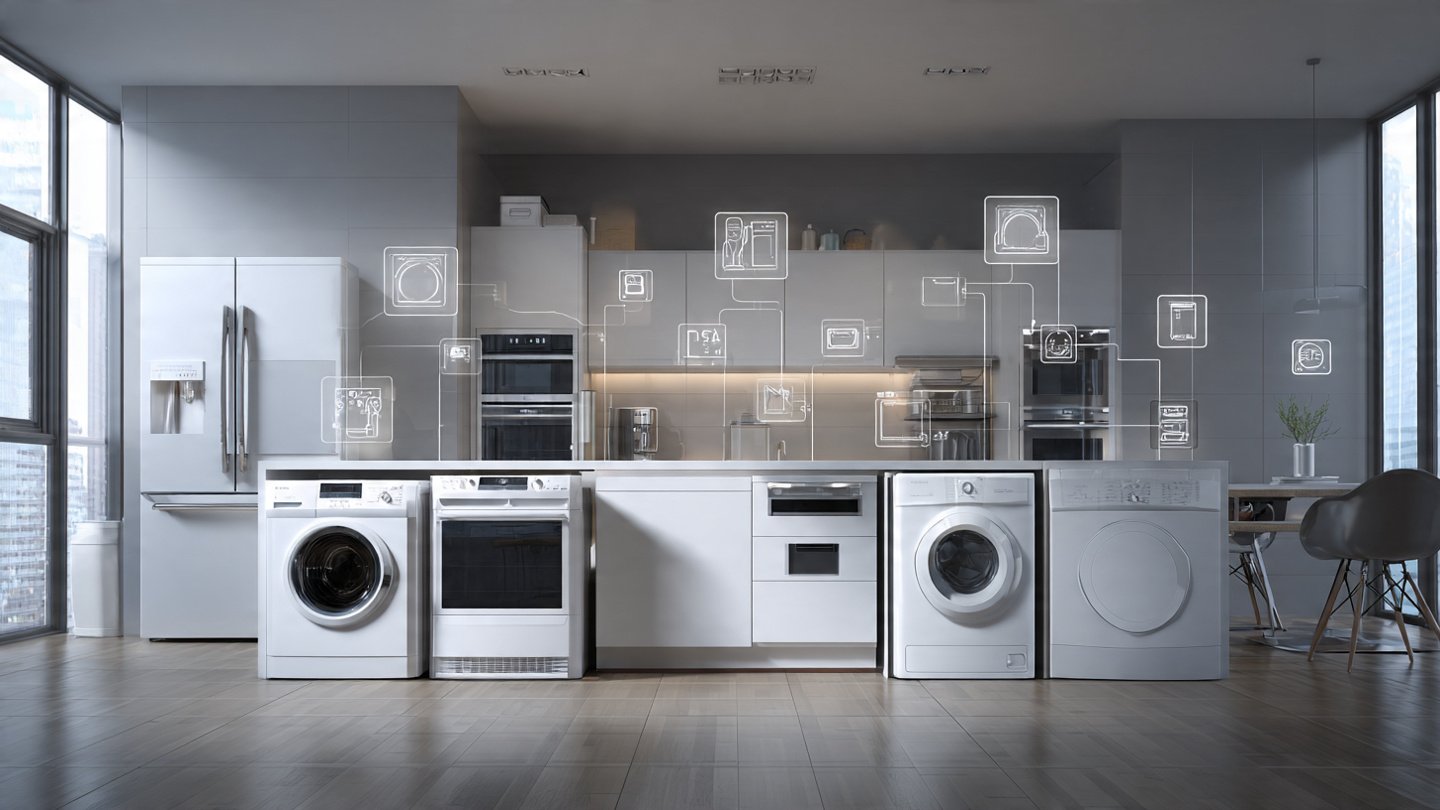
Smart appliances require technical comfort and learning investment that frustrates less tech-savvy users.
User experience challenges:
Initial setup complexity: Connecting to WiFi, downloading apps, creating accounts, and configuring settings can be intimidating.
Interface learning: Each manufacturer’s app has different layouts, terminology, and navigation, requiring time investment.
Troubleshooting burden: When connectivity issues arise, resolving them requires technical knowledge beyond most conventional appliance problems.
Update management: Keeping firmware updated, managing app updates, and dealing with feature changes.
Voice command syntax: Learning specific phrases required for voice control—not intuitive for everyone.
Generational gaps: Older family members may struggle with or resist smart features, sticking to manual controls.
Overcomplicated simple tasks: Sometimes operating smart appliances is more complex than pressing a button on conventional models.
Documentation quality: Manuals often assume technical knowledge or provide insufficient guidance for common problems.
Reliability and Dependency Issues
Smart features introduce failure points and dependencies absent from simpler conventional appliances.
Reliability concerns:
Internet dependency: Many features require internet connectivity—outages render smart capabilities useless.
WiFi requirements: Poor WiFi coverage in laundry rooms or garages limits functionality.
Server dependence: Manufacturer server outages prevent remote control, and the working internet.
App reliability: Buggy apps, crashes, or compatibility issues with phone OS updates disrupt control.
Software bugs: Firmware bugs causing erratic behavior or feature failures requiring updates to fix.
Complexity equals failure points: More components mean more potential problems compared to simple mechanical appliances.
Manufacturer support: If the manufacturer discontinues support, smart features may stop working while mechanical functions continue.
Real scenario: Your smart washing machine works perfectly mechanically, but server issues prevent the remote start you rely on, forcing you to work around the problem or wait for fixes outside your control.
Limited Practical Value for Some Users
Smart features don’t provide equal value to all users—benefits are highly situation-dependent.
Limited applicability scenarios:
Always-home users: Remote control offers little value if you’re always home when using appliances anyway.
Simple needs: If you just want coffee in the morning, a timer on a $30 conventional coffee maker provides the same result as a $200 smart version.
Reliability over features: Some users prioritize appliance longevity and mechanical reliability over smart capabilities.
Manual control preference: Tactile buttons and knobs can be faster and more intuitive than navigating app menus.
Feature underutilization: Studies show many smart appliance owners rarely use smart features after the initial novelty wears off.
Small living spaces: In apartments or small homes, you’re always near appliances, negating remote control benefits.
Cost-benefit analysis: For many users, the 20-50% premium doesn’t deliver proportional value in improved quality of life.
Alternative solutions: Inexpensive smart plugs can add basic remote control to conventional appliances at fraction of smart appliance costs.
Planned Obsolescence and Support Concerns
Smart appliances face technology obsolescence risks that conventional appliances avoid.
Longevity issues:
Software support limits: Manufacturers typically support devices 3-5 years; after that, no security updates or new features.
Cloud service shutdowns: When manufacturers discontinue cloud services, smart features stop working even if appliances are mechanically sound.
Compatibility evolution: New smart home standards may make older devices incompatible with newer systems.
App deprecation: Manufacturer apps may be discontinued, forcing migration to new platforms or losing functionality.
Hardware limitations: Older processors may not support newer software features even if manufacturers provide updates.
Battery degradation: Wireless smart devices with batteries require battery replacement or eventual disposal.
Faster replacement cycles: Smart appliances may need replacement after 5-10 years due to obsolete technology, even if mechanically functional.
Comparison: A conventional refrigerator might last 15-20 years; a smart refrigerator might be obsolete in 7-10 years when the manufacturer stops supporting the software.
Who Should Consider Smart Appliances?
Smart appliances deliver genuine value for specific user profiles while being poor fits for others.
Ideal Candidates for Smart Appliances
Smart appliance benefits align well with certain lifestyles and circumstances.
Good fit profiles:
Busy professionals: Remote workers, frequent travelers, or those with unpredictable schedules benefit from remote control and notifications.
Tech enthusiasts: People who enjoy new technology, have time to learn systems, and appreciate gadgets regardless of strict cost-benefit analysis.
Smart home investors: Those building comprehensive smart home ecosystems where appliances integrate with existing devices.
Energy conscious: Consumers prioritizing energy savings and willing to monitor usage patterns and optimize consumption.
Large households: Families with complex scheduling needs, multiple users with different preferences, or coordination challenges, smart features help manage.
Homeowners: People planning to stay in homes long-term, allowing time to recoup higher initial costs through convenience and energy savings.
Accessibility needs: Individuals with mobility limitations, disabilities, or elderly family members benefiting from voice control and remote operation.
Early adopters: People comfortable with occasional bugs, troubleshooting, and evolving technology,y accepting imperfection for cutting-edge features.
Who Should Stick with Conventional Appliances
Conventional appliances remain superior choices for many consumers.
Better fits for traditional appliances:
Budget-conscious buyers: Those prioritizing the lowest purchase price and avoiding premium costs for features they won’t use regularly.
Non-technical users: People uncomfortable with technology, lacking patience for troubleshooting, or preferring simple mechanical controls.
Privacy advocates: Individuals concerned about data collection, manufacturer surveillance, or security vulnerabilities from connected devices.
Renters: Those in temporary living situations are unable to recoup higher costs through long-term savings or convenience.
Minimalists: People preferring simple, reliable tools over feature-rich, complicated systems.
Rural residents: Those with unreliable internet service,e where smart features would be frequently unusable.
Longevity prioritizers: Consumers wanting appliances lasting decades without worry about technology obsolescence.
Infrequent users: Second homes, vacation properties, or appliances used rarely when ae remote control adds little value.
Making the Smart Appliance Decision
Evaluating whether smart appliances fit your needs requires an honest assessment of priorities and circumstances.
Questions to Ask Before Buying
Self-assessment questions guide smart purchasing decisions.
Key considerations:
- Will I actually use smart features regularly? Be honest—remote control sounds great, but will you really use it weekly or daily?
- Is my WiFi reliable throughout my home? Test connectivity in laundry rooms, garages, and other appliance locations.
- Am I comfortable troubleshooting technology? Consider your patience and abilityto handleg connectivity issues, app problems, or software bugs.
- Does the premium cost fit my budget? Calculatthe e actual price difference and determine if the features justify the additional expense.
- What happens if smart features fail? Ensure basic operation continues without internet or app access.
- How long do I plan to keep this appliance? Longer ownership periods better justify higher initial costs.
- Does this integrate with my existing ecosystem? Verify compatibility with current smart home devices and platforms.
- What are my privacy concerns? Review manufacturer data policies and determine if collection practices are acceptable.
- Are there alternative solutions? Could smart plugs or other add-ons provide similar functionality at a lower cost?
- What’s the manufacturer’s support history? Research how long they typically support products and handle discontinued models.
Alternative Approaches
Hybrid strategies let you gain smart home benefits while minimizing costs and risks.
Smart alternatives:
Smart plugs: $15-$30 smart plugs convert conventional appliances to smart devices, providing remote control and scheduling for coffee makers, lamps, fans, or other simple electronics.
Smart power strips: Control multiple conventional devices througha single smart interface.
Smart thermostats: Among the most cost-effective smart investments with clear energy savings and wide compatibility.
Robot vacuums: Stand-alone purchase providing smart cleaning without replacing conventional appliances.
Smart lighting: Bulbs and switches adding smart control without replacing fixtures.
Gradual adoption: Start with one category (kitchen, laundry, climate), testing benefits before committing toa full smart home.
Selective smart features: Choose appliances where smart capabilities deliver clear value (thermostats, security) while keeping others conventional (ovens, dishwashers).
Benefits: Lower upfront costs, reduced complexity, easier troubleshooting, less privacy exposure, while still gaining automation benefits.
Future-Proofing Considerations
Technology evolution requires consideration of long-term viability.
Future-proofing strategies:
Matter standard support: New universal smart home standard promising better interoperability—prioritize Matter-certified devices.
Reputable manufacturers: Choose established brands with long support histories over unknown companies likely to disappear.
Local processing: Prefer devices processing data locally rather than depending entirely on cloud services.
Manual operation retention: Ensure appliances work fully without apps or internet connectivity.
Regular updates: Select manufacturers are committed to ongoing software support and security patches.
Open platforms: Prefer devices working with multiple ecosystems (Alexa, Google, Apple) rather than proprietary systems.
Upgradeability: Consider whether devices can be updated or expanded as technology evolves.
Community support: Popular devices have active user communities providing troubleshooting help when manufacturers fail.
Conclusion
Should you buy smart appliances ultimately depends on your specific circumstances, technical comfort, budget constraints, and honest assessment of whether connected features will genuinely improve your daily life versus adding unnecessary complexity and expense to household management, with the pros of smart appliances including genuine convenience through remote control and monitoring, meaningful energy savings for high-use items like thermostats and refrigerators, enhanced functionality impossible in conventional models, improved safety through leak detection and remote shutoff capabilities, and seamless smart home integration creating coordinated automation across connected devices—advantages delivering real value for busy professionals, tech enthusiasts, energy-conscious consumers, and those building comprehensive smart home ecosystems.
However, the cons of smart appliances present serious considerations including substantial purchase price premiums of 20-50% over conventional equivalents, legitimate privacy and security concerns from extensive data collection and hacking vulnerabilities, frustrating compatibility and integration challenges across fragmented platforms, technology learning curves intimidating less tech-savvy users, reliability issues from internet dependency and software bugs, limited practical value for always-home users or those with simple needs, and planned obsolescence risks as manufacturers discontinue support rendering smart features useless while mechanical components remain functional.
The wisest approach for most consumers involves selective adoption—investing in smart appliances where benefits are clearest like programmable thermostats with proven energy savings, while maintaining conventional appliances for functions where smart features add little value or excessive complexity, perhaps using inexpensive smart plugs to add basic remote control capabilities to existing conventional appliances rather than replacing everything with premium-priced connected versions that may become obsolete long before their mechanical components fail.