What Is Edge Computing and Why Does It Matter
Discover what edge computing is and why edge computing matters in 2025. Learn edge computing benefits, applications in IoT and 5G.

Edge computing represents one of the most transformative technological paradigms emerging in 2025, fundamentally reshaping how organizations process, analyze, and manage data. Traditional models have relied on centralized cloud data centers where information travels across vast distances, resulting in delays, bandwidth constraints, and security vulnerabilities. Edge computing introduces a revolutionary alternative: bringing computational power directly to the source of data generation, eliminating unnecessary latency and creating unprecedented opportunities for real-time processing.
This distributed approach positions processing capabilities at the “edge” of networks—closer to end users, IoT devices, sensors, and data sources—rather than sending everything to remote cloud servers. The distinction between edge computing and traditional cloud computing extends beyond technical architecture; it represents a fundamental shift in how we conceive data management, application performance, and infrastructure design. Why edge computing matters has become increasingly clear as IoT devices proliferate, 5G networks expand globally, and organizations demand split-second decision-making capabilities.
With over 55.7 billion IoT devices expected by 2025 and 5G technology enabling unprecedented bandwidth and reduced latency, edge computing infrastructure has transitioned from experimental to essential. Industries ranging from autonomous vehicles generating 1 GB of data per second to healthcare systems requiring instantaneous patient monitoring depend on solutions to achieve their operational goals.
The global edge computing market is projected to reach $68.71 billion by 2030, growing at a CAGR of 33.1%, reflecting organizations’ recognition that edge computing benefits directly impact their competitive positioning and operational efficiency. This comprehensive guide explores what truly is, explains why edge computing matters, examines transformative applications, and demonstrates how this technology is reshaping business operations across industries.
What Is Edge Computing: Core Concepts and Definition
Edge Computing Technology
Edge computing fundamentally involves relocating computational resources from centralized cloud data centers to the network’s periphery, where data originates and consumption occurs. Rather than transmitting raw data across the internet to distant servers for processing, it enables analysis, filtering, and decision-making to happen locally on devices, edge nodes, or regional servers positioned geographically closer to data sources. Edge computing infrastructure includes edge devices such as IoT sensors, smartphones, surveillance cameras, autonomous vehicles, industrial robots, and specialized edge servers.
These distributed nodes possess processing power sufficient to execute computational tasks independently, reducing reliance on constant cloud connectivity. Edge computing architecture typically involves several components working in concert: edge devices generating or consuming data, edge nodes providing localized processing capabilities, fog layers adding intermediate processing points, and cloud services providing centralized storage and complex analytics. Distributed computing principles underlying edge computing technology mean that processing is distributed across numerous points rather than concentrated in one location.
This architectural difference creates the foundation for edge computing benefits and applications. Real-time data processing capabilities at the edge enable faster decision-making than traditional models, where data must traverse potentially thousands of miles to reach processing centers. Edge computing platforms vary in sophistication, from simple IoT gateway devices to sophisticated servers supporting complex artificial intelligence and machine learning operations.
Edge Computing vs Cloud Computing: Key Distinctions
Edge computing benefits require comparing it to traditional cloud computing models. Cloud computing centralizes data processing, storage, and application hosting in remote data centers accessible via internet connections. This approach offers scalability, centralized security management, and cost efficiencies through resource sharing. However, cloud computing introduces inherent latency—the time required for data to travel from source to processing center and back. fundamentally addresses this latency challenge by processing data closer to its origin. The latency differences are substantial: typically achieves response times under 5 milliseconds, compared to 20-40 milliseconds common in cloud computing. For applications where milliseconds determine success or failure—autonomous vehicle safety decisions, real-time video analysis, or medical emergency response—this difference proves critical.
Edge computing excels at reducing bandwidth consumption by filtering and processing data locally, transmitting only relevant information to cloud systems rather than all raw data. This approach dramatically reduces network strain and associated costs. Cloud computing remains superior for certain workloads: complex analytics requiring massive computational power, long-term data archival, and services requiring global access. Hybrid computing models increasingly combine edge and cloud, leveraging the strengths of each approach. Organizations typically position real-time processing at the edge while reserving sophisticated analytics and historical data analysis for cloud infrastructure. This hybrid approach represents the practical direction most enterprises are adopting for deployment.


Why Edge Computing Matters: Strategic Importance and Impact

Addressing Latency: The Critical Challenge
Latency reduction represents the most compelling reason why edge computing matters in modern technology infrastructure. Low latency is not merely a performance optimization; it enables entirely new categories of applications previously impossible with traditional cloud. Autonomous vehicles generate approximately 1 GB of data per second, requiring instantaneous processing to make safety-critical decisions. Processes this information locally on vehicle systems rather than waiting for cloud responses. At highway speeds, even 100 milliseconds of delay means vehicles travel approximately 8 meters before responding to obstacles—potentially catastrophic.
Real-time processing at the edge makes autonomous vehicle safety feasible. Medical applications similarly depend on ultra-low latency. Remote surgical procedures require surgeons to receive instantaneous feedback from robotic instruments, making cloud-based communication unacceptable. Edge computing enables local processing of sensor data with minimal delay. Gaming and augmented reality applications require response times under 20 milliseconds for immersive experiences. 5G edge computing combinations achieve these requirements, creating compelling user experiences impossible with traditional models.
Bandwidth Efficiency and Cost Reduction
- Bandwidth consumption represents another critical driver of adoption. Processing vast volumes of raw data centrally requires enormous network capacity. An industrial surveillance system generating 24/7 video from hundreds of cameras creates terabytes of data daily. Transmitting all footage to cloud servers overwhelms networks and creates massive storage costs. Edge computing analyzes video locally, detecting anomalies and transmitting only relevant clips when issues occur. This approach reduces bandwidth requirements by 90-99%, creating substantial cost savings.
- Edge computing benefits in bandwidth efficiency multiply across industries: manufacturing predictive maintenance systems analyze equipment performance locally, transmitting only critical alerts; smart city sensors process environmental data on-device, sending consolidated reports; IoT networks consisting of thousands of devices operate without overwhelming network infrastructure. The cost implications extend beyond bandwidth to computational processing and storage. By filtering data at the edge, organizations avoid expensive cloud processing and storage for irrelevant information. Edge computing cost savings prove especially significant for organizations operating in bandwidth-constrained environments: rural areas, mobile networks, maritime operations, or remote industrial sites.
Enhanced Security and Data Privacy
Data security and privacy protection represent increasingly important reasons why edge computing matters for regulated industries. Processing sensitive data centrally requires transmitting it across networks vulnerable to interception and attack. Edge computing maintains sensitive information at its source, minimizing transmission and exposure risks. Healthcare organizations processing patient data face HIPAA compliance requirements demanding stringent privacy protections. Edge computing enables on-premises processing of medical information, ensuring compliance without complex cloud configurations. Financial institutions protecting customer data benefit from local processing, keeping sensitive transactions within controlled environments rather than transmitting them through multiple network layers.
Data sovereignty concerns drive edge computing adoption in regions with strict regulations requiring data residency. GDPR in Europe mandates that personal data remain subject to European legal frameworks. Edge computing infrastructure positioned within Europe ensures compliance without complex arrangements with cloud providers. Similarly, countries implementing data localization requirements for government and corporate information benefit from edge computing architecture, keeping information locally processed. Cybersecurity threats proliferate as systems connect to networks, but edge computing reduces attack surfaces by minimizing data transmission. Fewer data movement points mean fewer opportunities for cyber criminals to intercept information. Edge security architecture enables applying encryption and access controls directly on edge devices, providing granular protection not easily achieved in centralized models.
Real-World Applications of Edge Computing Across Industries
Autonomous Vehicles and Intelligent Transportation
Autonomous vehicles represent perhaps the most prominent edge computing application, where technology is fundamentally enabling capabilities that would be impossible otherwise. Modern autonomous vehicles require 4000+ TOPS (trillion operations per second) of processing power for real-time perception, decision-making, and control. This processing happens locally on vehicle systems through edge computing, analyzing sensor data from cameras, lidar, radar, and ultrasonic systems.
The vehicle’s edge computing platform processes this information, detects obstacles, evaluates driving scenarios, and executes control decisions in milliseconds. Connected vehicle infrastructure similarly relies on edge computing: traffic management systems process real-time vehicle flow data locally, optimizing traffic light timing without cloud communication delays. Intelligent transport systems using edge computing reduce congestion, improve safety, and enable efficient emergency vehicle routing. V2X (vehicle-to-everything) communication powered by 5G edge computing enables vehicles to share real-time hazard information, significantly improving safety.
Healthcare and Remote Medical Monitoring
Healthcare applications leverage edge computing for real-time patient monitoring, diagnostic support, and emergency response. Wearable medical devices continuously monitor vital signs, transmitting only anomalous readings to healthcare systems rather than constant data streams. Edge AI embedded in medical devices analyzes patterns locally, detecting conditions like atrial fibrillation or respiratory distress instantly. Hospital systems deploy edge computing for patient monitoring, enabling instantaneous alerts when critical thresholds are reached.
Diagnostic imaging systems leverage edge computing to process medical images locally, assisting radiologists with real-time analysis suggestions. Telemedicine platforms powered by edge computing enable remote diagnostics and consultations with minimal latency, making healthcare accessible in underserved regions. Remote surgery becomes feasible through edge computing infrastructure, ensuring haptic feedback reaches surgeons with sufficient responsiveness.
Manufacturing and Industry 4.0
Smart manufacturing relies fundamentally on edge computing for real-time quality control, predictive maintenance, and production optimization. Manufacturing systems deploy edge computing on factory floors, analyzing sensor data from equipment instantaneously. Machine learning models at the edge detect equipment performance degradation before failures occur, enabling preventive maintenance and reducing costly downtime. Product quality is maintained through real-time computer vision processing at the manufacturing line, immediately identifying defects and triggering adjustments.
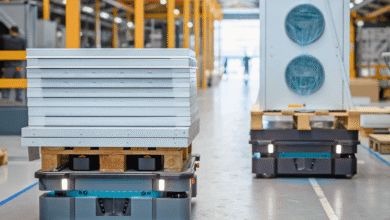
Autonomous robots and collaborative systems utilize edge computing for collision avoidance, task coordination, and quality assurance. Industrial IoT applications process vast sensor data streams locally, extracting actionable insights about production efficiency, energy consumption, and material waste. Manufacturers report double-digit efficiency improvements when adopting edge computing, alongside reduced downtime and improved product quality. Supply chain and logistics operations similarly benefit from edge computing, with real-time tracking, predictive routing, and inventory optimization.
Smart Cities and Urban Infrastructure
Smart city deployments increasingly utilize edge computing for real-time management of urban infrastructure. Traffic management systems process vehicle flow data at edge nodes, optimizing traffic signals dynamically without central processing delays. Environmental monitoring networks deploy edge computing for real-time pollution analysis, water quality monitoring, and weather data processing. Public safety systems leverage edge computing for rapid emergency response, with crime prediction systems analyzing patterns in real-time.
Energy grid management uses edge computing for renewable energy optimization, demand management, and fault detection. 5G-enabled edge computing supports smart city applications requiring massive device connectivity and real-time responsiveness. Cities implementing edge computing infrastructure report significant improvements in traffic flow, emergency response times, and resource efficiency.
IoT and Connected Devices
IoT applications represent perhaps the broadest category of edge computing usage, with billions of connected devices requiring edge computing capabilities. Smart home devices process audio and video locally, extracting only relevant information for cloud transmission. Industrial IoT sensors deployed across manufacturing facilities, refineries, power plants, and utilities transmit processed insights rather than raw sensor streams. Agricultural IoT applications analyze soil moisture, weather, and crop health data locally, enabling precise irrigation and fertilization decisions. Smart grid devices process energy consumption data, detecting anomalies and optimizing distribution in real-time. The proliferation of IoT devices—predicted to reach 55.7 billion by 2025—makes edge computing essential; centralized processing would overwhelm cloud infrastructure and create unacceptable latency.
Edge Computing and 5G: A Powerful Combination

How 5G Enhances Edge Computing Capabilities
5G technology and edge computing represent complementary technologies that amplify each other’s capabilities. 5G networks provide the high-bandwidth, low-latency connectivity that makes distributed edge computing practical at scale. 5G edge computing combinations deliver ultra-low latency under 1 millisecond in optimal conditions, enabling demanding real-time applications. Massive IoT connectivity through 5G supports billions of edge devices simultaneously, creating the infrastructure needed for global IoT deployments. 5G’s network slicing capability enables creating virtual networks optimized for specific applications, allowing organizations to dedicate network resources to latency-sensitive applications.
Mobile edge computing powered by 5G brings processing capabilities directly to cellular networks, enabling computation offloading from user devices. This combination proves transformative for augmented reality and virtual reality applications requiring instantaneous graphics rendering and response. Gaming applications leveraging 5G edge computing deliver immersive experiences with latency low enough for competitive gameplay. Industrial automation powered by 5G edge computing enables real-time factory floor coordination and remote equipment operation with minimal lag. Healthcare applications combining 5G and edge computing enable remote surgery and real-time patient monitoring previously impossible.
Infrastructure Requirements for 5G Edge Computing
Implementing 5G edge computing requires substantial infrastructure investments beyond traditional cloud computing. Edge data centers must be positioned strategically throughout network footprints, typically at telecommunications company points of presence or co-location facilities. These edge computing nodes require power infrastructure, cooling systems, and network connectivity, enabling communication with both local devices and central cloud systems.
Mobile edge computing platforms operated by telecommunications companies handle computation offloading from mobile devices, extending device battery life while improving application performance. Edge computing partnerships between device manufacturers, network providers, and software platforms determine successful deployments. Organizations building edge computing infrastructure must address several challenges: ensuring consistency across distributed nodes, managing security across numerous endpoints, and coordinating between edge and cloud processing. 5G edge computing deployment represents a multi-year transition, with operators gradually expanding coverage and capability. However, early adopters capturing first-mover advantages in 5G edge computing applications position themselves competitively.
Edge Computing Challenges and Limitations
Security and Compliance Challenges
Distributed edge computing architecture introduces security complexities not present in centralized systems. Distributed systems mean more potential attack vectors, with each edge node representing a security boundary requiring protection. Edge devices deployed in remote or hostile environments may face physical security threats. Encryption at the edge must balance security requirements against computational limitations on resource-constrained devices.
Compliance management becomes complex when data processing occurs across multiple geographies and jurisdictions. Organizations must ensure edge computing deployments meet regional data protection requirements, industry regulations, and organizational security standards. Security monitoring across distributed edge computing infrastructure requires sophisticated tools for detecting anomalies and coordinating responses.
Management and Operational Complexity
Operating distributed edge computing systems requires different management approaches than centralized cloud infrastructure. Edge device management involves provisioning, updating, and troubleshooting potentially thousands of geographically dispersed nodes. Software deployment becomes complex, with applications requiring optimization for varied edge device hardware and operating systems. Performance monitoring and troubleshooting must account for distributed execution, making cause analysis complex.
Organizations deploying edge computing typically require specialized expertise and tools for effective operations. Management costs for edge computing infrastructure can prove substantial, particularly if organizations lack existing operational capabilities. Standardization remains limited in edge computing spaces, forcing many organizations to develop custom solutions rather than leveraging mature enterprise platforms.
Cost and Engineering Complexity
Initial edge computing investments can prove substantial, requiring hardware procurement, facility provisioning, and custom software development. Costs of edge computing deployment vary dramatically across regions and use cases. Over-engineering edge solutions risks creating expensive infrastructure underutilized.
Engineering complexity increases when building edge computing applications, requiring developers to consider distributed execution, network partitioning, and variable performance. Developing edge applications demands specialized skills and expertise not universal among software development teams. Total cost of ownership for edge computing remains difficult to predict accurately, with expenses in infrastructure, management, and development creating complex financial calculations. Organizations should carefully evaluate edge computing ROI against specific business objectives before committing to a substantial investment.
The Future of Edge Computing
Emerging Trends in Edge Computing
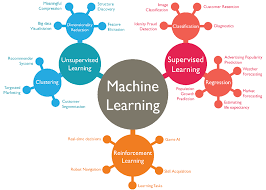
Edge computing evolution continues accelerating, with several transformative trends emerging. AI at the edge represents a major development, with sophisticated machine learning models now capable of running on edge devices. Edge AI enables advanced analytics locally: computer vision for surveillance and industrial inspection, natural language processing for voice interfaces, and predictive analytics for maintenance and anomaly detection. Blockchain integration with edge computing addresses data validation and security in decentralized systems. Supply chain applications leverage distributed ledgers across edge nodes, preventing fraud and ensuring transparency.
Quantum computing integration with edge infrastructure may provide unprecedented computational capabilities, though practical implementations remain years away. Sustainable computing addresses environmental concerns, with edge computing reducing energy consumption compared to centralized cloud processing. Space-based computing networks like China’s Three-Body Computing Constellation represent a frontier in orbital edge computing, processing data in space rather than on Earth-based infrastructure. These emerging edge computing trends suggest continued evolution toward more distributed, intelligent, and sustainable computational infrastructure.
Evolving Architectural Patterns
Edge computing architecture continues evolving beyond current approaches. Progressive edge architectures combine on-device processing, regional edge nodes, and cloud infrastructure, optimizing each layer for specific computational tasks. Serverless edge computing abstracts infrastructure complexity, enabling developers to focus on functionality without managing underlying compute resources. Multi-cloud edge strategies leverage multiple cloud providers’ edge services, avoiding vendor lock-in while optimizing performance. AI-driven edge optimization uses machine learning to dynamically allocate workloads between edge and cloud based on network conditions, latency requirements, and cost considerations. Edge computing APIs standardization efforts promise improved interoperability and reduced development complexity.
More Read: Edge Computing for IoT Processing Data Where It’s Generated
Conclusion
Edge computing fundamentally represents data processing and computational capability distributed across network peripheries rather than concentrated in centralized cloud data centers, addressing core challenges in latency, bandwidth, security, and operational efficiency that modern applications increasingly demand. Why edge computing matters stems from practical requirements across industries: autonomous vehicles require millisecond processing for safety, healthcare systems need instantaneous patient monitoring, manufacturers demand real-time quality control, and IoT networks with billions of connected devices cannot rely on centralized processing.
The combination of 5G networks providing high-bandwidth, low-latency connectivity, IoT proliferation generating data at unprecedented scales, and artificial intelligence enabling sophisticated local analysis has transformed edge computing from a theoretical concept to a business necessity. Edge computing benefits, including reduced latency, bandwidth efficiency, enhanced security, and improved resilience, make adoption increasingly compelling across sectors. While edge computing challenges persist—security complexity, operational management, and implementation costs—rapidly evolving platforms and maturing best practices are making deployment increasingly practical.
Organizations that successfully implement edge computing strategies aligned with their specific operational requirements position themselves to deliver superior user experiences, maintain competitive advantages in real-time decision-making, and optimize operational efficiency. The future of computing increasingly distributes intelligence across networks rather than concentrating it centrally, with edge computing infrastructure becoming as fundamental to modern systems as cloud computing proved to be in the previous decade. By 2030, organizations across industries will consider edge computing capabilities not as optional optimization but as essential infrastructure, with edge computing investment becoming standard in technology planning.